
The foldable phone market is about to witness something extraordinary. Recent certification leaks suggest that the Honor Magic V6 7150mAh battery could redefine what we expect from foldable devices in terms of endurance. While most book-style foldables struggle to break the 5,000mAh barrier without compromising on thickness, Honor appears ready to shatter expectations with a battery capacity that sounds more fitting for a gaming tablet than a premium foldable smartphone.
Why does this matter? Battery anxiety remains one of the biggest pain points for foldable phone users. The dual-display setup inherently consumes more power than traditional smartphones, yet manufacturers have historically prioritized thinness over capacity. If these leaks prove accurate, the Magic V6 could finally deliver the all-day confidence that foldable enthusiasts have been craving since the category’s inception.

When to Expect the Presentation: Honor Magic V6 Release Date
According to multiple industry sources, the Honor Magic V6 release date is strategically aligned with Mobile World Congress 2026 in Barcelona. The event runs from March 2-5, with some reports specifically pointing to March 1 as a potential unveiling date—a Sunday pre-show reveal that would give Honor maximum visibility before the official conference begins.
This timing makes strategic sense for several reasons. First, launching at MWC allows Honor to capture global attention from tech media, carriers, and potential partners all gathered in one location. Second, it positions the Magic V6 ahead of competitors’ spring launches, giving Honor a crucial first-mover advantage in the 2026 foldable race.
However, it’s important to note that these dates remain in “reported” and “rumored” territory. Honor hasn’t issued official invitations yet, and the company’s typical product cadence suggests they could also opt for a standalone China launch followed by a global event. What seems certain is that we’re looking at a Q1 2026 timeframe—specifically the February-March window that has become traditional for flagship foldable launches.
The MWC timing also hints at Honor’s global ambitions. Unlike some Chinese manufacturers who prioritize domestic launches, choosing Barcelona suggests an immediate international rollout strategy, potentially with European availability shortly after the announcement.
Quick Look at Expected Specifications: Honor Magic V6 Specs
While the battery capacity dominates headlines, certification documents and industry whispers paint a broader picture of what the Honor Magic V6 specs might include. Keep in mind these details come from preliminary leaks and should be treated as informed speculation rather than confirmed features.
Display Technology: Expect an 8-inch class main folding display with LTPO technology for adaptive refresh rates, likely ranging from 1Hz to 120Hz. The cover screen should measure around 6.4-6.5 inches, maintaining Honor’s philosophy of making the external display genuinely usable rather than just a notification window.
Processing Power: Qualcomm’s Snapdragon 8 Gen 4 or its successor appears likely, given the spring 2026 timeline. This would provide the computational muscle needed to manage two high-resolution displays efficiently while supporting advanced AI features that have become standard in flagship devices.
Camera System: Honor typically doesn’t compromise on photography, so anticipate a triple or quad-camera setup with at least one 50MP main sensor. Periscope telephoto capabilities seem increasingly standard in this category, possibly offering 3x-5x optical zoom.
Memory Configurations: Base models likely start at 12GB RAM with 256GB storage, with premium variants potentially reaching 16GB RAM and 1TB storage—numbers that reflect the professional use cases many foldable buyers prioritize.
Software: MagicOS based on Android 15, with Honor’s growing suite of productivity features designed specifically for the foldable form factor, including enhanced multitasking and stylus support.
These specs position the Magic V6 as a comprehensive flagship rather than a device that sacrifices everything for battery capacity—which makes the 7150mAh figure even more impressive.
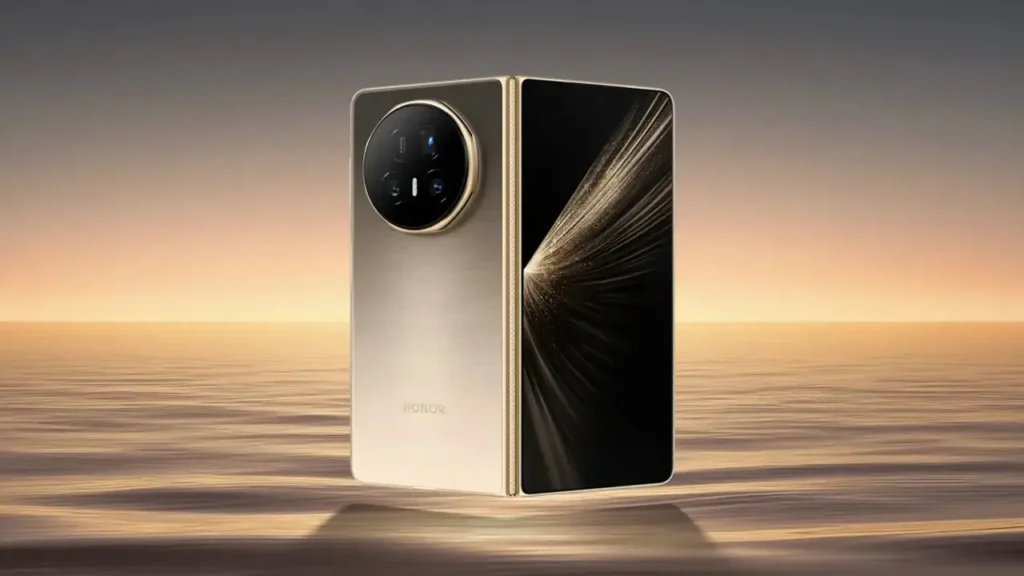
The Source of the 7150mAh Figure: Honor Magic V6 3C Certification
Understanding where this battery capacity number originates is crucial for evaluating its credibility. The Honor Magic V6 3C certification refers to documents filed with China’s Compulsory Certification system—a regulatory requirement for electronic devices sold in the Chinese market.
3C certification listings are considered highly reliable sources for hardware specifications because manufacturers must submit accurate technical details to receive approval. These aren’t marketing materials or wishful projections; they’re official documents with legal standing. When a device appears in 3C databases with specific battery capacity figures, it typically means the product is nearing production readiness.
Multiple tech reporters and leakers with established track records have independently verified the battery capacity listing in the certification database. The consistency across sources strengthens confidence that we’re looking at genuine information rather than speculation or mistranslation.
Certification timing also tells a story. Devices typically receive 3C approval 2-4 months before retail availability, which aligns perfectly with a March unveiling and April-May market launch. The appearance of these documents in late 2025 or early 2026 would fit the expected timeline for an MWC announcement.
It’s worth noting that 3C listings occasionally show prototype specifications that change before retail release, but major components like battery capacity rarely undergo last-minute reductions. If anything, manufacturers might increase capacity slightly, though in this case, there’s little room for improvement without entering unprecedented territory.
Understanding Battery Ratings: Honor Magic V6 Battery Capacity Explained
When discussing the Honor Magic V6 battery capacity, it’s essential to understand the distinction between “rated” and “typical” capacity—terms that often confuse consumers and even some tech reviewers.
Rated Capacity (sometimes called “minimum capacity”) represents the guaranteed minimum charge the battery will hold across its lifespan. This accounts for manufacturing variations and degradation. For the Magic V6, sources suggest a rated capacity around 7,000mAh.
Typical Capacity reflects the average capacity you’ll actually use when the battery is new. This is the number most manufacturers use in marketing materials because it represents real-world performance. The 7,150mAh figure for the Magic V6 appears to be the typical capacity.
Think of it like buying a bag of chips: the package might say “NET WT 10 oz (283g),” which is the minimum guaranteed amount, but the actual contents might weigh slightly more. Battery ratings work similarly—rated capacity is the promise, typical capacity is the reality.
Why does this matter? When comparing devices, make sure you’re comparing like with like. If one manufacturer lists rated capacity and another lists typical capacity, the numbers aren’t directly comparable. For context, most foldables advertise their typical capacity, so the 7,150mAh Magic V6 figure should be fairly compared against other devices’ typical ratings.
This dual-rating system exists because lithium-ion batteries naturally vary slightly in production and lose capacity over time. By specifying both numbers, manufacturers provide transparency about what users can expect both initially and as the device ages.
Strategic Timing: Honor Magic V6 MWC 2026 Launch Advantage
Choosing Mobile World Congress for the Honor Magic V6 MWC 2026 launch represents more than convenient scheduling—it’s a calculated competitive move with multiple strategic benefits.
Media Concentration: MWC attracts thousands of tech journalists, reviewers, and influencers from every major market. A well-executed launch event guarantees immediate global coverage without needing separate regional press tours. For a device with a headline-grabbing feature like record-breaking battery capacity, this concentration of attention amplifies the message exponentially.
Carrier and Partner Relationships: Mobile World Congress serves as the industry’s primary meeting ground for manufacturers and telecommunications companies. Launching at MWC facilitates immediate conversations with carriers about distribution deals, especially crucial for markets where subsidized contracts drive foldable adoption.
Competitive Positioning: By launching in early March, Honor establishes itself as the battery capacity leader before Samsung’s likely summer Galaxy Z Fold announcement and before Google’s expected Pixel Fold refresh. This first-mover advantage shapes the conversation—competitors will be responding to Honor’s benchmark rather than setting their own.
European Market Focus: Barcelona’s location signals Honor’s commitment to European expansion, a market where the brand has gained significant traction. An MWC launch followed by immediate European availability could help Honor capture market share from established players who’ve dominated the region.
The timing also avoids the crowded September-October flagship season when Apple, Samsung, and Google typically command overwhelming attention. In the comparatively quieter Q1 period, the Magic V6 can own the conversation around foldable innovation.

Charging Implications: Honor Magic V6 Charging Speed Expectations
A 7,150mAh battery raises immediate questions about Honor Magic V6 charging speed requirements. After all, a massive battery only delivers value if you’re not tethered to an outlet for hours waiting for it to recharge.
Honor has established strong credentials in fast-charging technology. The Magic V3 supported up to 66W wired charging and 50W wireless charging—respectable but not class-leading figures. With the V6’s significantly larger battery, maintaining similar charging times would require proportionally increased wattage.
Likely Wired Charging: Expect anywhere from 80W to 100W wired charging capability. At 80W, a 7,150mAh battery could theoretically charge from 0-100% in approximately 50-60 minutes. At 100W, that time drops to 40-50 minutes. These estimates assume Honor’s charging optimization continues improving alongside hardware capabilities.
Wireless Charging Considerations: Wireless charging inherently operates at lower power levels due to efficiency losses and heat management. The Magic V6 might offer 50-66W wireless charging, which would take approximately 90-120 minutes for a full charge. While slower than wired, this remains competitive in the foldable category where many devices still max out at 30W wireless.
Battery Health Features: Larger batteries face increased thermal management challenges during charging. Expect sophisticated systems that adapt charging speed based on temperature, usage patterns, and long-term health optimization. Honor might implement overnight intelligent charging that slowly tops up the battery to minimize degradation.
Real-World Usage: Here’s the practical implication—even with “only” 66W charging, a 7,150mAh battery could gain enough charge during a 15-minute coffee break to power several hours of typical use. The sheer capacity means you’re starting from a higher baseline, reducing charging frequency anxiety.
Generational Comparison: Honor Magic V6 vs Magic V5 Battery
Let’s examine how the Honor Magic V6 vs Magic V5 battery comparison illustrates the generational leap Honor is attempting:
| Specification | Magic V5 (Rumored) | Magic V6 (Leaked) | Change |
|---|---|---|---|
| Battery Capacity (Typical) | ~5,000-5,500mAh | 7,150mAh | +30-43% |
| Expected Thickness | ~10-11mm (folded) | Unknown (rumors suggest minimal increase) | TBD |
| Wired Charging | 66W (estimated) | 80-100W (expected) | +21-52% |
| Wireless Charging | 50W (estimated) | 50-66W (expected) | 0-32% |
| Screen-On Time (Estimated) | 7-9 hours (mixed use) | 10-13 hours (projected) | +29-44% |
Note: Magic V5 specifications remain largely rumored as Honor skipped direct numeric succession. Comparisons are based on expected evolutionary improvements from the Magic V3 series.
This comparison reveals that Honor isn’t simply incrementing battery capacity—they’re attempting a fundamental rethinking of power management in foldables. The 30-43% capacity increase far exceeds typical generational improvements, which usually hover around 10-15% for similar form factors.
The charging speed increases are equally important. A 40% larger battery with only 20-50% faster charging would still result in longer total charging times, but the proportional wattage bump should maintain or slightly improve the time-to-full-charge metric compared to predecessors.
What remains unknown is weight. Battery cells are dense, and adding 1,500-2,000mAh typically adds 30-50 grams. Whether Honor can keep the Magic V6 under 250 grams (a psychological threshold for many users) will significantly impact market reception. Advanced silicon-carbon battery technology might be the key enabling this capacity without prohibitive weight penalties.
Leak Roundup: What Multiple Sources Agree On
When evaluating Honor Magic V6 leaks, consistency across independent sources significantly increases reliability. Here’s what multiple reputable leakers and tech outlets are corroborating:
Battery Capacity Consensus: The 7,150mAh typical capacity appears in multiple certification databases and has been confirmed by at least three independent sources with established track records for Honor leaks. This represents the highest confidence prediction.
Launch Timing Alignment: While exact dates vary (some say March 1, others suggest March 2-3), virtually all sources agree on an MWC 2026 timeframe for the announcement. The consistency on the March window, even with minor date discrepancies, suggests coordinated retail partner briefings have occurred.
Silicon-Carbon Battery Technology: Several sources specifically mention Honor employing advanced silicon-carbon anode technology to achieve this capacity without proportional size/weight increases. This aligns with Honor’s previous statements about battery technology investments and patents filed in 2024-2025.
Gradual International Rollout: Leaks consistently suggest a China-first launch (possibly late March) followed by European availability in April and other markets throughout Q2 2026. This pattern matches Honor’s historical approach with flagship devices.
Where Sources Diverge: Processor specifications show some variation, with some leakers mentioning Snapdragon 8 Gen 4 and others suggesting a potential MediaTek Dimensity alternative. Camera specifications remain particularly murky, with sensor counts ranging from triple to quad-camera systems across different reports.
Charging Speed Discrepancies: Wired charging predictions vary from 80W to 120W across sources. This might reflect different prototype versions or regional variations, as Honor sometimes ships different charging capabilities for Chinese and international models.
Display Details: Main screen size estimates cluster around 7.9-8.1 inches, suggesting either measurement variations or multiple prototypes. Cover screen size shows stronger consensus at approximately 6.4 inches.
The elements with multi-source verification—battery capacity, MWC timing, and silicon-carbon technology—deserve the highest confidence. Specifications mentioned by only single sources should be treated as educated speculation until additional confirmation emerges.

Why This Could Crown the Foldable Battery King
The pursuit of the best foldable phone battery has defined much of the category’s evolution since book-style foldables became commercially viable. Understanding why the Magic V6’s 7,150mAh capacity could represent a category-defining achievement requires examining both the technical challenges and user experience implications.
Current Landscape: Today’s foldable leaders cluster around 4,400-5,000mAh. Samsung’s Galaxy Z Fold 5 shipped with 4,400mAh, the Pixel Fold offered 4,821mAh, and the OnePlus Open included 4,805mAh. Even Honor’s own Magic V3 featured “only” 5,150mAh. The Magic V6’s rumored 7,150mAh would represent a 38-62% increase over current flagship competitors.
Why Battery Matters More in Foldables: The dual-display architecture inherently consumes more power than traditional smartphones. Users don’t just have two screens—they’re running larger, higher-resolution panels that often operate at adaptive refresh rates. Multitasking features that make foldables productive (split-screen apps, floating windows) also increase power draw. Current foldables rarely achieve true all-day battery life with intensive use, frequently requiring mid-day charging.
The Thickness Trade-off: Historically, manufacturers prioritized thinness over capacity. The race to create the thinnest foldable led to battery capacity compromises that frustrated users. If Honor achieves 7,150mAh without creating an impractically thick device, it would prove that the either-or choice between form factor and endurance was a false dichotomy.
Silicon-Carbon Innovation: The likely enabler is silicon-carbon anode battery technology, which offers 10-20% better energy density than traditional lithium-ion cells. Honor and parent company Huawei have invested heavily in this technology, and the Magic V6 might be the first mainstream device to deploy it at scale. This represents not just a capacity win but a manufacturing breakthrough with implications across the entire mobile industry.
User Experience Transformation: With 7,150mAh, the Magic V6 could realistically offer:
- 10-13 hours of screen-on time with mixed use
- Two full days of moderate use without charging
- Confidence to travel without carrying chargers for day trips
- Enough overhead for power-hungry productivity tasks without anxiety
Setting a New Standard: If successful, the Magic V6 would force competitors to reconsider their battery strategies. Samsung, Google, and others couldn’t simply dismiss a 40%+ capacity advantage as a niche feature—they’d need to respond with their own high-capacity solutions or accept being perceived as inferior in endurance.
The “If” Factor: All of this potential remains conditional on confirmation. Certification leaks have occasionally shown prototype specs that change before release. However, battery capacity is among the least likely specifications to be reduced during production—doing so would require hardware redesign rather than simple software changes.
Final Thoughts: Separating Hype from Reality
As we eagerly await official confirmation, it’s worth maintaining balanced expectations about the Honor Magic V6 and its rumored 7,150mAh battery. The certification evidence is compelling, the timing makes strategic sense, and the technology enablers exist. However, we’re still in the realm of “if confirmed” rather than established fact.
What we can say with confidence: Honor has repeatedly demonstrated willingness to push boundaries in the foldable category. The company prioritized thinness with the Magic V3, achieved impressive camera systems in foldables when competitors struggled, and consistently delivered competitive pricing. A focus on battery capacity as the next differentiator aligns perfectly with user feedback about foldable pain points.
The MWC 2026 timeframe gives us a clear milestone. Within roughly six weeks, we’ll know whether these leaks were accurate glimpses of a groundbreaking device or overly optimistic speculation. Until then, the prospect of a foldable phone with tablet-level battery capacity in a pocketable form factor remains an exciting possibility that could reshape expectations for the entire category.
For foldable enthusiasts, productivity-focused users, and anyone who’s ever experienced battery anxiety with a current-generation book-style foldable, the Honor Magic V6 represents hope that compromise might finally be optional rather than inevitable.

Frequently Asked Questions
Is the Honor Magic V6 7150mAh battery confirmed?
No, the 7,150mAh capacity is not officially confirmed by Honor. The figure comes from 3C (China Compulsory Certification) database listings, which are generally reliable as they represent regulatory filings manufacturers must submit. Multiple independent sources have corroborated this specification, increasing confidence in its accuracy. However, until Honor makes an official announcement, it remains in “highly credible leak” territory rather than confirmed fact. Specifications can occasionally change between certification and retail release, though battery capacity is among the least likely elements to be reduced as it would require hardware redesign.
Honor Magic V6 release date: when is it expected?
Based on multiple industry sources and typical product cycles, the Honor Magic V6 is expected to launch during or around Mobile World Congress 2026 in Barcelona (March 2-5, 2026). Some reports specifically suggest March 1 as a potential unveiling date for a pre-conference reveal. Following the announcement, availability would likely begin in China first (late March), followed by European markets in April, and broader international rollout throughout Q2 2026. These timelines remain unofficial until Honor issues formal invitations or announcements, but the convergence of sources on the MWC window suggests coordinated partner briefings have occurred.
Will battery size affect thickness and weight?
This is a critical question that current leaks don’t definitively answer. Traditional lithium-ion battery technology would add approximately 30-50 grams and 1-2mm thickness for the 1,500-2,000mAh capacity increase over typical foldables. However, multiple sources suggest Honor is employing silicon-carbon anode battery technology, which offers 10-20% better energy density than conventional batteries. This would allow higher capacity in a similar volume, partially offsetting size and weight increases. The final device dimensions remain speculative until official announcement, but Honor’s historical focus on form factor suggests they wouldn’t sacrifice pocketability even for record-breaking capacity. Industry observers will be watching closely to see if Honor achieves this capacity without crossing the 250-gram or 12mm-folded thresholds that many users consider deal-breakers.
What charging speed is expected on Magic V6?
While not officially confirmed, the larger 7,150mAh battery will likely require faster charging to maintain reasonable recharge times. Industry speculation centers on 80-100W wired charging capability, up from the Magic V3’s 66W. At these speeds, a full charge from empty should take 40-60 minutes depending on actual wattage and optimization. Wireless charging will likely maintain or modestly improve upon the previous generation’s 50W, possibly reaching 66W. Honor’s Chinese models sometimes feature faster charging than international variants, so regional differences are possible. The company has historically balanced charging speed with battery longevity features, so expect intelligent systems that adjust power delivery based on temperature and usage patterns to protect long-term battery health.
Here’s a smooth pivot: while foldables chase bigger batteries, another trend is moving even faster—robots going premium. Unitree’s G1 humanoid getting the Caviar “Aladdin” treatment shows how tech is shifting from pure specs to status and storytelling. Dive into the details here: https://aiinovationhub.com/unitree-g1-humanoid-robot-caviar-aladdin/
