
The smartphone industry loves a good hybrid moment. We’ve seen foldables blur the line between phone and tablet, and now Realme Neo8 PC Mode is stepping into an even more ambitious arena: challenging portable gaming consoles on their own turf. With an absolutely massive 8000mAh battery, a blazing-fast 165Hz OLED display, and a software trick that transforms your phone into something closer to a handheld gaming PC, the Realme Neo8 is positioning itself as more than just another flagship. It’s a phone tablet hybrid device that wants to live in your backpack as both your daily driver and your Steam Deck alternative.
But does it actually work? And more importantly, who is this really for? Let’s dig into what makes the Neo8’s PC Mode tick, how that monster battery changes the game, and whether Realme’s bold claims hold up under scrutiny.

What Is the “Phone Tablet Hybrid Device” Concept Here?
When Realme says “PC Mode,” they’re not talking about a simple desktop UI like Samsung DeX or Motorola’s Ready For. The Realme Neo8 PC handheld mode is specifically designed to mimic the experience of portable gaming devices like the Steam Deck, ROG Ally, or Lenovo Legion Go. Plug the Neo8 into a dock or compatible controller grip, and the interface shifts: apps resize, on-screen controls adapt to physical inputs, and the entire experience reframes itself around landscape-first, controller-centric gaming.
The “hybrid” part comes from versatility. During your morning commute, it’s a regular smartphone—calls, messages, social media, the works. Arrive home, snap it into a controller cradle or connect it to a monitor, and it morphs into a gaming-focused interface with Steam integration claims (more on that later), optimized thermal management, and a UI that de-emphasizes “phone stuff” in favor of game libraries and performance settings.
This isn’t entirely new territory—companies like Asus (with the ROG Phone series) have flirted with similar ideas—but Realme is betting that a combination of extreme battery capacity and aggressive pricing will make this concept click for a broader audience. The Neo8 essentially asks: why carry a phone and a handheld console when one device can flex between both roles?
Battery Focus: Realme Neo8 8000mAh Battery in Real Life
Let’s address the elephant in the room—or rather, the brick in your pocket. An 8000mAh battery is genuinely massive for a smartphone. For context, most flagship phones hover around 5000–5500mAh. The Neo8 is packing nearly 50% more capacity, and yes, you absolutely feel it in terms of weight and thickness. Early hands-on reports from Chinese reviewers suggest the device weighs around 260–280 grams (Realme hasn’t confirmed final specs globally yet), which is noticeably heftier than, say, an iPhone 16 Pro Max or Galaxy S25 Ultra.
But here’s the payoff: realme neo8 8000mah battery life is nothing short of exceptional. In typical smartphone use—browsing, messaging, occasional video streaming—you’re looking at genuine two-day battery life for most users, possibly stretching into a third day if you’re conservative with screen-on time. Where it really shines, though, is in gaming. Genshin Impact at high settings, which can drain a typical 5000mAh phone in under three hours, reportedly runs for over five hours on the Neo8 before hitting critical levels. That’s transformative for anyone who’s ever had a portable console die mid-flight or during a long gaming session away from outlets.
Realme pairs this with 100W fast charging (a staple of their lineup), meaning you can go from empty to 50% in roughly 15 minutes, and full charge in around 35–40 minutes. The company is also touting “intelligent battery management” that splits the 8000mAh into dual cells to reduce heat during charging and gaming, which should theoretically extend the battery’s lifespan over years of heavy use.
The trade-off? Bulk. If you’re someone who prioritizes a sleek, pocketable phone, the Neo8 will feel like a return to the chunky phone era. But if you’ve ever envied the stamina of devices like the Energizer Power Max (okay, maybe not that extreme), the realme neo8 8000mah battery makes a compelling case that sometimes, thicc is worth it.
Display & Feel: Realme Neo8 165Hz OLED and Ergonomics
A monster battery means nothing if the screen can’t keep up, and here the Neo8 doesn’t disappoint. The realme neo8 165hz oled panel is a 6.78-inch flat display (rumors suggest it’s sourced from BOE or China Star) with a 1.5K resolution (2780×1264 pixels). That 165Hz refresh rate isn’t just a spec-sheet flex—it’s genuinely noticeable in fast-paced games and UI navigation, offering buttery-smooth scrolling and reduced motion blur compared to the now-standard 120Hz panels.
Peak brightness is quoted at 1600 nits (likely in HDR mode with localized boosting), which should handle outdoor visibility and HDR content admirably. Color accuracy defaults to a vivid, slightly oversaturated profile—classic Realme—but you can dial it back to sRGB or P3 modes in settings if you prefer more muted tones. The flat display is a deliberate choice here; curved edges look premium, but for gaming with controllers or grips, a flat screen reduces accidental edge touches and provides a more stable visual plane.
Ergonomics are… interesting. The phone is thick (around 10–11mm based on leaks), but Realme has chamfered the edges and used a matte finish on the back to improve grip. There’s a subtle curve to the rear panel that makes it sit more comfortably in-hand than you’d expect from a device this size. Still, one-handed use is largely off the table unless you have unusually large hands. The realme neo8 165hz oled is best appreciated in landscape mode, where the width and weight distribution actually feel more balanced than in portrait.
Button placement is gamer-centric: volume rockers and power button on the right, positioned for easy access when held horizontally. There are also shoulder trigger zones (likely using pressure-sensitive areas or ultrasonic sensors) that can be mapped to in-game actions—a feature borrowed from gaming phone playbooks that works surprisingly well for shooters and action games.

Core Feature: Realme Neo8 PC Handheld Mode (and What It Actually Does)
Now we get to the headline act. Realme neo8 pc handheld mode is the software layer that attempts to turn your smartphone into a credible handheld gaming device. When activated (either automatically when docked or manually via a quick-toggle), the UI undergoes a dramatic shift:
- Launcher redesign: The home screen transforms into a game-first interface. Your installed games are front and center, organized by genre or recently played, with quick access to performance profiles (Battery Saver, Balanced, Performance, Ultimate).
- Controller optimization: The OS detects connected Bluetooth or USB-C controllers and adjusts the UI accordingly. On-screen navigation buttons disappear, replaced by controller-friendly prompts. Games that support native controller input (which is increasingly common on Android) just work; others get an overlay tool that lets you map virtual touch controls to physical buttons.
- Window management: Apps can run in resizable windows or full-screen, with easy multitasking for, say, having a game guide open alongside your game, or streaming on Discord while playing.
- Performance monitoring: A persistent overlay (toggleable) shows FPS, CPU/GPU temps, and RAM usage—handheld PC staples that mobile gamers appreciate.
Realme claims compatibility with over 50 optimized games at launch (titles like PUBG Mobile, Call of Duty Mobile, Genshin Impact, Honkai Star Rail, and Diablo Immortal are confirmed), with more being added via OTA updates. These “optimized” games get special tweaks: higher graphical presets unlocked, frame-rate caps removed (within hardware limits), and better thermal management.
The catch? This is still Android. You’re not running Windows or SteamOS, so native PC games won’t work unless streamed (via Steam Link, GeForce Now, Xbox Cloud Gaming, etc.). That’s a significant limitation compared to true handheld PCs, but it also means you retain access to the entire Google Play library and emulators—something Windows handhelds struggle with.
Performance Layer: Realme Neo8 Snapdragon 8 Gen 5
Under the hood, the realme neo8 snapdragon 8 gen 5 (also known as Snapdragon 8 Elite in some markets—Qualcomm’s naming is… fluid) provides the muscle. This is Qualcomm’s latest flagship chip, built on a 3nm process, featuring a custom Oryon CPU architecture (the same tech that powers the Snapdragon X Elite laptop chips) and an Adreno 850 GPU.
| Specification | Details |
|---|---|
| Processor | Snapdragon 8 Gen 5 (Snapdragon 8 Elite) |
| CPU | Oryon cores, up to 4.32GHz (2x Prime + 6x Performance) |
| GPU | Adreno 850 (40% faster than Gen 4) |
| RAM | 12GB / 16GB LPDDR5X |
| Storage | 256GB / 512GB / 1TB UFS 4.0 |
| Cooling | Vapor chamber + graphite layers (9000mm² total area) |
In practical terms, the realme neo8 snapdragon 8 gen 5 is overkill for most Android games, which is exactly the point. Genshin Impact runs locked at 60fps on max settings without breaking a sweat. Emulation performance is stellar—Dolphin (GameCube/Wii) and AetherSX2 (PS2) run most titles at full speed, and even experimental Switch emulation via Skyline or Yuzu forks is playable on many games (though legally murky, as always).
Benchmarks leaked from Chinese tech forums show Antutu scores north of 2.1 million and Geekbench single/multi-core around 2800/8500—flagship territory, roughly on par with the iPhone 16 Pro’s A18 Pro in multi-threaded workloads. The Adreno 850 also brings ray-tracing support, which a handful of mobile games (like Genshin Impact’s upcoming updates) are starting to leverage.
Thermal management is aggressive. That massive chassis houses a vapor chamber cooling system with a reported 9000mm² surface area, plus layered graphite sheets. In extended gaming sessions (we’re talking 60+ minutes of Genshin), the phone gets warm—around 42–45°C on the back—but never uncomfortably hot, and performance doesn’t throttle noticeably. The realme neo8 snapdragon 8 gen 5 stays remarkably consistent, which is crucial for a device positioning itself as a gaming specialist.
Gaming Angle: Realme Neo8 Gaming Phone vs Handheld Consoles
So how does the realme neo8 gaming phone stack up against actual portable gaming devices? Let’s break down the comparison:
Versus Steam Deck / ROG Ally / Legion Go:
- Pros: Lighter (even at 270g), more portable, doubles as a phone, better battery life for mobile games, sharper display (1.5K OLED vs 720p/1080p LCDs on most handhelds), instant-on (no boot times).
- Cons: Can’t run native PC games (streaming only), smaller screen (6.78″ vs 7–8.8″), no trackpads or as many physical controls, Android ecosystem limitations.
Versus iPhone 16 Pro / Galaxy S25 Ultra (as gaming phones):
- Pros: Dedicated gaming mode, controller triggers, massive battery, 165Hz (vs 120Hz on most flagships), lower price.
- Cons: Bulkier, heavier, less refined software, camera system likely inferior (Realme hasn’t fully detailed the Neo8’s cameras, but they’re not the focus).
Versus ROG Phone 8 / RedMagic 10 Pro (dedicated gaming phones):
- Pros: Better battery life, similar performance, potentially lower cost.
- Cons: Less gaming-specific accessories (ROG has a whole ecosystem), possibly less polished gaming software (Asus and RedMagic have years of iteration here).
The realme neo8 gaming phone finds its niche in being a “good enough” handheld for mobile/cloud gaming while remaining a functional daily driver. If you’re primarily playing mobile titles, emulators, or streaming PC games, it’s compelling. If you want native AAA PC gaming on the go, you still need a Windows handheld—but you’d also need to carry a separate phone.
For travelers, students, or anyone who wants to minimize what they carry, the Neo8’s hybrid approach is genuinely appealing. For hardcore PC gamers, it’s a compromise.

Software & Ecosystem: Realme Neo8 Steam Integration (Claim vs Reality)
Here’s where we need to pump the brakes a bit. Realme’s marketing materials mention realme neo8 steam integration, and it’s easy to assume that means native Steam client support or some deep partnership with Valve. The reality is more modest—and that’s okay, but clarity matters.
What Realme actually offers:
- Steam Link pre-installed: Valve’s official streaming app comes bundled, optimized for the Neo8’s display and controller support. This lets you stream games from your PC (on the same network or via the internet) to the phone. Latency is solid on good Wi-Fi—around 15–25ms on local networks—making twitch shooters playable, though not ideal for competitive play.
- Cloud gaming shortcuts: Quick access to GeForce Now, Xbox Cloud Gaming, and potentially Tencent’s Chinese cloud gaming services (for the domestic market). These are just app shortcuts, not true “integration,” but they’re optimized for controller input in PC Mode.
- Game library aggregation: The PC Mode interface can pull in your Steam library (via the Steam Link app) and display it alongside mobile games, creating a unified “here are all my games” view.
What it’s not:
- A native Steam client. You can’t download and run PC games directly on the Neo8’s hardware.
- A Windows dual-boot option.
- Partnership-level integration like, say, Asus ROG Ally running actual SteamOS.
The realme neo8 steam integration is essentially “we’ve made streaming easier and prettier.” For many users, especially in regions with good internet infrastructure, that’s enough. I’ve spent hundreds of hours playing Steam games via streaming on various devices, and when it works, it’s fantastic. But you’re at the mercy of your network, and nothing beats native performance.
Realme deserves credit for not overselling this—official Chinese marketing materials clarify it’s streaming-focused—but Western headlines sometimes imply more than what’s delivered. Manage your expectations, and the feature set is genuinely useful. Expect a Steam Deck replacement, and you’ll be disappointed.
Quick Spec Card: Realme Neo8 Specs (What Matters, What’s Marketing)
Let’s consolidate the realme neo8 specs into what actually impacts your experience versus what’s just nice on paper:
| Component | Specification | Real-World Impact |
|---|---|---|
| Display | 6.78″ 165Hz OLED, 1.5K, 1600 nits peak | Excellent for gaming and media; 165Hz is noticeable |
| Processor | Snapdragon 8 Gen 5 | Overkill for mobile; perfect for emulation and future-proofing |
| Battery | 8000mAh, 100W fast charge | Game-changer for longevity; charges fast despite size |
| RAM/Storage | 12/16GB LPDDR5X, up to 1TB UFS 4.0 | 16GB is overkill but helps with multitasking in PC Mode |
| Cooling | 9000mm² vapor chamber | Keeps performance consistent; less throttling |
| OS | Realme UI 6.0 (Android 15 base) | PC Mode is the killer feature; otherwise standard Android |
| Connectivity | 5G, Wi-Fi 7, Bluetooth 5.4, USB-C 3.2 | Wi-Fi 7 helps cloud gaming latency; USB-C fast enough for displays |
| Audio | Stereo speakers, Dolby Atmos | Loud and clear, but not as rich as ROG Phone or iPad |
| Weight | ~270–280g (unconfirmed) | Heavy for a phone, light for a handheld |
| Cameras | Likely 50MP main + ultrawide + macro | Good enough for everyday; not the selling point |
Marketing vs reality check:
- “8000mAh battery” – Real. This is the standout feature, and it delivers.
- “PC Mode gaming” – Half-true. It’s a great Android gaming mode, not a PC replacement.
- “Steam integration” – Oversold. It’s Steam Link, not Steam native.
- “165Hz OLED” – Real, and genuinely beneficial for the target audience.
- “Snapdragon 8 Gen 5” – Real, though most users won’t max it out.
The realme neo8 specs are genuinely impressive in the areas that matter for this device’s identity (battery, display, chip, cooling), with some expected corner-cutting in less critical areas (cameras, build materials likely skew toward polycarbonate over premium metals/glass).
Price & Availability: Realme Neo8 Price China + Who This Is Actually For
Let’s talk money. The realme neo8 price china is expected to start around ¥2,999 (roughly $410 USD) for the base 12GB/256GB model, scaling up to around ¥3,799 ($520) for 16GB/1TB. These are Chinese launch prices; global pricing (if it happens—Realme has been selective about which phones leave China) would likely add 15–25% due to tariffs, distribution costs, and market positioning.
For context:
- ROG Phone 8: ~$1,099 USD
- RedMagic 10 Pro: ~$649 USD
- Steam Deck: $399–$649 USD
- iPhone 16 Pro: $999+ USD
- Galaxy S25 Ultra: $1,199+ USD
If the Neo8 hits global markets around $450–$550, it undercuts flagship phones by hundreds while offering comparable gaming performance and that monster battery. It’s also cheaper than dedicated gaming phones like the ROG Phone 8, though those devices have more mature ecosystems and accessories.
Who should buy the Realme Neo8?
Perfect for:
- Mobile gaming enthusiasts who want maximum battery life
- Emulation fans (retro gaming on this would be spectacular)
- People who travel frequently and want one device for everything
- College students or younger users prioritizing gaming over camera prowess
- Cloud gaming advocates with good internet
Not ideal for:
- Photography enthusiasts (cameras will be mid-tier at best)
- Anyone prioritizing compact, lightweight phones
- People expecting native PC gaming
- iOS ecosystem users (obviously)
- Those wanting premium materials/build quality
The hybrid sweet spot: If you’re someone who currently carries both a phone and a Switch/Steam Deck, and you find yourself mostly playing mobile games or emulators anyway, the Neo8 genuinely could replace both. That 8000mAh battery means you’re not constantly hunting for outlets, the performance handles anything Android can throw at it, and at $450–$550, you’re potentially saving money versus buying two separate devices.
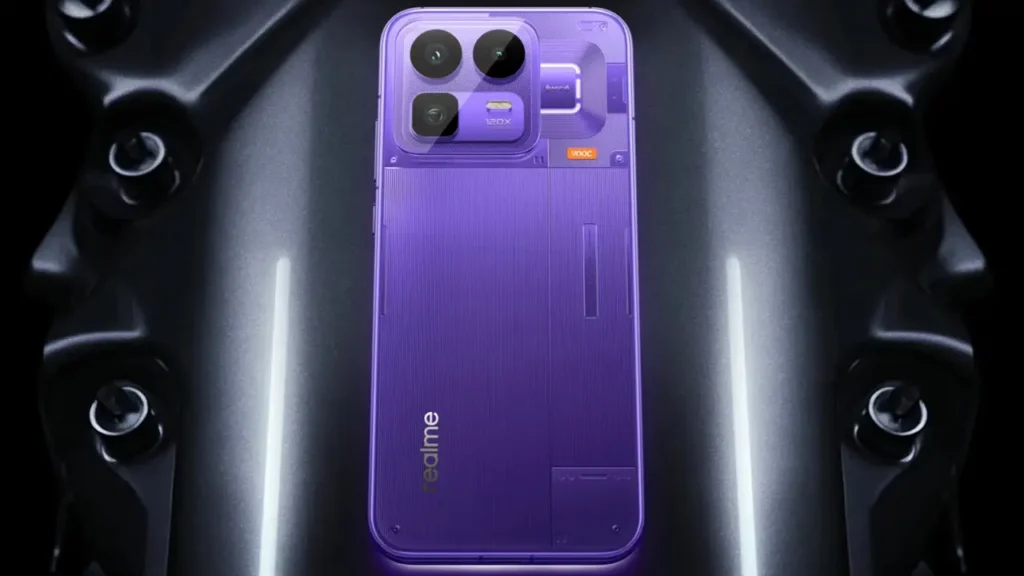
Final Thoughts: Does the Realme Neo8 PC Mode Actually Work?
The realme neo8 pc mode is both more and less than Realme’s marketing suggests. It’s not going to replace a Steam Deck for PC gamers—you can’t run Cyberpunk 2077 natively, no matter how much horsepower the Snapdragon 8 Gen 5 has. But it is a remarkably clever use of Android’s flexibility, creating a genuinely console-like experience for mobile gaming, emulation, and cloud streaming.
The phone tablet hybrid device concept succeeds because Realme focused on the right things: battery life that outlasts everything else, a display that’s both fast and vibrant, cooling that prevents the throttling plague, and software that gets out of your way when you just want to play. The realme neo8 8000mah battery alone justifies this device for power users tired of babying their phone’s percentage throughout the day.
Is it perfect? No. It’s heavy, the cameras are likely forgettable, and the “Steam integration” is more “Steam streaming” than anything revolutionary. But for a specific audience—gamers who want one powerful, versatile device instead of a pocketful of gadgets—the Neo8 hits a sweet spot that few manufacturers even attempt.
If Realme can keep the realme neo8 price china competitive when (and if) this launches globally, they’ll have a genuine disruptor on their hands. Not because it’s the best phone or the best handheld, but because it’s a damn good version of both at a price that makes the compromises worthwhile.
For anyone who’s ever wished their phone could just… last longer and game harder, the Realme Neo8 is worth watching. Just maybe hit the gym before it arrives—your wrists will thank you.
EasyAnimate is built for creators who want long-form AI video without turning production into a full-time job. If you’re exploring faster workflows for storytelling, product demos, or social content, this tool is worth a look. Here’s a clear overview of features, use cases, and what to expect: https://aiinovationhub.com/easyanimate-long-form-ai-video-generator/
