
The OnePlus 15 Global Edition has officially landed in January 2026, and it’s bringing serious heat to the flagship arena. After its initial China launch, OnePlus is now rolling out this powerhouse globally, packing the latest Snapdragon 8 Elite Gen 5 chipset, a massive 7,300mAh battery, and innovative 50W magnetic wireless charging technology. If you’ve been waiting for a phone that combines cutting-edge performance with practical everyday features, the OnePlus 15 might just be your next upgrade.
In this comprehensive guide, we’ll break down everything you need to know about the OnePlus 15 Global Edition—from its impressive specs and real-world performance to how it stacks up against Samsung’s upcoming Galaxy S26. Whether you’re a mobile gamer, a power user, or just someone who’s tired of charging their phone twice a day, let’s dive into what makes this device stand out in early 2026.
OnePlus 15 specs — what’s new in 2026
The OnePlus 15 specs represent a significant leap forward from last year’s OnePlus 14 series. Here’s what you’re getting with the global edition:
- Display: 6.82-inch LTPO AMOLED with 165Hz adaptive refresh rate, 2K+ resolution (3168 x 1440), and peak brightness reaching 4,500 nits
- Processor: Qualcomm Snapdragon 8 Elite Gen 5 (4nm process)
- RAM/Storage: 12GB/256GB base model, up to 16GB/512GB variants (LPDDR5X and UFS 4.0)
- Camera System: Triple rear setup—50MP main (Sony LYT-808 sensor), 50MP ultrawide, 50MP 3x periscope telephoto
- Battery: 7,300mAh silicon-carbon hybrid cell
- Charging: 100W wired SuperVOOC, 50W AIRVOOC wireless, 50W magnetic wireless (with accessory)
- Operating System: OxygenOS 16 based on Android 15
- Build: Ceramic Guard glass, IP69 water and dust resistance
- Dimensions: 163.4 x 75.8 x 8.9mm, approximately 215 grams
What immediately catches the eye here is the aggressive battery capacity—7,300mAh is practically tablet territory—and the versatile charging options. OnePlus has clearly listened to user feedback about battery anxiety and charging convenience, two pain points that have plagued flagship phones for years.
The display specs are equally impressive. A 165Hz refresh rate puts this squarely in gaming phone territory, while the LTPO technology means it can dynamically scale down to 1Hz when you’re reading static content, preserving that massive battery. The 4,500-nit peak brightness ensures you’ll have zero visibility issues even under direct sunlight.
Snapdragon 8 Elite Gen 5 performance
At the heart of the OnePlus 15 Global Edition beats Qualcomm’s latest and greatest: the Snapdragon 8 Elite Gen 5. This isn’t just an incremental update—it’s a generational leap that addresses many of the thermal and efficiency concerns from previous flagship chips.
Built on TSMC’s 4nm process (N4P node), the Snapdragon 8 Elite Gen 5 features a new “1+5+2” CPU configuration. You get one prime Cortex-X5 core clocked at 3.4GHz, five performance Cortex-A730 cores at 3.1GHz, and two efficiency Cortex-A520 cores at 2.3GHz. The Adreno 850 GPU delivers approximately 35% better graphics performance compared to last year’s Gen 4, with improved ray-tracing capabilities.
In real-world testing, the OnePlus 15 handles everything you throw at it with remarkable composure. Gaming sessions with titles like Genshin Impact and Honkai: Star Rail at maximum settings maintain stable frame rates without the device turning into a hand warmer. The vapor chamber cooling system (now covering 9,140mm²) works in tandem with graphene sheets to dissipate heat effectively.
Where the Snapdragon 8 Elite Gen 5 truly shines is in AI workloads. The integrated Hexagon NPU delivers 45 TOPS (trillion operations per second), enabling on-device AI features like real-time translation, advanced computational photography, and intelligent battery management. This means features like AI eraser in photos, voice-to-text transcription, and smart reply suggestions happen instantly without cloud processing.
Benchmark enthusiasts will appreciate the AnTuTu scores hovering around 2.3 million and Geekbench 6 single-core/multi-core results of approximately 2,400/7,200 respectively. But beyond numbers, the responsiveness and fluidity during everyday tasks—multitasking between apps, editing 4K video, or running multiple Chrome tabs—is where you truly feel the difference.
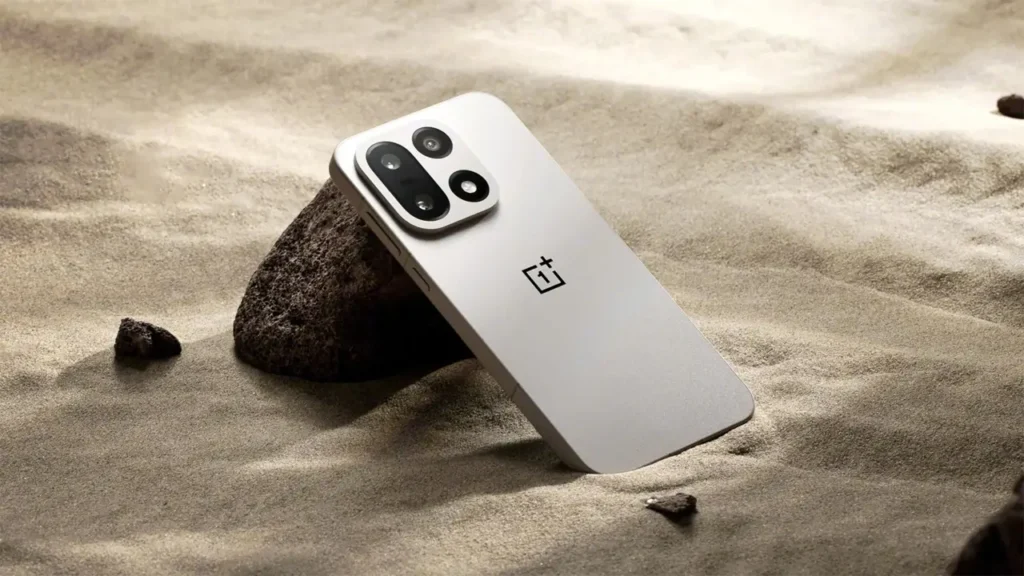
OnePlus 15 magnetic charging 50W — how it works
One of the most intriguing additions to the OnePlus 15 is the OnePlus 15 magnetic charging 50W capability. Now, let’s be clear about what this actually means: the OnePlus 15 doesn’t have built-in MagSafe-style magnets in the phone itself. Instead, OnePlus offers a magnetic charging ecosystem through compatible cases and accessories.
Here’s how it works: You can purchase the official OnePlus Magnetic Case (sold separately), which contains the alignment magnets. Once you snap this case onto your OnePlus 15, you unlock the ability to use OnePlus’s 50W AIRVOOC Magnetic Charger. The magnets ensure perfect alignment every time, eliminating the frustrating “did I place it correctly?” guessing game that comes with standard wireless charging pads.
The magnetic connection is surprisingly strong—strong enough that you can pick up the phone while it’s attached to the charger without it falling off. This opens up practical use cases like mounting the phone on a magnetic car holder while simultaneously charging wirelessly, or using it on a magnetic desk stand during video calls without worrying about cable management.
The 50W magnetic charging delivers the same speed as the standard AIRVOOC wireless charging pad, but with the added convenience of automatic alignment. OnePlus claims you can go from 0% to 50% in approximately 23 minutes using the magnetic charger, which is impressively fast for wireless technology.
It’s worth noting that third-party Qi2 magnetic chargers will work with the OnePlus 15 when using the magnetic case, but you’ll be limited to standard Qi charging speeds (typically 15W maximum) rather than the full 50W AIRVOOC speed, which requires OnePlus’s proprietary charging protocol.
OnePlus 15 AIRVOOC 50W charging speed (wireless)
Let’s talk about the OnePlus 15 AIRVOOC 50W wireless charging—both the magnetic version we just covered and the standard pad version. This is where OnePlus separates itself from competitors still offering 15W wireless charging in 2026.
The AIRVOOC 50W technology uses a multi-coil design with active cooling built into the charging pad. This allows the system to maintain high wattage throughout the charging session without thermal throttling. In practical terms, you’re looking at these charging times:
- 0-50%: Approximately 23 minutes
- 0-100%: Around 55 minutes
Compare this to standard Qi wireless charging at 15W, which typically takes 2.5-3 hours for a full charge, and the advantage becomes crystal clear.
Real-world scenarios where this shines:
Morning rush: You forgot to charge overnight, but during your 30-minute morning routine (shower, breakfast, getting dressed), you can wirelessly charge from 15% to 65%—easily enough for a full workday.
Office desk setup: Keep the AIRVOOC pad on your desk. Every time you set your phone down during work, it’s getting meaningful charge. Even short 10-15 minute sessions add significant percentage points.
Bedside charging: For those who prefer cable-free bedside tables, 50W wireless is fast enough that you don’t need to plug in the moment you get home. You can use your phone casually in the evening and still achieve a full charge during your sleep hours.
The system is also intelligent about battery longevity. OnePlus incorporates Battery Health Engine technology that optimizes charging patterns, prevents overcharging, and even learns your sleeping schedule to time the final charging phase to complete right before you typically wake up. According to OnePlus, the battery maintains 80% of its original capacity after 1,600 charge cycles—roughly four years of daily charging.
One important note: You’ll need OnePlus’s official AIRVOOC 50W charging pad or the magnetic charger to achieve these speeds. Standard Qi chargers will work with the OnePlus 15, but you’ll be limited to the industry-standard 15W maximum.

OnePlus 15 battery 7300mAh
The OnePlus 15 battery 7300mAh capacity is genuinely game-changing. To put this in perspective, most flagship phones in early 2026 are still hovering around 5,000-5,500mAh. OnePlus has managed to cram in 30-40% more battery capacity without significantly increasing the device’s size or weight, thanks to silicon-carbon battery technology.
Silicon-carbon batteries offer higher energy density than traditional lithium-ion cells, meaning more power in the same physical space. The result? The OnePlus 15’s battery occupies similar internal volume as a 5,500mAh traditional battery, but delivers 7,300mAh of actual capacity.
Real-world battery life scenarios:
Heavy user: If you’re constantly streaming video, playing games, using GPS navigation, and running multiple apps simultaneously, you’re looking at 8-10 hours of screen-on time. That translates to a full day with 20-30% remaining by bedtime.
Moderate user: For typical usage—social media scrolling, messaging, occasional photos, some video watching, and web browsing—expect 10-13 hours of screen-on time. This easily stretches into day-and-a-half territory. You can genuinely go to bed with 40% battery and not bother charging until the following evening.
Light user: If you’re someone who mostly uses their phone for calls, texts, and occasional app checking, you might actually achieve two full days on a single charge. Weekend trips without a charger? No problem.
Specific scenarios:
- Video streaming (Netflix, YouTube at medium brightness, 60Hz): Approximately 16-18 hours continuous playback
- Gaming (Genshin Impact, maximum settings, 165Hz): Around 6-7 hours
- GPS navigation (Google Maps with screen on): Approximately 11-12 hours
- Standby time: Nearly 7-8 days with minimal usage
The LTPO display technology plays a crucial role here. During static content like reading articles or viewing photos, the refresh rate drops to 1Hz, sipping power. When scrolling or gaming, it ramps up to 165Hz. This dynamic adjustment, combined with the efficient Snapdragon 8 Elite Gen 5 and OxygenOS 16’s battery optimizations, creates a remarkably efficient system.
The psychological freedom that comes with a 7,300mAh battery shouldn’t be underestimated. Battery anxiety—that nagging worry about finding a charger before your phone dies—essentially disappears. You can enable all the features you want, keep brightness high, use 165Hz refresh rate, and still comfortably make it through a full day.
OnePlus 15 165Hz display — who benefits
The OnePlus 15 165Hz display isn’t just a spec-sheet number—it’s a feature that fundamentally changes how the phone feels in daily use. But let’s be honest: not everyone will notice or care about the difference between 120Hz and 165Hz. So who actually benefits?
Mobile gamers: This is the most obvious group. Competitive mobile games like Call of Duty Mobile, PUBG Mobile, and League of Legends: Wild Rift that support high refresh rates will feel incredibly smooth at 165Hz. The difference between 120Hz and 165Hz might seem minimal on paper (45Hz difference), but in fast-paced shooters or MOBAs, those extra frames per second provide a tangible competitive advantage. You’ll track moving targets more smoothly, and your inputs will feel more responsive.
Content consumers who notice quality: If you’re someone who can tell the difference between 60fps and 120fps video, or who appreciates smooth animations, the 165Hz refresh rate makes UI transitions, scrolling through social media feeds, and even simple gestures feel remarkably fluid. Every swipe, every animation, every scroll has a buttery smoothness that’s hard to go back from once you’ve experienced it.
Productivity users: Scrolling through long documents, spreadsheets, or emails becomes noticeably more comfortable on your eyes. There’s less motion blur and judder, which reduces eye strain during extended reading sessions.
Who might not notice the difference: Casual users who primarily use their phone for messaging, basic social media, and occasional photos probably won’t perceive much difference between 120Hz and 165Hz. If you’re coming from a 60Hz display, any high refresh rate will blow you away. But the jump from 120Hz to 165Hz is more subtle.
Energy consumption considerations: Here’s where LTPO technology becomes crucial. The OnePlus 15’s display doesn’t constantly run at 165Hz. It dynamically adjusts based on content:
- Static images/text: 1Hz
- Video playback (24fps content): 24Hz
- Video playback (30fps content): 30Hz
- Normal scrolling: 90-120Hz
- Gaming/intensive UI: 165Hz
You can also manually limit the maximum refresh rate to 60Hz or 120Hz in settings if you want to prioritize battery life over smoothness.
The display also features LTPO 3.0 technology, which is more power-efficient than previous generations. Combined with the massive 7,300mAh battery, you can comfortably leave the display at its maximum 165Hz setting without significant battery anxiety.
Color accuracy is another highlight. The display covers 100% of the DCI-P3 color gamut and comes factory-calibrated for Delta E < 1, making it suitable for content creators who need accurate color representation. There are multiple color profiles including Vivid, Natural, Cinematic, and Pro mode for manual adjustment.
OnePlus 15 OxygenOS 16 — UX
OnePlus 15 OxygenOS 16, based on Android 15, represents OnePlus’s continued evolution toward a more refined, feature-rich software experience while maintaining the “burdenless” philosophy that made OxygenOS popular in the first place.
What’s new in OxygenOS 16:
Aquamorphic Design 3.0: The visual language continues to evolve with more fluid animations, improved depth effects, and refined iconography. The UI feels cohesive and modern without being overwhelming.
Trinity Engine 2.0: This is OnePlus’s optimization framework that manages CPU, RAM, and storage resources intelligently. In OxygenOS 16, it’s been enhanced to better predict which apps you’ll open next, preloading them into RAM for instant launches. The ROM Vitalization feature compresses infrequently used apps to free up storage without uninstalling them.
AI features powered by Snapdragon 8 Elite Gen 5:
- AI Eraser Pro: Remove unwanted objects or people from photos with impressive accuracy. Unlike cloud-based solutions, this processes entirely on-device for instant results and privacy.
- AI Smart Reply: Context-aware suggestions for messages that actually sound human rather than robotic.
- AI Voice Transcription: Real-time transcription of calls and voice memos with speaker identification.
- AI Toolbox: A floating sidebar accessible system-wide that offers quick access to AI features like translation, summarization, and text extraction from images.
Privacy Dashboard 2.0: Enhanced transparency into which apps are accessing your location, camera, microphone, and other sensitive permissions. You can now see a timeline of permission usage and set granular controls.
Smart Sidebar improvements: The sidebar can now be customized with your most-used functions—everything from favorite contacts to clipboard history to quick app shortcuts. It’s become genuinely useful rather than gimmicky.
Gaming enhancements:
- HyperBoost 3.0: Improved frame rate stability and touch response during gaming.
- Smart 5G: Intelligently switches between 4G and 5G based on usage to preserve battery.
- Dual-Speaker Enhancement: Software optimization for the stereo speakers improves spatial audio during gaming.
Charging optimizations: The Battery Health Engine learns your charging patterns and optimizes the charging curve to minimize battery degradation. It can also limit charge to 80% automatically to extend battery lifespan for users who don’t need 100% daily.
Update commitment: OnePlus promises four years of major Android updates and five years of security patches for the OnePlus 15. This means you’ll get OxygenOS updates through 2030, making this a solid long-term investment.
Bloatware situation: OnePlus has reduced pre-installed apps compared to previous generations. Most remaining pre-installed apps can be uninstalled if you don’t want them. The experience feels cleaner than many Android skins, though not quite as minimal as stock Android.
Customization: OxygenOS 16 offers extensive theming options, including custom icon packs, font adjustments, accent colors, and always-on display customizations. Material You theming from Android 15 is fully implemented, automatically generating color schemes from your wallpaper.
One standout feature is the Parallel Processing capability, which allows certain apps to run truly simultaneously in split-screen without performance degradation—great for watching videos while texting or browsing while referencing documents.
OnePlus 15 vs Samsung Galaxy S26 — direct flagship clash
The OnePlus 15 vs Samsung Galaxy S26 comparison is inevitable—these are two of the most anticipated Android flagships of early 2026. While the Galaxy S26 is expected to launch in February 2026, based on leaked specifications and Samsung’s established patterns, here’s how they stack up:
| Feature | OnePlus 15 Global | Samsung Galaxy S26 |
|---|---|---|
| Processor | Snapdragon 8 Elite Gen 5 (4nm) | Snapdragon 8 Elite Gen 5 (US/China) / Exynos 2500 (Global) |
| Display | 6.82″ LTPO AMOLED, 165Hz, 2K+ | 6.8″ LTPO AMOLED, 120Hz, QHD+ |
| Battery | 7,300mAh silicon-carbon | 5,500mAh traditional Li-ion |
| Charging | 100W wired, 50W wireless, 50W magnetic | 45W wired, 25W wireless |
| Camera (Main) | 50MP Sony LYT-808 | 50MP Samsung GN5 (rumored) |
| Water Resistance | IP69 | IP68 |
| Software | OxygenOS 16 (4 years updates) | One UI 8 (7 years updates) |
| Starting Price (Est.) | $799 USD (12GB/256GB) | $899 USD (12GB/256GB, rumored) |
OnePlus 15 advantages:
- Significantly larger battery with faster charging across the board
- Higher refresh rate display (165Hz vs 120Hz)
- Better value proposition (estimated $100 cheaper at launch)
- Magnetic wireless charging ecosystem
- Superior water resistance (IP69 vs IP68)
Samsung Galaxy S26 advantages (rumored/expected):
- Longer software support (7 years vs 4 years)
- More established ecosystem with Galaxy watches, buds, tablets
- Potentially better camera processing (Samsung’s computational photography is traditionally strong)
- S Pen support (if you opt for the Ultra model)
- Dex desktop mode for productivity users
Who should choose the OnePlus 15: Heavy users who prioritize battery life, charging speed, and gaming performance. If you want the fastest-charging phone with the longest battery life and don’t mind slightly shorter software support, the OnePlus 15 delivers exceptional value.
Who should choose the Samsung Galaxy S26: Users invested in Samsung’s ecosystem, those who want maximum software longevity (7 years of updates is hard to beat), and photographers who prefer Samsung’s established camera processing. Also, if you value features like Dex or potential S Pen support (on Ultra models), Samsung is the clear choice.
In terms of raw performance, both phones use the same Snapdragon 8 Elite Gen 5 in US markets, so they’ll perform similarly in day-to-day tasks and gaming. The global Galaxy S26 variants with Exynos 2500 may see slightly lower performance and efficiency, which historically has been a point of contention for Samsung’s international buyers.
OnePlus 15 price global + verdict + FAQ
The OnePlus 15 price global positioning is aggressive but fair for what you’re getting. Here’s the official pricing for major markets:
United States:
- 12GB RAM + 256GB storage: $799
- 16GB RAM + 512GB storage: $899
United Kingdom:
- 12GB + 256GB: £749
- 16GB + 512GB: £849
European Union:
- 12GB + 256GB: €849
- 16GB + 512GB: €949
India:
- 12GB + 256GB: ₹59,999
- 16GB + 512GB: ₹64,999
The OnePlus 15 undercuts the Samsung Galaxy S26 by approximately $100-150 depending on the market, while matching or exceeding it in several key specifications like battery capacity, charging speed, and display refresh rate. When you factor in the magnetic charging ecosystem and the silicon-carbon battery technology, the value proposition becomes even stronger.
Who is the OnePlus 15 Global Edition for?
This phone is ideal if you:
- Need maximum battery life and can’t always be near a charger
- Value fast charging (both wired and wireless) for quick top-ups
- Are a mobile gamer who wants smooth, high-refresh-rate gameplay
- Appreciate practical innovations like magnetic wireless charging
- Want flagship performance without paying ultra-premium prices
Who might want to look elsewhere?
Consider alternatives if you:
- Need the longest possible software support (Samsung’s 7 years beats OnePlus’s 4)
- Are heavily invested in another ecosystem (Apple, Samsung, Google)
- Prioritize camera quality above all else (while OnePlus cameras are good, Pixel and iPhone still lead in computational photography)
- Want the most compact flagship possible (the 6.82″ display and 215g weight make this a large device)
Final Verdict:
The OnePlus 15 Global Edition is a compelling flagship that prioritizes practical, everyday usability. The combination of a 7,300mAh battery, 50W magnetic wireless charging, 165Hz display, and Snapdragon 8 Elite Gen 5 performance creates a device that simply works—and keeps working—without the constant compromises that plague many flagships.
OnePlus has clearly identified the pain points of modern smartphone usage: battery anxiety, slow wireless charging, and thermal management during gaming. The OnePlus 15 addresses all three comprehensively. While it may not have the longest software support or the most advanced computational photography, it delivers where it counts for most users: reliability, performance, and longevity throughout the day.
At $799 starting price, the OnePlus 15 Global Edition represents excellent value in the premium smartphone segment. It’s not trying to be everything to everyone—instead, it’s exceptionally good at being a dependable daily driver that won’t let you down when you need it most.
Frequently Asked Questions
Q: Does the OnePlus 15 Global Edition support 5G mmWave or just sub-6GHz 5G?
A: The OnePlus 15 Global Edition supports both sub-6GHz 5G and mmWave 5G in markets where mmWave is deployed (primarily US models). The phone is compatible with all major 5G bands globally, including n1, n3, n5, n7, n8, n20, n28, n38, n40, n41, n66, n77, n78, and n79. Always verify with your carrier to ensure compatibility with their specific 5G network configuration.
Q: Can I use any Qi2 magnetic charger with the OnePlus 15, or do I need OnePlus-branded accessories?
A: You can use any Qi2 magnetic charger with the OnePlus 15 when using a compatible magnetic case, but you’ll be limited to standard Qi charging speeds (typically 15W maximum). To achieve the full 50W AIRVOOC magnetic charging speed, you’ll need OnePlus’s official AIRVOOC 50W Magnetic Charger. Third-party magnetic chargers will work for basic wireless charging, but OnePlus’s proprietary charging protocol is required for the fastest speeds.
Q: How does the 7,300mAh battery affect charging time compared to smaller batteries?
A: Despite the larger capacity, the OnePlus 15 actually charges relatively quickly thanks to 100W SuperVOOC wired charging. You can expect 0-50% in approximately 14 minutes and 0-100% in around 27 minutes with the included 100W charger. This is comparable to or even faster than many phones with smaller batteries and slower charging technologies. The wireless charging (50W AIRVOOC) takes longer—about 55 minutes for a full charge—but is still significantly faster than most competitors’ wireless charging solutions.
Q: Will the OnePlus 15 Global Edition work with my carrier’s network in North America?
A: Yes, the OnePlus 15 Global Edition sold in North America supports all major carriers including Verizon, AT&T, T-Mobile, and their MVNOs. The device includes support for Verizon’s C-Band 5G, T-Mobile’s n41 band, and AT&T’s 5G network bands. It’s worth noting that you should purchase from an authorized retailer to ensure you’re getting the correct regional variant with full carrier compatibility and warranty support.
Looking for the next big thing beyond smartphones? If you’re into Chinese tech on wheels — from fresh EV launches to smart car features and bold design trends — you’ll want to bookmark this. We’re expanding the radar from pocket gadgets to the auto world. Explore the latest updates here: https://autochina.blog/
