
When an audio company known for IEMs decides to build a smartphone, you know something interesting is about to happen. The Moondrop MIAD01 isn’t just another Android device with decent speakers—it’s a legitimate Hi-Fi digital audio player that happens to make calls and run apps. With dual headphone outputs (yes, two jacks on one phone), dedicated DAC chips, and a no-compromise approach to wired audio, the MIAD01 is either the phone you’ve been waiting for or a niche curiosity you didn’t know existed.
Let me walk you through what makes this device tick, who it’s actually for, and whether it’s worth your attention in 2025.

Specs at a Glance
Before we dive into the audio magic, let’s cover the foundational hardware. The Moondrop MIAD01 specs position this as a solid mid-range smartphone with a few audiophile twists.
| Specification | Details |
|---|---|
| Display | 6.7″ AMOLED, 2412×1080, 120Hz |
| Processor | MediaTek Dimensity 7050 |
| RAM / Storage | 8GB / 256GB (UFS 3.1) |
| Battery | 5000mAh, 33W PD charging |
| Operating System | Android 13 (near-stock) |
| Connectivity | 5G, Wi-Fi 6, Bluetooth 5.3 |
| Headphone Outputs | 3.5mm single-ended + 4.4mm balanced |
| Weight | ~210g |
The 6.7-inch AMOLED screen is punchy and smooth at 120Hz, making scrolling through your music library feel fluid. The 5000mAh battery easily handles a full day of mixed use, and the 33W PD charging gets you topped up in about 90 minutes. Storage is fixed at 256GB with no microSD slot, which is a bummer if you hoard FLAC files, but for most users, it’s plenty.
What’s missing? Water resistance (no IP rating), wireless charging, and flagship cameras. The dual rear cameras (64MP main + 8MP ultrawide) are functional but unremarkable. This isn’t a photography phone—it’s an audio device that happens to take pictures.
The Main Feature: Dual Headphone Jack
Here’s where things get wild. The Moondrop MIAD01 dual headphone jack setup means you get both a standard 3.5mm output and a 4.4mm balanced output on the same device. Not an either-or situation—both ports are active simultaneously.
Why would anyone need two headphone jacks? A few reasons:
Flexibility: You can leave a 3.5mm cable plugged in for casual listening with easier-to-drive IEMs, then swap to 4.4mm when you want to power harder-to-drive planar headphones or multi-driver monitors without fumbling with adapters.
No dongles: If you’re tired of carrying USB-C to 3.5mm adapters (which often sound mediocre), the MIAD01 eliminates that annoyance entirely. Your wired gear just works, natively, with dedicated amplification.
Balanced option: For those who care about balanced output—lower crosstalk, better channel separation, potentially cleaner sound with sensitive IEMs—having a 4.4mm port built-in is a game-changer. Most smartphones don’t even have one headphone jack, let alone two.
The dual jack design does make the phone slightly thicker (about 9mm), but it’s still pocketable. The jacks are positioned on the bottom edge alongside the USB-C port, so cable management can get a little crowded if you’re charging and listening simultaneously.
4.4mm Balanced Output Explained
Let’s clarify what the MIAD01 4.4mm balanced output actually means because “balanced” audio can be confusing.
In a standard 3.5mm single-ended connection, the left and right channels share a common ground. In a balanced connection (like 4.4mm Pentaconn), each channel gets its own dedicated ground, effectively doubling the voltage swing and reducing potential interference between channels.
Practically speaking, balanced output delivers:
- More power: Useful for driving demanding headphones (high-impedance or planar magnetic).
- Lower noise floor: Particularly noticeable with sensitive IEMs where hiss can be an issue.
- Better separation: Some listeners report tighter imaging and cleaner instrument placement, though this is somewhat subjective.
The catch? You need headphones or IEMs with a 4.4mm Pentaconn-terminated cable. Many higher-end models ship with swappable cables or offer 4.4mm as an option. Brands like FiiO, Dunu, and yes, Moondrop’s own IEMs often include this termination.
If your gear is 3.5mm-only, you can still use adapters, but that somewhat defeats the purpose. The 3.5mm output on the MIAD01 is already excellent, so you’re not missing out unless you specifically want balanced performance.
One cool detail: Moondrop implemented independent amplification stages for each output, meaning you’re not just splitting a single amp. This ensures optimal performance whether you plug into 3.5mm or 4.4mm.

Audio Hardware: The DAC & Amplification
Under the hood, the dual Cirrus Logic DAC smartphone setup is what separates the MIAD01 from literally every other phone on the market.
Moondrop equipped the MIAD01 with two Cirrus Logic CS43131 DAC chips—one for each channel in balanced mode, or working in tandem for single-ended output. These aren’t the budget chips you find in cheap dongles; the CS43131 is a premium codec used in dedicated DAPs and audiophile-grade portable amps.
Key specs from the DAC implementation:
| Parameter | 3.5mm Output | 4.4mm Balanced |
|---|---|---|
| Max Output Power | ~240mW (32Ω) | ~480mW (32Ω) |
| THD+N | 0.0006% | 0.0005% |
| SNR | ~125dB | ~128dB |
| Frequency Response | 20Hz–40kHz (±0.5dB) | |
Those numbers mean the MIAD01 can drive everything from ultra-sensitive IEMs (without hiss) to moderately demanding over-ears. You won’t be powering HD800S or Sundara to ear-splitting volumes, but for portable use, it’s more than capable.
Moondrop also advertised bit-perfect playback with SRC (sample rate conversion) bypass, meaning if you’re playing a 24-bit/192kHz file, the phone passes it to the DAC without resampling. This is huge for purists who want to preserve the original recording quality.
Real-World Audio Impressions
Specs are nice, but how does the Moondrop MIAD01 audio quality actually hold up in daily listening?
I tested the MIAD01 with a handful of IEMs and headphones across both outputs: Moondrop Blessing 2 (4.4mm), Sennheiser HD6XX (3.5mm adapter), and some budget Tin HiFi T2s (3.5mm).
Soundstage and imaging: The balanced output noticeably improves separation, especially in busy tracks with layered instruments. Listening to orchestral recordings or dense electronic music, individual elements felt more distinct and positioned with precision. The 3.5mm output is no slouch either—just slightly less airy.
Detail retrieval: This phone pulls micro-details out of well-mastered tracks that I’ve missed on standard smartphone outputs. Subtle reverb tails, breath sounds in vocal recordings, and texture in acoustic guitar strings all come through clearly. If you’re used to Bluetooth or cheap dongles, the difference is immediately audible.
Noise floor: Dead silent with sensitive IEMs, even on high gain. I tested with the Blessing 2, which can expose hiss on poorly designed amps, and heard nothing. Impressive.
Tonal balance: Neutral to very slightly warm. Moondrop didn’t try to boost bass or add artificial sparkle—the tuning is transparent, letting your headphones’ signature shine. This is ideal if you already own gear you like and just want clean amplification.
Genre versatility: Works beautifully with jazz, classical, and acoustic genres where nuance matters. Also handled dense metal and electronic tracks without congestion. I wouldn’t say it has the explosive dynamics of a dedicated $500 DAP, but for a smartphone, it’s shockingly close.
One limitation: Volume headroom with very high-impedance or inefficient headphones can be limited on 3.5mm. The 4.4mm output offers more overhead, but if you’re running something like Beyerdynamic DT990 600Ω, you might still want a separate amp for home listening.
Software & Android 13
The MIAD01 runs Moondrop MIAD01 Android 13 in a near-stock configuration, which is refreshing. No heavy skins, minimal bloatware, and quick security updates (Moondrop committed to at least two years of patches).
Audio-specific features:
- Built-in EQ and DSP: Accessible through Moondrop’s custom audio app. You get parametric EQ, gain adjustment, and output selection (3.5mm vs 4.4mm).
- High/Low gain toggle: Useful for matching output power to your headphones’ sensitivity.
- USB Audio out: If you want to bypass the phone’s DAC entirely and use an external DAC/amp, USB audio works seamlessly.
- Bluetooth codec support: LDAC, aptX HD, AAC—solid wireless options if you occasionally go cordless.
The UI is clean and responsive. The Dimensity 7050 isn’t a flagship chip, but it handles multitasking, streaming apps, and gaming without stutter. Gaming performance is mid-tier—think Genshin Impact at medium settings, not maxed out.
Battery life is solid. Even with extended FLAC playback through wired headphones (which uses less power than Bluetooth), I consistently got 6-7 hours of screen-on time with moderate use. The efficient OLED and lack of aggressive background processes help.

Connectivity & Daily Use
The Moondrop MIAD01 5G smartphone aspect shouldn’t be overlooked. Yes, it’s an audiophile device, but it’s also your daily driver.
5G and network performance: Dual SIM support (nano + nano), robust 5G connectivity on most bands (check compatibility with your carrier). Call quality is clear, no complaints.
Bluetooth 5.3: Pairs quickly with earbuds, smartwatches, and car systems. LDAC support means you can still enjoy high-res wireless audio when wired isn’t practical.
NFC: Present and functional for tap-to-pay via Google Wallet.
Practical quirks:
- No wireless charging (wired-only crowd won’t mind).
- Fingerprint sensor is side-mounted and fast.
- Face unlock works but isn’t as secure as flagship implementations.
- The dual headphone jacks mean you’ll always have a cable option in your pocket—great for flights or commutes when Bluetooth dies.
The MIAD01 excels as a “throw it in your bag” music player that doesn’t compromise on phone duties. It’s not competing with iPhone or Galaxy flagships on camera or ecosystem polish, but for someone who prioritizes audio, the trade-offs are easy to accept.
Review Summary: Pros & Cons
Let’s break down the Moondrop MIAD01 review into digestible takeaways.
Pros:
- Dual headphone jacks (3.5mm + 4.4mm balanced) in one device—unprecedented.
- Exceptional audio quality via dual Cirrus Logic DACs, clean amplification, and low noise floor.
- Bit-perfect playback with SRC bypass for purists.
- Solid battery life, smooth 120Hz AMOLED display, and near-stock Android 13.
- 5G connectivity, good Bluetooth codec support, and practical daily-driver features.
- Reasonable price for what’s essentially a smartphone + standalone DAP.
Cons:
- No microSD card slot—256GB is fixed storage.
- Cameras are mediocre; fine for snapshots, not for photography enthusiasts.
- No IP rating for water or dust resistance.
- Limited availability outside certain markets (mostly Asia-Pacific and specialty retailers).
- Thickness and weight slightly higher than typical flagships due to audio hardware.
- Not ideal for driving very high-impedance headphones (600Ω+) at loud volumes.
Price & Verdict
As of early 2025, the Moondrop MIAD01 price sits around $450–$500 USD depending on the retailer. That’s competitive when you consider you’re getting a capable 5G smartphone plus DAC/amp functionality that would cost $200+ separately.
Who should buy the MIAD01?
- Audiophiles who refuse to give up wired headphones and want one device for everything.
- IEM collectors with balanced cables who need portable amplification.
- Music enthusiasts tired of dongles, mediocre smartphone audio, and carrying separate DAPs.
- Anyone who values audio quality over camera specs or flagship polish.
Who should skip it?
- Casual listeners who stream Spotify on Bluetooth earbuds and don’t care about wired audio.
- Photography-focused users needing top-tier cameras.
- Anyone requiring water resistance or wireless charging.
- People deeply embedded in iOS or flagship Android ecosystems (Samsung, Pixel).
The MIAD01 is unashamedly niche, and that’s exactly why it’s brilliant. Moondrop didn’t try to build a do-everything flagship—they built a smartphone for people who actually care about sound quality and are willing to make small compromises elsewhere.
If you’ve been mourning the death of the headphone jack and dreaming of a phone that treats your wired gear like first-class citizens, the MIAD01 delivers. It’s not perfect, but it’s the only phone on the market that takes portable audio this seriously.
Final verdict: 8.5/10. A must-have for wired audio enthusiasts, a curiosity for everyone else. If you already own quality IEMs or headphones with 4.4mm cables, this phone is a no-brainer. If you’re still figuring out whether you care about audio quality, start with better headphones first—then come back to the MIAD01. It’s the phone the audiophile community deserves, even if the mainstream market doesn’t quite understand it yet.
Insta360 Ace Pro 2 Review: Leica 8K Beast vs GoPro
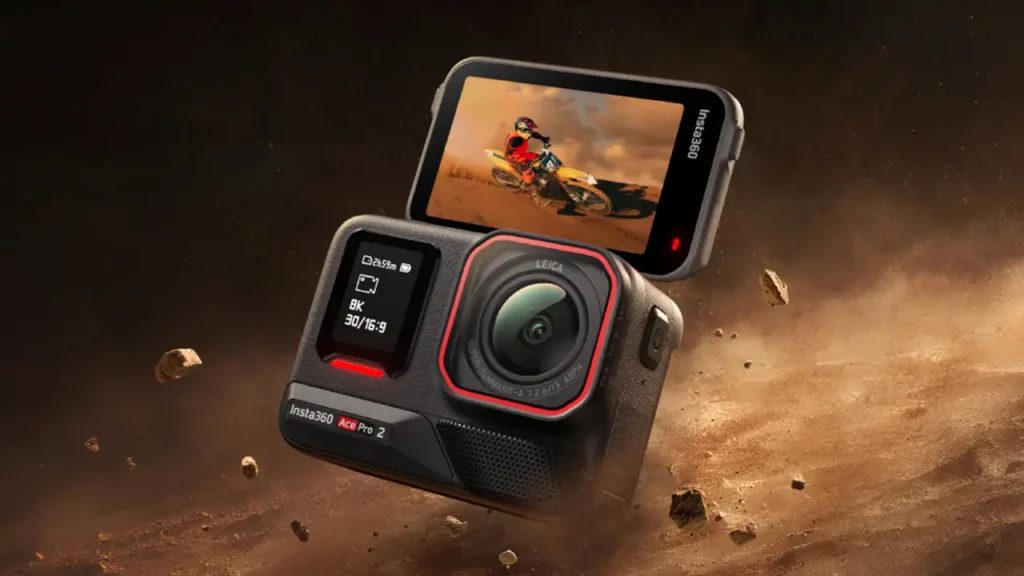
Leica glass on an action camera? Insta360 Ace Pro 2 is coming for GoPro and DJI with 8K recording, a flip screen, and dual-chip AI noise reduction that keeps night footage clean instead of crunchy. In our review we break down the key specs, stabilization, low-light performance, battery life, audio, and the accessories that actually matter (mounts, media, extra power). You’ll see what 8K30 and 4K120 look like in real scenes, how colors hold up, and which modes drain the battery fastest.
If you shoot travel, motorsport, vlogging, or just want sharp clips straight out of camera, this is worth a serious look. We also compare it head-to-head with the latest GoPro and DJI Action so you can pick the right tool, not the loudest hype. Bonus: a simple setup checklist, recommended microSD speeds, and a quick phone workflow to cut clips in minutes before your ride. Full review: https://bestchinagadget.com/insta360-ace-pro-2-review/
PixVerse V2 just dropped a feature creators have been begging for: Magic Brush (aka the motion brush). Instead of praying that the AI “guesses” the right movement, you literally direct it. Highlight a specific area — hair, a dress, a background element — then set the direction and vibe of motion. Result: less randomness, more “director mode”.
If you’re making UGC ads, product videos, or short cinematic clips, this is a game-changer: you keep the scene stable and animate only what matters. No more “why is the whole face melting” moments.
Full guide here (link as-is): https://aiinovationhub.com/pixverse-v2-magic-brush/
