
1. Introduction to Huawei Watch D2
The Huawei Watch D2 represents a significant leap forward in wearable health technology, combining the convenience of a smartwatch with serious medical-grade monitoring capabilities. Unlike traditional fitness trackers that focus primarily on steps and heart rate, the Huawei Watch D2 tackles one of healthcare’s most critical metrics: blood pressure.
This Huawei wearable health tech device isn’t just another gadget promising to revolutionize your wellness routine. It’s a thoughtfully engineered piece of equipment that brings hospital-grade blood pressure monitoring to your wrist. For anyone who’s ever struggled with bulky home blood pressure monitors or forgotten to take regular readings, the Watch D2 offers an elegant solution that fits seamlessly into daily life.
What makes the Huawei Watch D2 particularly compelling is its dual identity. During the day, it functions as a capable smartwatch with all the features you’d expect: notifications, fitness tracking, sleep monitoring, and more. When you need it, however, it transforms into a medical-grade monitoring device capable of taking accurate blood pressure readings throughout the day without requiring you to sit down with a traditional cuff.
The watch addresses a real problem in healthcare: the challenge of getting consistent, accurate blood pressure data. Many people with hypertension struggle to monitor their condition regularly, leading to gaps in health data that can impact treatment decisions. By making blood pressure monitoring as simple as tapping your wrist, Huawei has created something genuinely useful for both patients and healthcare providers.
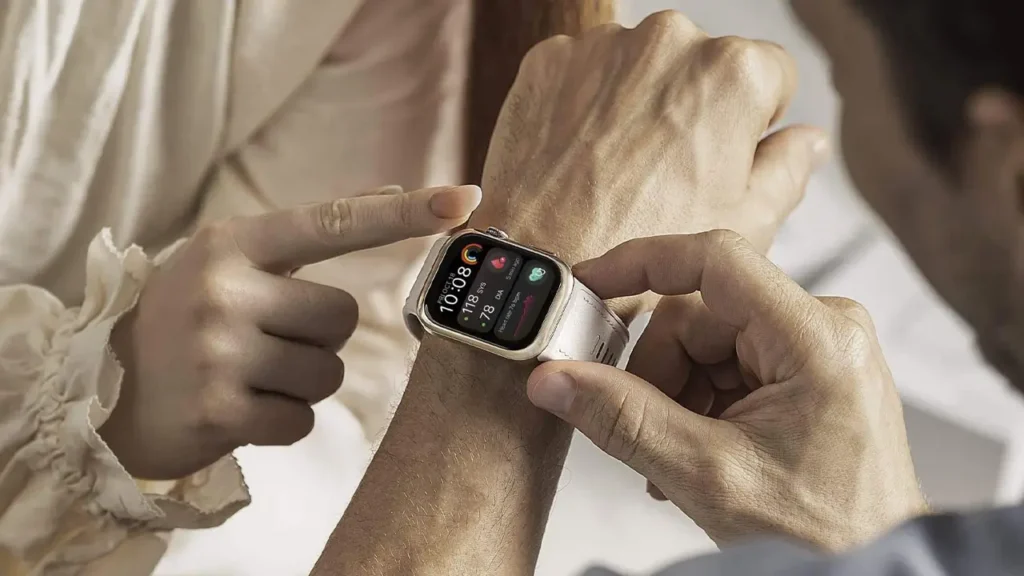
2. Why Huawei Watch D2 Is Unique on the Market
When you look at the smartwatch landscape, you’ll find plenty of devices claiming to monitor various health metrics. But the Huawei Watch D2 stands apart because of one key feature: its integrated inflatable cuff smartwatch design.
Most smartwatches that claim to measure blood pressure use optical sensors that estimate readings based on pulse wave analysis. While these can provide general trends, they’re not considered medically accurate. The Watch D2 takes a completely different approach by incorporating an actual inflatable cuff into the watch strap—the same technology used in traditional blood pressure monitors.
This isn’t just an incremental improvement; it’s a fundamental difference in methodology. The inflatable cuff applies pressure around your wrist, gradually releasing it while sensors measure the precise moment blood flow resumes. This oscillometric method is the gold standard for blood pressure measurement, and having it on your wrist represents genuine innovation.
The uniqueness extends beyond just the technology. Huawei has managed to package this medical-grade capability into a device that doesn’t look like a medical device. The Watch D2 maintains a sleek, modern aesthetic that you’d be happy to wear to a business meeting or social gathering. This is crucial because the best health monitor is the one you’ll actually use consistently.
Another distinguishing factor is Huawei’s commitment to certification and accuracy. The company has pursued medical device certifications in multiple markets, demonstrating their confidence in the technology’s reliability. This isn’t a wellness gadget making vague health claims—it’s a device designed to meet stringent medical standards.
3. Blood Pressure Measurement Technology Explained
Understanding how the Huawei Watch D2 measures blood pressure helps appreciate why it’s considered an accurate blood pressure watch. The technology combines several sophisticated components working in harmony.
At its core, the Watch D2 uses oscillometric measurement, the same principle employed by arm-based blood pressure monitors you’d find in a doctor’s office. When you initiate a measurement, the built-in mini-pump inflates a butterfly-shaped airbag within the watch strap. This airbag wraps around your wrist, applying controlled pressure.
As the cuff inflates, it temporarily restricts blood flow through your radial artery—the main artery running along the thumb side of your wrist. The watch then slowly releases this pressure while highly sensitive sensors detect the oscillations (vibrations) in the artery wall as blood begins flowing again. These oscillations follow a specific pattern that reveals both systolic (when your heart beats) and diastolic (when your heart rests between beats) pressure.
What makes the Watch D2 particularly sophisticated is its use of multiple sensors and algorithms to ensure accuracy. The device doesn’t just measure pressure; it also monitors your heart rate, movement, and even arm position. If you’re moving around or your arm isn’t positioned correctly, the watch will prompt you to adjust before taking a reading.
The blood pressure smartwatch also employs adaptive measurement technology. It learns from your individual readings over time, adjusting its algorithms to account for your specific physiology. This personalization helps improve accuracy, especially as the device gathers more data about your typical blood pressure patterns.
Temperature compensation is another critical feature. Blood pressure can be affected by ambient temperature, and the Watch D2 accounts for this in its calculations. Similarly, the device considers your recent activity level, knowing that blood pressure naturally varies throughout the day based on what you’ve been doing.
4. Inflatable Cuff Smartwatch: How It Works
The engineering behind the inflatable cuff smartwatch design deserves closer examination because it represents one of the most impressive miniaturization achievements in wearable technology.
Traditional blood pressure monitors use a large cuff that wraps around your upper arm, connected to a bulky pump and display unit. Shrinking this system down to wrist size while maintaining accuracy required solving several significant challenges.
First, there’s the airbag itself. Huawei developed a butterfly-shaped airbag that fits within the watch strap and distributes pressure evenly around your wrist. Unlike a simple tube, this design ensures consistent contact with your skin and proper compression of the radial artery. The airbag is made from a flexible, medical-grade material that can withstand thousands of inflation cycles without degrading.
The micro-pump that inflates this airbag is remarkably tiny yet powerful enough to reach the pressures needed for accurate measurement—typically up to 180 mmHg or higher. This pump operates quietly and inflates the cuff in just seconds, making the measurement process quick and unobtrusive.
Pressure sensors integrated into the watch track the inflation precisely, measuring changes in pressure with high resolution. These sensors need to be incredibly sensitive to detect the subtle oscillations in your artery that indicate blood pressure levels. The Huawei Watch D2 blood pressure measurement system uses piezoelectric sensors capable of detecting pressure changes as small as 1 mmHg.
The valve system that controls deflation is equally important. It releases pressure gradually and smoothly, allowing the sensors to capture the oscillation pattern accurately. If the deflation happens too quickly, the measurement won’t be reliable; too slowly, and the reading takes uncomfortably long.
All of this happens while the watch also monitors your position and movement. Accelerometers detect if your wrist is at heart level (crucial for accurate readings) and whether you’re holding still. If conditions aren’t ideal, the watch provides real-time feedback, asking you to raise your wrist or stop moving.
| Component | Function | Technology Used |
|---|---|---|
| Butterfly Airbag | Distributes pressure evenly around wrist | Medical-grade flexible material |
| Micro-Pump | Inflates cuff to required pressure | Miniaturized oscillometric pump |
| Pressure Sensors | Detect arterial oscillations | Piezoelectric sensors (1 mmHg precision) |
| Valve System | Controls gradual pressure release | Precision deflation valve |
| Position Sensors | Ensure wrist is at heart level | 6-axis accelerometer |

5. Medical Grade Smartwatch Accuracy
When we call the Huawei Watch D2 a medical grade smartwatch, that designation carries significant weight. Medical-grade accuracy isn’t just about being “close enough”—it means meeting rigorous standards set by regulatory bodies worldwide.
The Watch D2 has received medical device certifications, including CE Medical Device certification in Europe and NMPA certification in China. These certifications require extensive clinical testing, comparing the device’s readings against gold-standard mercury sphygmomanometers or calibrated aneroid devices across diverse patient populations.
Clinical studies conducted on the Watch D2 have demonstrated impressive accuracy. In controlled testing, the device showed mean differences of less than 5 mmHg for both systolic and diastolic readings when compared to professional-grade equipment. This level of accuracy meets the standards set by organizations like the European Society of Hypertension and the Association for the Advancement of Medical Instrumentation.
What makes these results particularly noteworthy is the consistency across different user groups. The device was tested on people with various wrist sizes, ages, and blood pressure ranges—from those with normal readings to individuals with stage 2 hypertension. The accuracy remained stable across these diverse conditions, which is essential for a consumer device that will be used by people with varying health profiles.
The watch also addresses a common challenge with wrist-based blood pressure measurements: position sensitivity. Blood pressure readings can vary significantly based on whether your wrist is above, below, or level with your heart. The Watch D2 includes sensors that detect wrist position and guide users to hold their arm correctly during measurement, helping ensure consistent accuracy.
Another aspect of medical-grade performance is reliability over time. The Watch D2 is designed for long-term use with regular calibration checks. Huawei recommends periodic verification against a standard blood pressure monitor and provides guidance for recalibration if needed. This attention to ongoing accuracy is crucial for a device people may use for years to monitor chronic conditions.
6. Smart Watch with Blood Pressure Monitor for Daily Use
One of the most significant advantages of the Huawei Watch D2 as a smart watch with blood pressure monitor is how it integrates health monitoring into everyday life without disrupting your routine.
Taking your blood pressure with the Watch D2 is remarkably simple. You can initiate a measurement directly from the watch face with just a few taps, or you can schedule automatic measurements at specific times throughout the day. The entire process takes about 40 seconds from start to finish—quick enough that you can easily fit multiple readings into your daily schedule.
This ease of use translates into better health outcomes. Medical research consistently shows that people who monitor their blood pressure regularly have better control over hypertension than those who only check occasionally at doctor’s visits. The Watch D2 removes the friction that often prevents regular monitoring: there’s no need to find your blood pressure cuff, sit down in a quiet spot, or remember which arm you used last time.
The watch stores all your measurements locally and syncs them to the Huawei Health app on your smartphone. This creates a comprehensive history of your blood pressure trends over days, weeks, and months. You can view this data in various formats—graphs showing trends over time, averages for different periods, or detailed logs of individual readings with timestamps.
For people taking blood pressure medication, this historical data is invaluable. You can see exactly how your readings change throughout the day, identify patterns related to meals or stress, and share comprehensive reports with your healthcare provider. Many doctors appreciate having this detailed data rather than just the snapshot reading taken during an office visit.
The Watch D2 also supports multiple user profiles, making it suitable for households where several family members want to monitor their blood pressure. Each person can have their own profile with separate data storage and personalized measurement settings.
Beyond blood pressure, the watch functions as a full-featured smartwatch. It tracks your daily steps, monitors heart rate continuously, analyzes sleep patterns, and supports various workout modes. You receive notifications from your smartphone, control music playback, and use various apps. This versatility means you’re not choosing between health monitoring and smartwatch features—you get both in one device.
| Feature | Specification | Daily Use Benefit |
|---|---|---|
| Measurement Time | ~40 seconds per reading | Quick enough for multiple daily checks |
| Scheduled Measurements | Automatic reminders & readings | Never forget to check BP |
| Data Storage | Unlimited cloud sync via app | Complete health history available |
| Multi-User Support | Multiple profiles on one device | Whole family can monitor health |
| Battery Life | Up to 6 days typical use | Less charging, more monitoring |
| Additional Tracking | Heart rate, sleep, steps, workouts | Comprehensive health picture |
7. Health Tracking and Huawei Ecosystem Integration
The Huawei Watch D2 doesn’t exist in isolation—it’s part of the broader Huawei health monitoring watch ecosystem that brings together hardware, software, and services to create a comprehensive health management platform.
At the heart of this ecosystem is the Huawei Health app, which serves as the central hub for all your health data. When paired with the Watch D2, the app provides detailed insights into your cardiovascular health that go far beyond simple blood pressure numbers. The app analyzes your data to identify trends, provides personalized health tips, and can even alert you to concerning patterns that warrant medical attention.
One particularly useful feature is the Ambulatory Blood Pressure Monitoring mode. This medical-grade feature allows you to program the watch to take blood pressure readings automatically throughout a 24-hour period, mimicking the kind of comprehensive monitoring typically only available through hospital equipment. This data helps identify patterns like morning surges, nocturnal dipping, and how your blood pressure responds to daily activities.
The integration extends to other health metrics as well. The Watch D2 monitors your resting heart rate, heart rate variability, blood oxygen levels, skin temperature, and sleep quality. When viewed together with blood pressure data, these metrics provide a holistic picture of your cardiovascular health. For instance, the app might notice that your blood pressure tends to spike on nights when your sleep quality is poor, helping you identify connections between different aspects of your health.
For users already invested in the Huawei ecosystem, the Watch D2 integrates seamlessly with other devices. If you have Huawei smart scales, your weight and body composition data flows into the same health app, allowing you to track how weight changes affect blood pressure. Huawei earbuds can monitor heart rate during workouts, complementing the watch’s fitness tracking capabilities.
The ecosystem approach also enables smarter health coaching. Based on your complete health profile—blood pressure, activity levels, sleep patterns, and more—the Huawei Health app can provide personalized recommendations. It might suggest the best times for you to exercise based on your blood pressure patterns, or remind you to take movement breaks if you’ve been sedentary during periods when your blood pressure tends to rise.
Data sharing capabilities make it easy to involve healthcare providers in your monitoring. The Huawei Health app can generate detailed PDF reports summarizing your blood pressure trends, complete with graphs and statistics. These reports are formatted in a way that medical professionals can easily interpret, making your doctor visits more productive.
Privacy and data security are important considerations for health data. Huawei encrypts all health information both during transmission and at rest. You maintain control over who can access your data, and the system complies with relevant health data protection regulations including GDPR in Europe.

8. Smartwatch for Hypertension and Preventive Care
The Huawei Watch D2 shines particularly bright as a smartwatch for hypertension management, addressing one of the most common chronic health conditions affecting billions of people worldwide.
Hypertension is often called the “silent killer” because it typically has no symptoms until it causes serious complications like heart attack or stroke. Many people with high blood pressure don’t take it seriously until something goes wrong. The Watch D2 helps change this dynamic by making blood pressure monitoring effortless and constant, turning abstract numbers into a daily reality.
For people already diagnosed with hypertension, the watch serves as an essential management tool. It helps you understand how your blood pressure responds to medication, allowing you and your doctor to fine-tune treatment. You can take readings before and after taking medication to see its effects, or check your pressure at times when you typically experience symptoms.
The watch also helps identify white coat hypertension—the phenomenon where blood pressure spikes in medical settings due to anxiety. By providing accurate home measurements in comfortable, familiar environments, the Watch D2 gives a truer picture of your typical blood pressure levels. Conversely, it can also identify masked hypertension, where readings appear normal at the doctor’s office but are elevated during daily life.
Preventive care is another crucial application. Even if you don’t have diagnosed hypertension, regular blood pressure monitoring can catch problems early. The Watch D2 makes it practical to check your blood pressure regularly starting in middle age, when hypertension risk begins to increase. Early detection means earlier intervention, often through lifestyle changes rather than medication.
The watch includes intelligent alerts for concerning readings. If your blood pressure exceeds preset thresholds—either values you set yourself or medically recommended limits—the watch will notify you. These alerts can prompt you to recheck your reading, contact your healthcare provider, or take immediate action if needed.
Lifestyle modification is central to hypertension management, and the Watch D2 supports this through its comprehensive activity and stress monitoring. You can see how exercise affects your blood pressure over time, providing motivation to maintain an active lifestyle. Stress management features, including guided breathing exercises, can help you lower blood pressure in moments when readings are elevated.
The watch’s sleep tracking capabilities are particularly relevant for blood pressure management. Poor sleep quality is strongly linked to hypertension, and the Watch D2 can help you identify sleep issues that might be contributing to elevated readings. If the data shows a pattern of poor sleep and high blood pressure, it’s valuable information to discuss with your doctor.
For individuals at risk of hypertension—those with family history, obesity, or other risk factors—the Watch D2 serves as an early warning system. Regular monitoring can detect the gradual creep upward in blood pressure that often precedes a formal hypertension diagnosis, providing an opportunity for preventive lifestyle changes.
| Hypertension Use Case | How Watch D2 Helps | Key Feature |
|---|---|---|
| Medication Monitoring | Track effectiveness of BP meds | Before/after medication readings |
| White Coat Hypertension | True readings in comfortable settings | 24-hour monitoring capability |
| Early Detection | Catch rising BP before diagnosis | Regular automated measurements |
| Crisis Prevention | Alert to dangerously high readings | Customizable threshold alerts |
| Lifestyle Impact | See effects of diet, exercise, stress | Correlation with activity & sleep data |
| Doctor Communication | Share comprehensive trend reports | PDF export to Huawei Health app |
9. Design, Comfort, and Wearability
Despite packing sophisticated medical technology, the Huawei Watch D2 maintains the design sensibility of a premium smartwatch rather than a medical device. This is crucial because a health monitor you’re embarrassed to wear won’t get worn consistently.
The watch case features a sleek, modern aesthetic with a square-rounded shape that’s become popular in contemporary smartwatch design. The display is a crisp AMOLED screen with excellent visibility both indoors and in bright sunlight. At 1.82 inches, it’s large enough to display health data clearly without overwhelming smaller wrists.
The most impressive design achievement is how Huawei integrated the inflatable cuff without creating a bulky, uncomfortable strap. The butterfly-shaped airbag is barely noticeable when deflated. You can wear the watch all day, and most of the time, you won’t feel any difference compared to a standard smartwatch strap. Only during the brief measurement period does the cuff inflate, and even then, the sensation is similar to what you’d experience with a traditional blood pressure monitor—slightly tight but not painful.
The strap itself is made from skin-friendly materials that resist sweat and moisture. This is important because unlike a watch you only wear occasionally, a health monitoring device needs to be worn consistently, including during workouts and hot weather. The strap is also designed with ventilation channels to improve airflow and reduce skin irritation during extended wear.
Weight is another consideration for all-day comfort. While the Watch D2 is slightly heavier than a basic fitness tracker due to its additional components, Huawei has kept the weight reasonable at around 40 grams with the strap. This is comparable to many traditional smartwatches and light enough that most people adapt quickly to wearing it.
Build quality reflects the device’s medical-grade aspirations. The watch features water resistance rated at 5 ATM, meaning you can wear it while washing hands, in the shower, or even swimming (though blood pressure measurements should be taken with dry skin). The materials feel premium, with attention to details like smooth edges and secure clasps that inspire confidence in long-term durability.
The watch comes in different color options to suit various style preferences, from professional-looking dark tones to more casual colors. This customization extends to watch faces, with numerous digital and analog options available through the Huawei Health app. Some watch faces even integrate blood pressure data directly, letting you glance at your latest reading alongside the time.
For people who need to dress formally for work, the Watch D2 succeeds in looking appropriate for business settings. It doesn’t scream “medical device” the way some health-focused wearables do. At the same time, it’s rugged enough for casual wear, workouts, and outdoor activities.
Comfort during sleep is particularly important since the watch’s sleep tracking features provide valuable health insights. The slim profile and smooth edges mean the watch doesn’t dig into your wrist when sleeping on your side. Many users report being able to wear it overnight without discomfort after a brief adjustment period.

10. Final Verdict: Who Should Choose Huawei Watch D2
After examining all aspects of the Huawei Watch D2, the question becomes: who is this blood pressure smartwatch really for?
The most obvious audience is anyone already monitoring their blood pressure regularly. If you have diagnosed hypertension and currently use a traditional blood pressure monitor, the Watch D2 offers dramatic improvements in convenience and consistency. Instead of remembering to pull out your blood pressure cuff and sit down for a reading, you simply tap your wrist. This convenience translates directly into better health outcomes through more frequent, consistent monitoring.
People who have been told by their doctor to monitor their blood pressure but struggle with compliance will find the Watch D2 transformative. The device removes nearly all the friction that prevents regular monitoring. There’s no equipment to set up, no quiet space required, no disruption to your day. This makes it far more likely that you’ll actually follow through on your doctor’s recommendations.
Individuals with a family history of cardiovascular disease should seriously consider the Watch D2 as a preventive tool. Hypertension often runs in families, and early detection is key to prevention. Having easy access to blood pressure monitoring means you can catch concerning trends early, long before they develop into serious health problems.
Older adults juggling multiple health conditions will appreciate having comprehensive health data in one place. The Watch D2’s integration with other health metrics provides a complete picture that helps both you and your healthcare providers make better decisions. The watch can also serve as a safety tool, with alerts for concerning readings and the ability to quickly share health data with family members or caregivers.
Health-conscious individuals who want to understand how their lifestyle affects their cardiovascular health will find the Watch D2 enlightening. You can see directly how that morning coffee, afternoon workout, or stressful meeting affects your blood pressure. This real-time feedback can be powerfully motivating for maintaining healthy habits.
The watch may be less necessary for young, healthy individuals with no cardiovascular risk factors. If you’re in your twenties with normal blood pressure, no family history of heart disease, and excellent fitness levels, the Watch D2’s primary features might be overkill for your needs. A more basic fitness tracker would likely serve you just as well while costing considerably less.
Budget-conscious shoppers need to weigh the Watch D2’s premium price against its capabilities. This isn’t an inexpensive device, and you’re paying for genuine medical-grade monitoring technology. If you need that technology, the price is justified. If you’re mainly interested in basic fitness tracking with occasional blood pressure checks, there may be more economical options available.
One consideration is ecosystem compatibility. The Watch D2 works best with Android devices, particularly Huawei phones where integration is deepest. iOS users can still use the watch, but some features may be limited. If you’re deeply invested in another smartwatch ecosystem like Apple Watch, switching to the Watch D2 means giving up some of that integration.
Battery life expectations matter too. While the Watch D2 offers respectable battery life for a smartwatch with these capabilities—typically 5-6 days with moderate blood pressure monitoring—it can’t match basic fitness trackers that last weeks between charges. If you find charging devices frustrating, this is worth considering.
Ultimately, the Huawei Watch D2 represents a significant achievement in wearable health technology. It successfully delivers medical-grade blood pressure monitoring in a package that’s actually practical for daily use. For the right person—someone who needs or wants regular blood pressure monitoring and values convenience and comprehensive health tracking—it’s an excellent investment that could genuinely improve health outcomes.
The watch bridges the gap between consumer electronics and medical devices in a way few products have achieved. It respects the serious medical nature of blood pressure monitoring while making the process accessible and unintimidating. That combination of medical reliability and user-friendly design is what makes the Huawei Watch D2 stand out in an increasingly crowded wearable technology market.
If blood pressure monitoring matters to you, whether for managing existing hypertension, preventing future problems, or simply understanding your health better, the Huawei Watch D2 deserves serious consideration. It transforms a medical task into a seamless part of daily life, and that transformation could make all the difference in maintaining cardiovascular health over the long term.
Looking for an affordable hybrid SUV that’s making waves in China? The Wuling Starlight S PHEV combines modern design, efficient plug-in hybrid technology, and impressive range at a competitive price point. Explore the full specifications, features, and pricing details in our complete review: https://autochina.blog/wuling-starlight-s-phev-review-price-specs/
