
The smartphone camera wars have entered a new era. In 2026, we’re witnessing something remarkable: phones that genuinely rival dedicated cameras, not through marketing hype, but through real optical engineering. The best camera phone 2026 isn’t just about megapixel counts anymore—it’s about sensor size, telephoto reach, and computational photography that actually enhances rather than replaces good optics.
If you’ve been following smartphone photography over the past few years, you’ve probably noticed the shift. While battery life and charging speeds dominated headlines in 2023-2024, 2025 saw manufacturers pivot hard toward imaging. Now, in early 2026, we’re seeing the fruits of that investment: phones with 1-inch sensors, periscope telephoto systems reaching 10x optical zoom, and partnerships with legendary camera brands like Zeiss and Hasselblad that go beyond mere logo placement.
This guide cuts through the noise. Whether you’re a content creator tired of carrying a mirrorless camera, a travel photographer looking to downsize, or simply someone who wants the absolute best photos from a device that fits in your pocket, you’re in the right place. We’ll explore what makes a professional photography smartphone in 2026, compare the flagship contenders, and help you decide which camera phone deserves your investment.
The bottom line? The gap between smartphone and dedicated camera has never been smaller. Let’s find out which phone closed it the most.
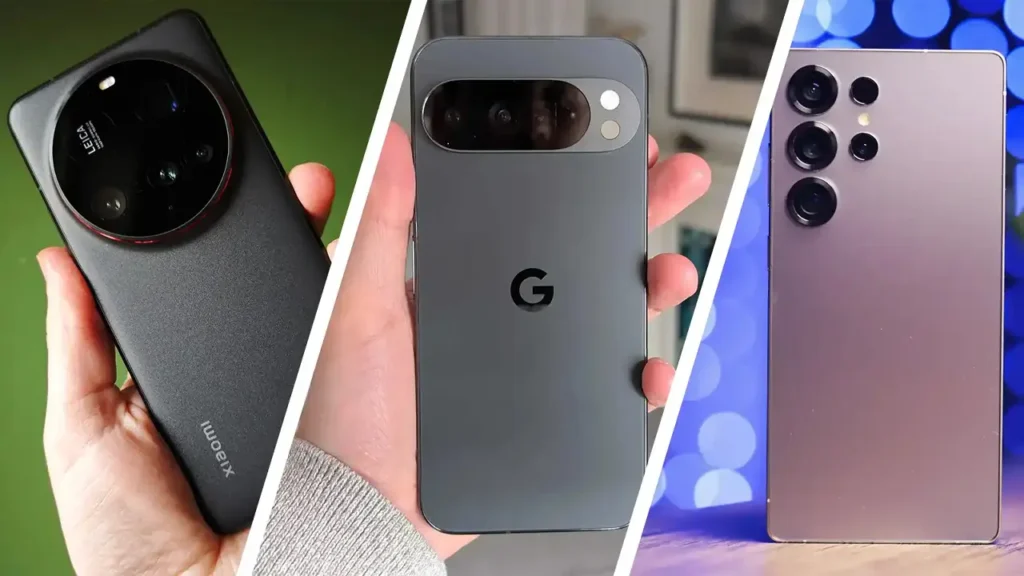
Why 1 Inch Sensor Smartphone Is the New Standard
Here’s the truth that camera manufacturers don’t always advertise clearly: sensor size matters more than almost anything else in photography. A 1 inch sensor smartphone represents a genuine leap forward, not just an incremental upgrade.
To understand why, let’s talk physics. Light is information, and larger sensors capture more of it. A typical smartphone sensor measures around 1/1.5 inches (roughly 8.8mm diagonal). A 1-inch sensor (actually 13.2mm diagonal—yes, sensor naming is confusing) has nearly 2.7 times the surface area. That’s not just a spec sheet detail; it’s transformative.
What does this mean for your photos? First, low light camera phone performance improves dramatically. More sensor real estate means larger individual pixels or more pixels overall, both of which capture more photons. In practical terms, you can shoot in dimmer conditions without the image turning into a noisy mess. Night photography that previously required a tripod and 3-second exposures can now happen handheld at 1/30th of a second.
Second, dynamic range expands. Those challenging scenes—sunset with people in shadow, bright window with interior detail—become manageable. The sensor captures more gradations between the darkest shadows and brightest highlights, giving computational photography algorithms more actual data to work with rather than just inventing details.
Third, and this matters for portrait photographers, depth of field becomes naturally shallower. That beautiful background blur (bokeh) happens optically, not just through software edge detection. Yes, computational bokeh has improved, but nothing beats the real thing—the subtle focus fall-off, the way highlights render, the natural look that immediately distinguishes a great photo from a processed one.
The flagship phones in 2026 using 1-inch sensors—primarily from Xiaomi, Sony, and Sharp—represent the closest thing to carrying a compact camera in your pocket. They’re physically larger and heavier than slim phones, but the image quality trade-off is substantial enough that serious photographers are willing to accept the bulk.
Is a 1-inch sensor essential for everyone? No. If you mostly shoot in good light and share photos on social media at compressed resolutions, you won’t necessarily see the benefit. But if you’ve ever been frustrated by grainy night shots, blown-out skies, or fake-looking portrait mode, sensor size is the upgrade that delivers real, visible improvement.
Zeiss Camera Phone: Precision Optics Revolution
When Vivo partnered with Zeiss in 2020, many assumed it was another marketing arrangement—slap a famous logo on the phone, maybe tweak some color profiles, call it a day. By 2026, that partnership has evolved into something genuinely meaningful, and Zeiss camera phone technology represents one of the most interesting developments in mobile imaging.
What makes Zeiss optics special in a smartphone context? It starts with the glass itself. Zeiss T* coating, originally developed for their legendary camera lenses, is now applied to smartphone lens elements. This anti-reflective coating reduces flare and ghosting—those annoying artifacts you see when shooting toward light sources. In practice, this means cleaner images when photographing sunsets, street scenes with neon signs, or any situation with strong backlighting.
The Vivo X100 Pro+ and X200 Ultra, both featuring Zeiss optics, demonstrate this advantage clearly. Take the same scene with a competing flagship, shoot toward the sun, and compare. The Zeiss-equipped phone maintains contrast and color saturation where competitors show washed-out highlights and reduced micro-contrast.
But Zeiss brings more than just coatings. Their optical engineering team works with Vivo on lens design, particularly the challenge of maintaining sharpness across the entire frame. Smartphone lenses are incredibly complex—cramming what would be multiple elements in a camera lens into a space a few millimeters thick. Edge softness and chromatic aberration (color fringing) are constant battles.
The 2026 Zeiss collaboration introduces APO (apochromatic) design elements to smartphone telephoto lenses, correcting chromatic aberration more effectively than ever before. Zoom in on fine details—tree branches against sky, architectural details, text—and the difference becomes apparent. Lines stay sharp without color fringing, even at the edges of the frame.
Zeiss also influenced the natural bokeh simulation on these phones. Rather than aggressive edge detection and blur, the Zeiss Natural Color mode analyzes depth information to create bokeh characteristics similar to Zeiss Biotar or Sonnar lenses—subtle, graduated, with pleasant highlight rendering. It’s still computational, but informed by decades of optical knowledge about how people actually want background blur to look.
For photographers familiar with Zeiss glass on dedicated cameras, shooting with a Zeiss camera phone feels surprisingly familiar. The contrast curve, the color rendering, even the way specular highlights roll off—there’s a consistency that makes the transition between devices less jarring.
Hasselblad Camera Phone: Color Science Matters
If Zeiss brought optical precision to smartphones, Hasselblad camera phone partnerships brought something arguably even more important: color science. When OnePlus announced their collaboration with Hasselblad in 2021, photographers were skeptical. By 2026, with the OnePlus 12T Pro and Oppo Find X8 Pro both featuring genuine Hasselblad color calibration, the skepticism has largely dissolved.
Hasselblad’s medium format cameras are legendary for color accuracy—the reason they were chosen for NASA’s moon missions wasn’t just build quality, but their faithful color reproduction. That expertise in color science translates surprisingly well to smartphones.
The core innovation is Hasselblad Natural Color Solution (HNCS), now in its fourth generation. Rather than punchy, over-saturated colors that look impressive on phone screens but terrible when printed or viewed on calibrated monitors, HNCS prioritizes accuracy. Skin tones look like skin tones—not orange, not magenta, but believably human across different lighting conditions and ethnicities.
This matters more than you might think. Generic smartphone color processing tends to make everything “pop” through saturation boosts, but this creates problems. Blues become electric, greens turn neon, and skin tones shift toward Instagram-filter territory. For social media scrolling, maybe that’s fine. For professional work, client deliverables, or photos you’ll look at in five years, it’s a problem.
The Hasselblad collaboration also introduced a Pro Mode that will feel familiar to anyone who’s shot with their medium format cameras. The interface uses similar terminology, the control layout echoes their digital backs, and—critically—RAW files carry similar color characteristics to Hasselblad’s proprietary 3FR format.
Portrait processing received particular attention. Hasselblad’s experience photographing people at the highest level informed OnePlus and Oppo’s portrait algorithms. The 2026 models include Hasselblad Portrait mode, which prioritizes flattering skin texture while maintaining actual detail—smoothing without the plastic, overly-processed look that plagued earlier smartphone portraits.
One subtle but important feature: Hasselblad Master mode allows photographers to select from classic Hasselblad film simulations. These aren’t generic vintage filters, but carefully calibrated color profiles mimicking their actual film stocks and processing. For photographers who shot Hasselblad film cameras, it’s a surprisingly emotional connection—your phone producing colors reminiscent of what you remember from your own negatives.
Critics argue that Hasselblad smartphone partnerships are still primarily marketing. There’s some truth there—you’re not getting a $30,000 medium format camera in your pocket. But what you are getting is genuinely better color science, informed by decades of expertise in how colors should actually look. For a professional photography smartphone, that’s not nothing.

Periscope Telephoto Lens Smartphone Explained
The periscope telephoto lens smartphone represents one of the most clever engineering solutions in modern phone design. Understanding how it works helps explain why telephoto reach has exploded from 2x to 10x optical zoom in just a few years.
Traditional telephoto lenses in phones face a fundamental problem: focal length requires physical distance between lens elements. To achieve 5x optical zoom, you need roughly five times the focal length of the main camera. In a phone 8-9mm thick, that’s physically impossible with a straight lens arrangement.
Enter the periscope design. Instead of mounting the telephoto lens perpendicular to the phone’s back (pointing directly out), periscope systems mount it parallel to the phone’s length, using a 90-degree prism to redirect light. This folded optical path allows much longer focal lengths within the phone’s thin profile.
The best smartphone with telephoto zoom in 2026 is arguably the Xiaomi 14 Ultra, featuring a periscope telephoto reaching 10x optical zoom (equivalent to roughly 240mm in full-frame terms). The implementation uses a complex series of lens elements aligned horizontally within the phone body, with optical image stabilization that moves the prism itself to counteract handshake.
Why does this matter for real-world photography? Reach. Genuine 10x optical zoom means you can photograph distant subjects—wildlife, sports, architectural details, street photography without getting intrusive—with actual optical resolution, not digital interpolation.
Compare this to digital zoom, which simply crops and enlarges the center of the sensor. A 1-inch sensor at 10x digital zoom is using perhaps 1/100th of the sensor area, throwing away 99% of your image quality. Optical zoom uses the full sensor at the actual focal length, maintaining full resolution and detail.
The 2026 flagships also feature intermediate focal lengths—3x and 5x optical steps—giving photographers more compositional flexibility. Portrait photographers particularly appreciate the 3x (roughly 75mm equivalent), which provides flattering perspective compression for faces without requiring awkward working distances.
Night photography benefits too. Periscope telephoto systems in 2026 feature surprisingly large apertures (f/2.8 to f/3.4) considering the focal length, and some include dedicated sensors rather than just cropping the main sensor. The Oppo Find X8 Pro’s 6x periscope telephoto uses a 50MP 1/1.95″ sensor, allowing excellent low-light telephoto shots that were simply impossible on earlier phones.
The trade-off? Size and cost. Periscope systems require precision manufacturing and take up significant internal space. Phones with advanced telephoto tend to be larger, heavier, and more expensive. But for photographers who want genuine zoom capability, there’s currently no alternative.
Best Phone for Night Photography in 2026
Night photography separated good camera phones from great ones in previous years. In 2026, the best phone for night photography achieves results that would have required a full-frame camera and tripod just five years ago.
Two philosophies dominate current approaches: sensor-first and AI-first. The sensor-first camp, led by phones with 1-inch sensors, argues that capturing more light physically beats trying to compute it later. The AI-first camp, represented by Google Pixel and Samsung flagships, believes computational photography can extract detail and reduce noise beyond what physics alone allows.
Reality? The best phones combine both approaches.
The Vivo X200 Ultra exemplifies sensor-first philosophy. Its 1-inch main sensor captures genuinely usable images at ISO 6400—noise is present but maintains fine detail and color accuracy. Combined with optical image stabilization allowing 1-second handheld exposures, you can shoot dimly lit interiors, nighttime cityscapes, even indoor events without flash.
Google’s Pixel 9 Pro represents AI-first thinking. Its smaller 1/1.3″ sensor captures less absolute light, but Night Sight mode’s multi-frame computational photography creates remarkably clean images by combining 10-15 frames, aligning them with sub-pixel accuracy, and intelligently averaging out noise while retaining detail.
Which approach wins? It depends on the subject. For static scenes—architecture, landscapes, still life—both work brilliantly. The sensor-first approach delivers slightly more natural texture and color, while AI-first produces slightly cleaner (sometimes too clean) results.
For moving subjects, sensor-first wins decisively. Computational night modes require either multiple frames (problematic with motion) or extremely long single exposures (also problematic with motion). A large sensor capturing sufficient light in a single short exposure maintains motion-stopping shutter speeds while keeping noise manageable.
The absolute best phone for night photography in early 2026 is likely the Xiaomi 14 Ultra. It combines a 1-inch sensor for light-gathering ability with sophisticated computational photography that doesn’t overprocess. Crucially, it allows manual control—you can shoot in actual RAW, set your own ISO and shutter speed, and process later rather than trusting automatic processing.
Special mention to the low light camera phone performance of the Oppo Find X8 Pro’s periscope telephoto. Most phones struggle with telephoto in dim light—smaller sensors, narrower apertures, and optical image stabilization challenges make it difficult. Oppo’s implementation manages surprisingly clean 6x telephoto shots in twilight conditions where competitors force you back to the main camera.
A practical tip for night photography with any 2026 flagship: shoot RAW when possible, use optical image stabilization, and don’t be afraid of higher ISOs—modern sensors handle them far better than you expect. The obsession with perfectly noiseless images has led to overprocessed, artificial-looking photos. A bit of grain is fine; lost detail and weird artifacts aren’t.
Flagship Camera Phone Comparison: Top Contenders
Let’s get specific. The flagship camera phone comparison for 2026 comes down to five serious contenders, each with distinct strengths. Here’s how they stack up across key imaging criteria:
| Phone Model | Main Sensor | Telephoto | Optics Partner | Best For |
|---|---|---|---|---|
| Xiaomi 14 Ultra | 1″ Sony LYT-900, 50MP | 3.2x, 5x, 10x periscope | Leica Summilux | All-around excellence, manual control |
| Vivo X200 Ultra | 1″ Sony IMX989, 50MP | 3.7x, 6x periscope | Zeiss T* | Low light, natural color |
| Oppo Find X8 Pro | 1/1.4″ Sony LYT-808, 50MP | 3x, 6x dual periscope | Hasselblad | Portraits, color accuracy |
| OnePlus 12T Pro | 1/1.4″ Sony LYT-808, 50MP | 3.3x, 6x periscope | Hasselblad | Value, fast performance |
| Honor Magic 6 Pro | 1/1.49″ OmniVision H9000, 50MP | 2.5x, 5x periscope | Honor (in-house) | AI features, computational photography |
Xiaomi 14 Ultra currently holds the crown for most versatile camera system. That 1-inch sensor delivers exceptional image quality, and the triple telephoto system (3.2x, 5x, 10x) provides focal length flexibility unmatched by competitors. The Leica partnership brings genuine optical input—Summilux lens design and Leica’s color science through Authentic and Vibrant modes. For photographers who want DSLR-like manual control, Photography Pro mode offers shutter priority, aperture priority, and full manual with focus peaking and zebra stripes. The trade-off? Size and weight—this is a substantial phone, and the camera bump is significant even by 2026 standards.
Vivo X200 Ultra challenges Xiaomi directly with an equally large 1-inch sensor and Zeiss optics that reduce flare and improve micro-contrast. Where it differentiates is color science—Vivo’s processing tends toward more neutral, accurate tones compared to Xiaomi’s slightly more saturated Leica look. The 6x periscope telephoto is excellent, though lacking the extreme 10x reach of Xiaomi’s system. Vivo’s video capabilities deserve special mention—8K recording with all cameras including telephoto, and gimbal-level stabilization make it appealing for content creators who shoot more video than stills.
Oppo Find X8 Pro and OnePlus 12T Pro share DNA (both under BBK Electronics) but target slightly different audiences. Oppo emphasizes Hasselblad color calibration and portrait excellence, while OnePlus focuses on speed and gaming performance alongside camera capability. Both feature dual periscope telephoto systems (3x and 6x), providing useful focal lengths for everyday photography. Neither uses a 1-inch sensor, but their 1/1.4″ sensors still significantly outperform typical smartphone sensors. The Hasselblad partnership brings excellent skin tone rendering and professional-grade RAW processing. These phones represent the best balance of camera excellence and everyday usability—smaller and lighter than Xiaomi/Vivo ultras, but with camera systems still in the flagship tier.
Honor Magic 6 Pro takes a different approach entirely. Rather than competing on sensor size or optical partnerships, Honor invested heavily in AI-powered computational photography. Their Honor Image Engine uses machine learning trained on millions of photos to optimize every shot automatically. The AI Motion Capture feature excels at freezing fast action—sports, pets, children—where other phones struggle. For users who want excellent results without manual fiddling, Honor delivers impressively. The sensor is smaller (1/1.49″), but aggressive computational processing often produces cleaner, sharper results than the hardware alone would suggest possible.
So which wins the flagship camera phone comparison? There’s no single answer. Xiaomi for photographers wanting maximum control and versatility. Vivo for videographers and those prioritizing low-light purity. Oppo/OnePlus for portraits and balanced everyday shooting. Honor for users who trust AI optimization over manual control.

Telephoto vs Sensor Size: What Matters More?
Photographers debate this endlessly: would you rather have a larger sensor with moderate telephoto, or a smaller sensor with more zoom reach? The smartphone with telephoto zoom has become sophisticated enough that this trade-off actually matters.
Let’s establish some physics first. Sensor size affects light gathering, dynamic range, and depth of field across all focal lengths. Telephoto reach affects composition, perspective compression, and your ability to photograph distant subjects. They’re not directly comparable—they serve different photographic purposes.
A larger sensor benefits every shot you take. Whether you’re shooting wide-angle architecture, standard focal length street photography, or telephoto portraits, the 1-inch sensor captures more light, renders smoother tonal gradations, and provides better raw material for processing. It’s a fundamental improvement to image quality across your entire photographic range.
Telephoto reach, conversely, enables shots that simply aren’t possible otherwise. No matter how good your main sensor is, if you can’t physically get close to your subject—wildlife, sports, distant architectural details, candid street photography—you need optical zoom. Digital zoom degrades image quality too severely to be a real alternative.
The practical answer depends on what you shoot:
Choose sensor size if you primarily photograph:
- Landscapes and architecture (wide to normal focal lengths)
- Low-light and night scenes (sensor size critical for clean results)
- Controlled situations where you can move closer (studio work, planned portraits)
- Video (larger sensors provide better background separation and low-light performance)
Choose telephoto reach if you primarily photograph:
- Wildlife and nature (distance is unavoidable)
- Sports and action (access restrictions require zoom)
- Street photography (telephoto allows unobtrusive shooting)
- Travel and events (flexibility to capture distant moments)
The 2026 flagship phones increasingly offer both—1-inch sensors AND periscope telephoto systems—eliminating the compromise. But these phones are expensive and bulky. If you’re choosing a more moderately priced or sized option, think honestly about your actual shooting habits.
A helpful thought experiment: review your last 100 favorite photos. How many were shot at telephoto focal lengths? If it’s less than 20%, sensor size probably matters more to you. If it’s more than 50%, you’ll miss telephoto reach more than you’ll notice sensor differences in good light.
One often-overlooked consideration: processing time. Larger sensors generate massive files—100+ MB RAW files aren’t uncommon with 1-inch sensors. This impacts burst shooting, how many photos fit on your storage, and processing time in apps. Smaller sensors with good telephoto systems create more manageable file sizes while still delivering excellent results within their range.
Who Needs a Professional Photography Smartphone?
The professional photography smartphone category sounds like marketing speak, but in 2026, it describes a real category of devices aimed at users with specific professional imaging needs.
Content creators represent the primary audience. Instagram photographers, YouTube creators, TikTok producers—anyone building a business or following around visual content—need consistent, high-quality images and video without carrying dedicated camera gear everywhere. A flagship camera phone with 1-inch sensor and quality telephoto enables professional-grade content from a device they’re carrying anyway.
Journalists and documentary photographers increasingly rely on smartphones for fast-breaking news and field reporting. The combination of immediate connectivity (shoot and upload instantly), professional image quality, and inconspicuous form factor makes modern camera phones ideal for photojournalism. The Xiaomi 14 Ultra and Vivo X200 Ultra, with their manual controls and RAW capability, meet editorial image quality standards while maintaining the mobile workflow journalists need.
Travel photographers downsizing from full camera systems find flagship camera phones surprisingly capable. A phone like the Xiaomi 14 Ultra, with 1-inch sensor and 10x telephoto, handles vast majority of travel photography situations—landscapes, architecture, portraits, street scenes, food, cultural details—in a package dramatically smaller and lighter than a mirrorless camera with three lenses. For photographers who’ve done the math on airline weight limits and realized they’re carrying 15 pounds of camera gear but only actually need it for 5% of shots, a professional-grade camera phone makes sense.
Real estate photographers and agents benefit from wide-angle capability, excellent dynamic range for interior/exterior shots, and fast workflow. The best 2026 flagships shoot in RAW, handle difficult lighting with HDR processing, and allow immediate sharing to clients or listings.
Event photographers shooting casual events—family gatherings, small weddings, parties—where formal camera equipment feels inappropriate find camera phones provide sufficient quality with better social dynamics. Pulling out a phone feels normal; setting up DSLR with flash signals “official photographer” and changes how people behave.
Who doesn’t need a professional photography smartphone? Anyone who already owns and is comfortable with dedicated camera equipment for specialized work. Sports photographers need long telephoto reach (400mm+) and ultra-fast autofocus. Studio photographers need controlled lighting and tethered shooting. Landscape photographers printing large often still want medium format resolution. Fashion photographers need the look only specific lenses and lighting provide.
But here’s the thing: even professional photographers increasingly carry flagship camera phones as a backup and casual shooting device. The image quality gap has closed enough that the convenience factor matters. Having a genuinely capable camera in your pocket means capturing moments you’d miss running back to your bag for the “real” camera.

Final Verdict: Choosing the Best Camera Phone 2026
So what’s the actual best camera phone 2026? After extensive comparison, here’s how to decide:
For overall camera excellence: Xiaomi 14 Ultra. The combination of 1-inch sensor, triple periscope telephoto system (3.2x, 5x, 10x), Leica optics, and comprehensive manual controls makes it the most complete camera phone available. It’s expensive, it’s large, and the camera bump is substantial, but for serious photographers, it’s the most capable smartphone imaging system ever created.
For low-light and night photography: Vivo X200 Ultra edges ahead slightly with purer sensor-first processing that maintains more natural texture and color in challenging light. The Zeiss T* coating also helps with difficult backlit situations.
For portraits and color accuracy: Oppo Find X8 Pro or OnePlus 12T Pro. The Hasselblad color science delivers more accurate skin tones and color rendering, and the dual periscope telephoto system (3x and 6x) provides ideal portrait focal lengths.
For video creators: Vivo X200 Ultra again, with 8K recording across all cameras, exceptional stabilization, and clean high-ISO performance for handheld video in available light.
For AI-assisted photography: Honor Magic 6 Pro if you prefer automatic optimization over manual control. The AI processing genuinely improves results for casual shooting.
Best value in flagship tier: OnePlus 12T Pro delivers 90% of the imaging capability at roughly 70% of the price of ultra-flagships like Xiaomi and Vivo.
Here’s the honest truth: any phone discussed in this guide will take better photos than most people need. The differences matter to photographers pixel-peeping, printing large, or shooting professionally. For social media sharing and casual photography, you’ll be thrilled with any of them.
The more important question is which system you prefer. Android vs iOS makes a bigger real-world difference than sensor size once you’re in the flagship tier. Computational photography philosophy (aggressive processing vs clean and neutral) affects every photo you take. Ergonomics and interface matter when you’re actually using the camera.
If possible, visit a store and actually hold these phones. Take some test shots. See which interface feels intuitive to you. Photography is tactile and immediate—the best camera is ultimately the one you’ll actually use, which means it needs to feel right in your hands and fit your workflow.
The professional photography smartphone category in 2026 offers remarkable choice. Five years ago, smartphone cameras were improving rapidly but still clearly inferior to dedicated cameras in most situations. Today, the gap has closed to the point where your decision is more about shooting style and preference than absolute quality.
Want the most comprehensive camera system available in a smartphone? Xiaomi 14 Ultra. Want the purest low-light results? Vivo X200 Ultra. Want best-in-class portraits? Oppo or OnePlus with Hasselblad. Want AI to do the thinking? Honor Magic 6 Pro.
There’s no wrong choice among these flagships—only different choices that suit different photographers. The smartphone camera wars have elevated the entire category to a point where “phone camera” is no longer a limitation but a legitimate creative tool. That’s the real story of 2026: you no longer compromise by shooting with your phone. You’re making a deliberate choice to shoot with a device that happens to also make calls.
| Priority | Recommended Phone | Key Strength |
|---|---|---|
| Maximum zoom reach | Xiaomi 14 Ultra | 10x periscope telephoto, 1-inch sensor |
| Best night photography | Vivo X200 Ultra | 1-inch sensor, clean high-ISO, Zeiss optics |
| Most accurate colors | Oppo Find X8 Pro | Hasselblad color calibration |
| Best portrait photography | OnePlus 12T Pro | Hasselblad Portrait mode, dual telephoto |
| Video creation | Vivo X200 Ultra | 8K recording, gimbal stabilization |
| AI-powered ease of use | Honor Magic 6 Pro | Advanced AI optimization, motion capture |
| Best value flagship | OnePlus 12T Pro | 90% of ultra-flagship capability, better price |
The smartphone camera revolution isn’t coming—it’s here. The best camera phone 2026 isn’t trying to be something it’s not. It’s confidently being what it is: a powerful imaging tool that fits in your pocket, connects instantly to the world, and captures professional-quality photos and video without compromise. Choose the one that matches your shooting style, and go create something remarkable.
Photography tech is evolving fast — but hardware is only half of the revolution. AI is reshaping how we create, share, and monetize content. If you’re curious how artificial intelligence is building entire social ecosystems around creators, explore this deep dive:
https://aiinovationhub.com/moltbook-ai-agents-social-network/
