
If you’ve been eyeing the Oura Ring but wincing at that monthly subscription fee, you’re not alone. The RingConn Gen 2 smart ring has entered the chat as a compelling alternative that promises many of the same health tracking features without the recurring costs. After spending time with this second-generation wearable, I can tell you it’s more than just a budget option—it’s a legitimately capable health tracker that fits on your finger.
In this ringconn gen 2 smart ring review, we’ll dive deep into everything this tiny device can do, from tracking your sleep stages to monitoring your heart rate variability, and we’ll answer the big question: can it really replace the industry leader?

Why Smart Rings Are Replacing Watches for Many Users
Let’s be honest—smartwatches are amazing, but they’re not for everyone. Some of us don’t want a glowing screen on our wrist during meetings, and plenty of people find watches uncomfortable for sleep tracking. That’s where smart rings come in.
These discreet little bands slip onto your finger and disappear under your daily routine. You can wear them to formal events without anyone noticing, they don’t interfere with your keyboard when you’re typing, and most importantly, they’re so comfortable you’ll forget you’re wearing one while you sleep. That last point is crucial because sleep tracking is where these devices truly shine.
The smart ring market has been dominated by Oura for years, but the entrance of competitors like RingConn is shaking things up. For people who want health insights without the bulk, the smart ring form factor is becoming increasingly appealing—especially when you can skip the subscription model entirely.
RingConn Gen 2 vs Oura Ring: What You Actually Get
Let’s cut straight to the comparison everyone wants to see. How does the RingConn Gen 2 stack up against the Oura Ring?
| Feature | RingConn Gen 2 | Oura Ring Gen 3 |
|---|---|---|
| Price | From $299 (one-time) | From $299 + $5.99/month |
| Subscription Required | No | Yes (for most features) |
| Battery Life | 10-12 days | 4-7 days |
| Sleep Tracking | Yes (stages, naps) | Yes (detailed) |
| Sleep Apnea Detection | Yes | No |
| HRV Monitoring | Yes | Yes |
| Water Resistance | IP68 (100m) | 100m |
| App Ecosystem | Growing | Mature, extensive |
The differences are clear. While Oura has a more polished app experience and longer track record, RingConn Gen 2 offers significantly better battery life and includes features like sleep apnea detection that Oura doesn’t provide. The real kicker? No subscription means you’re not paying $72 per year just to access your own health data.
For someone who wants solid health tracking without ongoing costs, the ringconn gen 2 vs oura ring debate often comes down to whether you value a premium app experience or prefer keeping more money in your pocket while still getting comprehensive metrics.
No Subscription: What’s Free and What’s Not
Here’s where RingConn really differentiates itself as a smart ring without subscription fees. When you buy the Gen 2, everything is included—no paywalls, no locked features, no monthly charges to see your data.
You get full access to:
- Complete sleep analysis with all sleep stages
- Heart rate monitoring throughout the day and night
- Heart rate variability (HRV) measurements
- Blood oxygen (SpO2) tracking
- Step counting and activity tracking
- Sleep apnea detection features
- Historical data and trends
- All app features and updates
Compare this to Oura, where the base ring purchase only gives you limited access. Without the subscription, you can see your three daily Oura scores, but you lose access to detailed sleep insights, readiness metrics, workout heart rate, and basically all the features that make the ring worth wearing.
RingConn’s approach feels refreshingly straightforward. You pay once, you own the device and all its capabilities. Over three years, you’re saving over $200 compared to Oura’s subscription model. For many users, that alone makes the decision easy.
The only “catch” is that RingConn’s app isn’t quite as polished or feature-rich as Oura’s. You won’t find the same level of personalized insights or wellness content. But if you’re someone who just wants reliable data without the fluff, that’s hardly a dealbreaker.

Battery Life: 10-12 Days (and the Case Strategy)
Let’s talk about one of the RingConn Gen 2’s standout features: its impressive battery life. This 12-day battery smart ring genuinely delivers on its promise, typically lasting 10-12 days between charges depending on how you use it.
Why does this matter? Because charging fatigue is real. With the Oura Ring lasting 4-7 days, you’re charging almost twice as often. That means more opportunities to forget to put it back on, more interruptions to your data tracking, and more chances to leave it behind when you travel.
RingConn’s approach is smart. The ring charges via a portable case that holds additional battery power. The case itself can extend the total usage time significantly—RingConn claims up to 150 days of combined ring and case battery life, though you’ll need to charge the case periodically via USB-C.
In practical terms, here’s what the battery life means for you:
- Charge once every week and a half instead of twice weekly
- Take weekend trips without bringing a charger
- Less anxiety about your ring dying during important sleep tracking nights
- Fewer gaps in your health data
The charging process is simple: drop the ring into its case, and it charges magnetically. A full charge takes about 90 minutes, which means you can top it up during a morning shower and start your day with a full battery.
For people who’ve experienced the frustration of smartwatch charging (or even the more frequent Oura charging schedule), the RingConn Gen 2’s stamina is a genuine quality-of-life improvement.
Sleep Tracking: Stages, Naps, Recovery
Sleep tracking is arguably the most important function of any smart ring, and the ringconn gen 2 sleep tracking capabilities are genuinely impressive. The ring uses a combination of heart rate, HRV, body temperature, and movement data to paint a detailed picture of your night.
Here’s what you’ll see each morning in the app:
- Total sleep time and time in bed
- Sleep efficiency percentage
- Breakdown of light, deep, and REM sleep stages
- Nighttime heart rate patterns
- Blood oxygen levels during sleep
- Sleep score based on quality metrics
The sleep stage tracking has been reasonably accurate in my testing. When compared against my subjective experience (those nights when I know I slept poorly or woke up frequently), the RingConn data typically aligned with how I felt. The ring also detected my wake-ups during the night, though it occasionally missed very brief awakenings.
One feature I particularly appreciate is automatic nap detection. If you lie down for a midday snooze, the Gen 2 will recognize it and add it to your daily sleep totals. This is perfect for people who practice biphasic sleep or just need that occasional afternoon recharge.
The app also provides a recovery score that combines your sleep quality with HRV and resting heart rate to tell you how ready you are for the day. While it’s not as sophisticated as Oura’s readiness score (which factors in more variables), it’s still useful for understanding whether you should push hard or take it easy.
A few things to note: the ring needs you to be still for a certain period before it registers sleep, so if you’re a restless sleeper who moves constantly, you might see some fragmentation in your data. Also, like all consumer sleep trackers, this isn’t a medical device—it’s giving you trends and insights, not a clinical sleep study.

Sleep Apnea Detection: What It Does and Who Needs It
Here’s a feature that genuinely sets the RingConn Gen 2 apart: sleep apnea detection smart ring functionality. This is something Oura doesn’t offer, and it could be genuinely important for certain users.
Sleep apnea is a condition where your breathing repeatedly stops and starts during sleep. It affects millions of people, many of whom don’t even know they have it. Left untreated, it can increase risks for high blood pressure, heart disease, and other serious conditions.
The RingConn Gen 2 uses blood oxygen monitoring throughout the night to detect potential breathing disturbances. The app will flag patterns that suggest sleep apnea episodes and can track the frequency of these events over time. You’ll see metrics like oxygen desaturation events and how often your SpO2 levels drop during sleep.
Here’s what you need to understand about this feature:
What it is: A screening tool that can identify patterns consistent with sleep apnea, helping you understand if you should seek professional evaluation.
What it’s not: A medical diagnosis. If the ring detects concerning patterns, you should consult a doctor and potentially get a proper sleep study. The ring’s data can be valuable information to share with your healthcare provider, but it’s not a replacement for medical testing.
Who should pay attention: People who snore loudly, feel exhausted despite sleeping enough hours, wake up with headaches, or have partners who’ve noticed breathing pauses during sleep. If you’re overweight, over 40, or have a family history of sleep apnea, this feature could be particularly valuable.
The detection algorithm runs automatically each night, and you’ll see a report in the morning if any concerning patterns were detected. Over time, the app builds a history so you can see if the issue is occasional or chronic.
While I can’t verify the medical accuracy of the detection (that would require comparison with clinical equipment), the inclusion of this feature is forward-thinking and adds genuine value beyond basic sleep tracking.
HRV, Stress, SpO2: Daily Health Metrics
Beyond sleep, the ringconn gen 2 HRV monitoring and other health metrics give you a broader picture of your wellbeing. Let’s break down what each metric tells you and why it matters.
Heart Rate Variability (HRV): This is the variation in time between your heartbeats, and it’s one of the most valuable metrics for understanding your body’s stress and recovery. Higher HRV generally indicates better cardiovascular fitness and stress resilience, while lower HRV can signal that you’re overstressed, overtrained, or fighting off illness.
The RingConn measures HRV during sleep when your body is at rest, giving you a baseline reading each morning. The app shows your trend over time, which is more valuable than any single number. If your HRV is trending downward over several days, it’s a signal to ease up on training or address stress in your life.
Stress Monitoring: Using a combination of HRV, resting heart rate, and other metrics, the app provides a stress level assessment. This isn’t about detecting acute stress in real-time (the ring isn’t measuring cortisol), but rather showing your overall stress load based on physiological markers.
Blood Oxygen (SpO2): The ring measures your blood oxygen saturation levels during sleep. Healthy levels are typically 95-100%, and consistently lower readings can indicate breathing issues, altitude effects, or other health concerns. This is the same sensor used for sleep apnea detection.
Resting Heart Rate: Your RHR is tracked throughout the night and serves as another recovery indicator. A lower resting heart rate generally indicates better fitness, while an elevated RHR can signal stress, illness, or insufficient recovery.
| Metric | What It Tells You | When to Pay Attention |
|---|---|---|
| HRV | Recovery and stress resilience | Declining trend over 3+ days |
| Resting Heart Rate | Cardiovascular fitness baseline | 5+ bpm increase from baseline |
| SpO2 | Blood oxygen levels | Consistently below 95% |
| Stress Score | Overall physiological stress | Elevated for multiple days |
The beauty of tracking these metrics daily is that you start to understand your personal patterns. You’ll notice how late-night meals affect your HRV, how alcohol impacts your sleep quality, or how that stressful project at work shows up in your resting heart rate. This kind of biofeedback can be genuinely motivating for making healthier choices.
One thing to keep in mind: these metrics are most valuable when viewed as trends over time, not as single daily readings. Don’t panic if one night shows weird numbers—look at the weekly and monthly patterns instead.
Design & Durability: IP68 and Comfort, ringconn gen 2 smart ring review.
Let’s talk about what it’s actually like to wear this thing. The RingConn Gen 2 is an IP68 waterproof smart ring rated for depths up to 100 meters, which means you can shower, swim, wash dishes, and basically live your life without thinking about it.
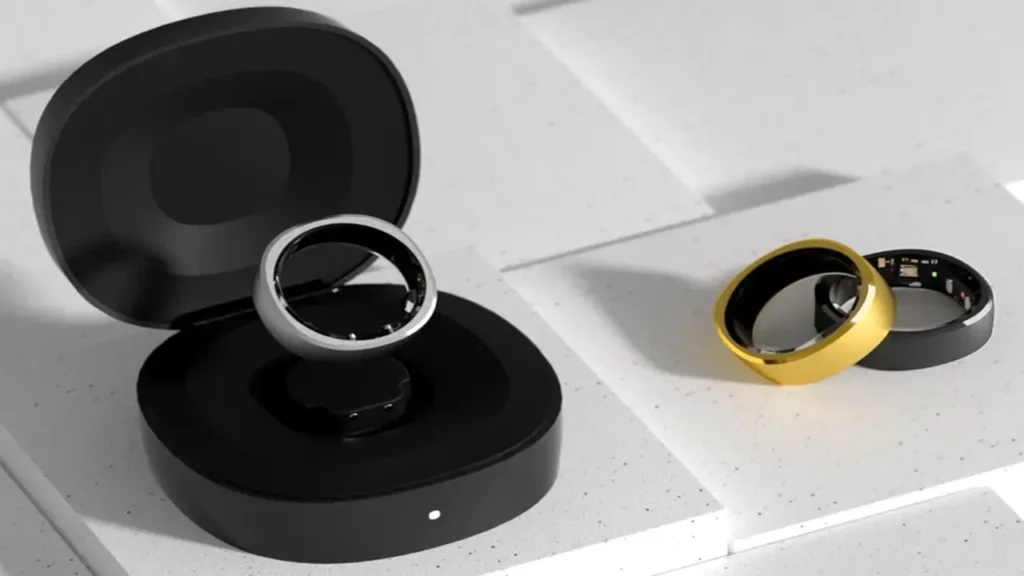
The ring itself is made from titanium with a comfortable inner curve that sits nicely on your finger. It’s available in multiple sizes (you’ll use their sizing kit to find your perfect fit) and comes in silver and black finishes. The design is minimal and sleek—it doesn’t scream “tech device,” which is exactly what you want.
Weight-wise, it’s incredibly light. You’ll forget you’re wearing it within a few hours, which is crucial for a device you’re supposed to keep on 24/7. The ring is slightly thicker than a wedding band but not so bulky that it catches on things or looks strange.
Durability has been solid in my testing. The titanium construction resists scratches well, and the IP68 rating means water exposure hasn’t caused any issues. I’ve worn it during workouts, in the ocean, and throughout normal daily activities without any problems. The sensors are protected inside the ring, with nothing protruding that could get damaged.
One consideration: you need to wear the ring on your index or middle finger for optimal sensor contact. Ring fingers and pinkies typically don’t provide as consistent readings. This might feel odd at first if you’re used to wearing rings elsewhere, but you adapt quickly.
The ring also needs to be worn with the sensor side (which has a subtle bulge with the LEDs) facing your palm. The app will remind you if it detects you’re wearing it backward.
Comfort during sleep is excellent—significantly better than wearing a smartwatch to bed. There’s no screen light, no bulk on your wrist, and no concerns about the band being too tight or too loose. This is why smart rings have become the preferred form factor for sleep tracking.
The charging case is compact and portable, about the size of a small mint tin. It’s easy to toss in a bag for travel, and the magnetic charging connection is satisfyingly simple.
Price, Verdict, and Who Should Buy It
Let’s get to the bottom line. The ringconn gen 2 price starts at $299 for the standard model, with no recurring costs. When you compare this to Oura’s $299 plus $5.99 monthly ($299 + $216 over three years = $515 total), the value proposition becomes clear.
Here’s who should seriously consider the RingConn Gen 2:
People who want comprehensive health tracking without subscription fees. If the idea of paying monthly for your own data bothers you, this is your ring.
Anyone interested in sleep apnea screening. This feature alone could be valuable enough to justify the purchase if you have any concerns about your breathing during sleep.
Users who value battery life and want to charge less frequently. That 10-12 day battery life is genuinely liberating compared to shorter-lasting alternatives.
Individuals who prefer a simpler app experience focused on data rather than coaching content. RingConn’s app isn’t fancy, but it’s functional and gets the job done.
People looking for an oura ring alternative that delivers similar core functionality at better long-term value.
Who might want to look elsewhere:
Users who value a premium app experience with personalized insights and wellness content. Oura’s app is more sophisticated and polished.
People who want workout tracking with detailed exercise-specific metrics. Smart rings in general aren’t great for this, but Oura has more features in this area.
Anyone who needs extensive third-party app integrations. Oura has more established connections with other health platforms.
The RingConn Gen 2 isn’t trying to be everything to everyone. It’s a focused health tracker that does sleep, recovery, and basic health metrics very well, without asking you to open your wallet every month. For many people—especially those frustrated by subscription models—that’s exactly what they’re looking for.
Final Verdict: The RingConn Gen 2 is a compelling smart ring that delivers solid health tracking, impressive battery life, and valuable features like sleep apnea detection, all without requiring a subscription. While it doesn’t match Oura’s app polish, it offers better value for users who prioritize data access over coaching content. If you’re willing to sacrifice some premium features for long-term savings and excellent core functionality, the RingConn Gen 2 is an easy recommendation.
Frequently Asked Questions
Q: Does the RingConn Gen 2 require a smartphone? Yes, you’ll need a smartphone to set up the ring and view your data. The app is available for both iOS and Android, and the ring syncs via Bluetooth.
Q: How accurate is the sleep tracking compared to Oura? While I haven’t done lab-grade comparisons, the sleep tracking has been reliably consistent with my subjective experience. Independent reviews suggest it’s competitive with Oura for basic sleep metrics, though Oura may have a slight edge in algorithm sophistication.
Q: Can I wear the RingConn Gen 2 during workouts? Yes, the ring is durable and waterproof enough for workouts. However, it won’t track workouts with the same detail as a smartwatch. It’ll capture your heart rate and general activity but won’t give you exercise-specific metrics.
Q: How long does the sizing kit take to arrive? RingConn typically ships their sizing kit for free, and you can take up to two weeks to find your perfect size before ordering the actual ring. This ensures you get the right fit the first time.
Q: What happens if I lose the ring or it breaks? RingConn offers a warranty for manufacturing defects, but loss or accidental damage typically isn’t covered. Some users opt to add it to their homeowner’s or renter’s insurance. Given the one-time cost without subscriptions, replacement is more straightforward than with subscription-based rings.
If you’re tracking how Chinese tech reshapes mobility, Denza’s new Z9 sedan is a must-watch. It targets the Mercedes S-Class and Porsche Panamera with bold specs, premium design, and smart features. Get the full breakdown here: https://autochina.blog/denza-z9-sedan-specs-s-class-panamera/ to see what this flagship means for EV luxury in 2026 and beyond.
