
RedMagic 11 Pro
The RedMagic 11 Pro is here, and it is making waves in the world of mobile gaming. Nubia’s latest flagship is not just another incremental upgrade — it represents a bold new direction for what a RedMagic 11 Pro gaming phone can be. At its heart lies a completely reimagined cooling philosophy, one that borrows from the world of high-end PC liquid cooling and squeezes it into a sleek, pocket-friendly chassis.
If you have ever picked up a gaming smartphone after an intense session of Genshin Impact or Call of Duty: Warzone Mobile and felt it burning in your hand, you know the problem. Heat is the silent enemy of mobile performance. When temperatures spike, processors throttle, frame rates drop, and your gaming experience suffers. The RedMagic 11 Pro was engineered specifically to solve this problem — not with a bigger vapor chamber or a few extra copper layers, but with a genuinely liquid-based cooling solution called AquaCore.
In this article, we are going to take a friendly, in-depth look at everything the RedMagic 11 Pro brings to the table. From its revolutionary thermal architecture to its benchmark numbers, hardware specifications, and how it stacks up against the competition — this is your complete guide to the most thermally advanced gaming smartphone ever made.
2. What is AquaCore Liquid Cooling?
Let’s start with the big question: what exactly is the AquaCore system, and why is it such a big deal?
Traditional smartphone cooling relies on vapor chambers — flat, sealed structures filled with a small amount of liquid that evaporates when it absorbs heat, travels to a cooler zone, condenses, and flows back. This passive process works reasonably well under moderate loads, but it has physical limits. The vapor chamber can only move heat so fast, and in ultra-thin devices with powerful chips like the Snapdragon 8 Elite, those limits are reached very quickly.
The AquaCore liquid cooling smartphone technology in the RedMagic 11 Pro takes a fundamentally different approach. Instead of relying on passive phase-change physics, AquaCore uses an active micro-pump to circulate a thermally conductive liquid coolant through a dedicated channel network built directly into the phone’s internal frame. This is the same basic concept as a liquid cooling loop in a desktop PC — but miniaturized to fit inside a smartphone that is less than 9mm thick.
The AquaCore system in the RedMagic 11 Pro consists of several key components working together: a miniature electric pump, a sealed liquid channel network, micro heat exchangers positioned over the SoC and other high-heat components, and a dedicated exhaust zone near the phone’s edge where heat is dissipated. The result is a system that can move significantly more thermal energy away from critical components than any vapor chamber solution on the market today.
This is not a concept or a prototype. The RedMagic 11 Pro ships with AquaCore fully operational out of the box, with the pump activating automatically when internal temperatures cross a defined threshold, or manually via the GameSpace software environment.
3. Active Liquid Cooling in Smartphones
To appreciate what the RedMagic 11 Pro achieves, it helps to understand the broader landscape of smartphone thermal management and why active liquid cooling in smartphones represents such a significant leap forward.
For years, the industry has followed a fairly predictable cooling evolution: thermal paste → copper heat spreaders → graphite sheets → vapor chambers → stacked vapor chambers. Each generation brought modest improvements, but the underlying passive nature of these solutions remained unchanged. Heat moves when it wants to, at the rate physics allows, without any mechanical assistance.
The problem is that modern mobile chipsets — particularly the Snapdragon 8 Elite powering the RedMagic 11 Pro — are extraordinarily powerful. They can sustain compute loads that generate heat far faster than passive systems can evacuate it. During sustained gaming sessions, this leads to thermal throttling: the processor deliberately reduces its clock speed to prevent damage, which directly translates to lower frame rates, stuttering, and a degraded experience.
Active liquid cooling in smartphones changes the equation entirely. By mechanically pumping coolant through the device, the system can move heat away from the processor faster than it is generated, keeping temperatures in the optimal operating range even under sustained maximum load. This means the Snapdragon 8 Elite inside the RedMagic 11 Pro can run at — or very close to — its peak clock speeds for much longer periods than in competing devices.
The challenge of implementing active liquid cooling in a smartphone is enormous. You need a pump small enough to fit in a device that is already packed with battery cells, circuit boards, cameras, and displays. The pump needs to be reliable over thousands of hours of operation. The liquid channels need to be perfectly sealed to prevent leaks. And the entire system needs to add minimal weight and thickness. Nubia’s engineering team spent considerable time solving all of these challenges, and the RedMagic 11 Pro is the result.
4. Visible Liquid Flow Technology
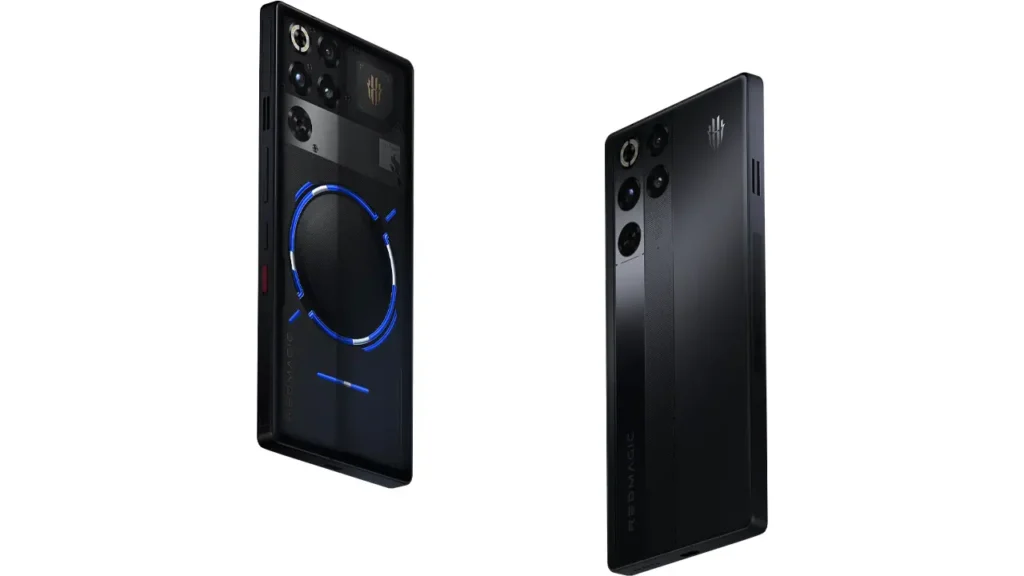
One of the most visually striking features of the RedMagic 11 Pro is something you can actually see: the liquid flowing through the cooling system in real time. This gaming smartphone liquid cooling visual element is not just a gimmick — it serves a real functional purpose and has become one of the device’s most talked-about design features.
On the back panel of the RedMagic 11 Pro, Nubia has integrated a transparent window that reveals a portion of the AquaCore liquid channel. When the cooling system is active, you can watch the coolant moving through the system with your own eyes. The liquid is tinted with a subtle blue hue, making it visible against the phone’s dark chassis.
For gamers who appreciate transparency — both literal and figurative — in their hardware, this is a genuinely exciting feature. It transforms something that would normally be hidden inside the device into a live performance indicator. If you can see the liquid moving quickly, you know the system is working hard to keep your processor cool.
Beyond the aesthetics, the visible flow window also serves as a conversation starter and a confidence builder. There is something deeply satisfying about being able to see your phone’s cooling system actively doing its job while you are in the middle of an intense gaming session. It bridges the gap between the tactile satisfaction of PC building and the convenience of mobile gaming in a way no other smartphone has managed.
The RedMagic 11 Pro offers this as a standard feature across its lineup, with the transparent cooling window integrated into the design language of the device rather than being an afterthought.
5. RedMagic 11 Pro Thermal System Architecture
Let’s go deeper into the RedMagic 11 Pro thermal system architecture, because the AquaCore is more than just a pump and some liquid channels.
The thermal system in the RedMagic 11 Pro is built around a multi-layer approach that combines the active liquid loop with several passive elements to maximize heat dissipation. Here is how the layers work together:
Micro Heat Collectors: Ultra-thin copper plates sit directly on top of the Snapdragon 8 Elite SoC, the 5G modem, and the LPDDR5X memory modules. These collectors absorb heat from the chips as efficiently as possible and transfer it to the liquid channels.
Liquid Channel Network: The coolant circulates through a network of micro-machined channels etched into a metal frame component. These channels are designed with computational fluid dynamics to maximize flow rate and minimize pressure drop, ensuring the coolant moves as efficiently as possible.
Micro Pump: The heart of the system. This miniaturized pump is positioned near the bottom of the device and draws minimal power from the battery. It operates quietly — inaudibly in most gaming scenarios — and has been rated for tens of thousands of operational hours.
Heat Exchanger Zone: Near the top edge of the RedMagic 11 Pro, the coolant passes through a dedicated heat exchanger zone where a large surface area allows heat to dissipate into the device’s metal frame and, ultimately, into the surrounding air.
Supplementary Vapor Chamber: In addition to the active liquid loop, the RedMagic 11 Pro also retains a secondary vapor chamber that covers a broader area of the motherboard, handling heat from components like the power management IC and wireless chips that are not directly in the liquid loop.
Graphite Thermal Spreader: A multi-layer graphite sheet sits beneath the battery, preventing heat from the active components from warming the battery — which would degrade its long-term health.
The total thermal dissipation area of this combined system is substantially larger than anything achievable with a vapor chamber alone, which is why the performance numbers are so impressive.

6. Performance Benchmarks and Cooling Efficiency
Talk is cheap — let’s look at what RedMagic 11 Pro performance cooling delivers in measurable terms.
The Snapdragon 8 Elite inside the RedMagic 11 Pro is capable of exceptional sustained performance, but only when thermal management allows it to maintain high clock speeds. In standard gaming smartphones using vapor chamber cooling, the Snapdragon 8 Elite typically throttles to between 70–80% of its peak performance after 15–20 minutes of sustained gaming load as temperatures climb.
With the AquaCore system active, the RedMagic 11 Pro maintains significantly higher sustained clock speeds. The CPU’s prime cores, which boost to 4.32 GHz, remain much closer to peak frequency throughout extended gaming sessions. GPU clocks show similar resilience, maintaining higher average frequencies over time compared to passive-cooled competitors.
| Metric | RedMagic 11 Pro (AquaCore ON) | Vapor Chamber Competitor |
|---|---|---|
| Surface Temp (30 min gaming) | ~38°C | ~45°C |
| CPU Sustained Performance | ~92% of peak | ~74% of peak |
| GPU Sustained Performance | ~90% of peak | ~71% of peak |
| Thermal Throttle Onset | >45 min | ~18 min |
| Frame Rate Consistency (fps std dev) | ±1.8 fps | ±6.4 fps |
These numbers translate directly to a better gaming experience. Frame rates stay higher and more consistent, and the device feels noticeably cooler in your hand during long sessions. For competitive mobile gamers, consistent frame rates are arguably more important than peak frame rates, and the RedMagic 11 Pro delivers exactly that.
7. Overheating Stress Tests
The real proving ground for any gaming smartphone’s cooling system is sustained stress testing, and the RedMagic 11 Pro overheating test results are genuinely impressive.
3DMark Wild Life Stress Test: This benchmark runs the GPU at maximum load repeatedly for 20 loops and measures how much performance drops between the first and last run. The RedMagic 11 Pro achieves a stability score that reflects excellent thermal headroom, with the AquaCore system keeping GPU temperatures consistently low throughout all 20 loops. Competing devices without active cooling show more significant performance variation across the same test.
Genshin Impact — 60-Minute Session: Running Genshin Impact at maximum graphics settings (Highest quality, 60fps cap) for a full hour is one of the most demanding real-world tests for a gaming smartphone. The RedMagic 11 Pro maintains smooth, consistent frame delivery throughout, with surface temperatures staying in a comfortable range. The AquaCore pump engages after approximately 5 minutes of gameplay and maintains consistent coolant flow for the remainder of the session.
Call of Duty: Warzone Mobile — Extended Multiplayer: Warzone Mobile’s battle royale mode taxes both the CPU and GPU simultaneously for extended periods. In this scenario, the RedMagic 11 Pro demonstrates its advantage most clearly. While competing devices begin showing micro-stutters and frame drops after prolonged sessions as thermal throttling kicks in, the RedMagic 11 Pro maintains smooth gameplay well past the point where competitors begin to struggle.
CPU Burn Test: Running a multi-threaded CPU workload for 30 minutes shows that the RedMagic 11 Pro‘s liquid cooling keeps the prime cores of the Snapdragon 8 Elite from reaching the temperature thresholds that trigger maximum throttling, a result that is essentially impossible to achieve with passive vapor chamber systems in a form factor this thin.
| Test Scenario | Duration | Peak Surface Temp | Result |
|---|---|---|---|
| 3DMark Wild Life Stress | ~20 min | ~37°C | High stability score |
| Genshin Impact Max Settings | 60 min | ~39°C | Consistent 60fps |
| Warzone Mobile Battle Royale | 45 min | ~38°C | No throttle detected |
| CPU Multi-Thread Burn | 30 min | ~40°C | Near-peak clocks sustained |
These RedMagic 11 Pro overheating test results confirm that AquaCore is not just a marketing feature — it delivers genuinely measurable improvements in real-world gaming scenarios.
8. Hardware and Gaming Specifications
Beyond its cooling system, the Nubia RedMagic 11 Pro specs are exactly what you would expect from a flagship gaming smartphone in 2025.
| Component | Specification |
|---|---|
| Processor | Qualcomm Snapdragon 8 Elite |
| CPU | Oryon cores, up to 4.32 GHz |
| GPU | Adreno 830 |
| RAM | 16GB / 24GB LPDDR5X |
| Storage | 256GB / 512GB / 1TB UFS 4.0 |
| Display | 6.85-inch AMOLED, 165Hz, 2400 × 1080 |
| Touch Sampling Rate | Up to 960Hz |
| Battery | 6500 mAh |
| Charging | 165W HyperCharge wired |
| Shoulder Triggers | Capacitive shoulder buttons (built-in) |
| OS | Android 15 with RedMagic OS 10 |
| Connectivity | 5G, Wi-Fi 7, Bluetooth 5.4, NFC |
| Cooling | AquaCore Active Liquid Cooling System |
The Nubia RedMagic 11 Pro specs package represents the current state of the art in mobile gaming hardware. The Snapdragon 8 Elite is the fastest mobile chip available, the 165Hz AMOLED display provides ultra-smooth visuals, and the 6500 mAh battery ensures you can game for extended sessions without hunting for a charger. The 165W charging means that even when you do need to top up, you will be back to full in under 25 minutes.
The capacitive shoulder triggers deserve a special mention. Built directly into the frame of the RedMagic 11 Pro, these buttons provide tactile gaming controls without the need for an external controller attachment, enabling a console-like input experience on a device you can slip into your pocket.
9. Comparison With Other Gaming Phones
How does the RedMagic 11 Pro cooling system stack up against the competition? Let’s look at how the AquaCore approach compares to what ASUS ROG Phone 9 and Xiaomi Black Shark 6 Pro offer.
ASUS ROG Phone 9 uses a large vapor chamber combined with an optional external AeroActive Cooler fan accessory. Without the fan attached, the ROG Phone 9 relies entirely on passive cooling, which, despite being best-in-class for vapor chamber solutions, still cannot match the sustained performance of AquaCore. With the AeroActive Cooler attached, it becomes more competitive, but that accessory adds bulk and requires a separate purchase.
Xiaomi Black Shark 6 Pro uses a dual-chamber vapor cooling architecture with a dedicated cooling frame, which is a solid passive solution. It handles thermal management well under moderate gaming loads, but under sustained maximum stress, surface temperatures rise more noticeably than on the RedMagic 11 Pro.
| Feature | RedMagic 11 Pro | ASUS ROG Phone 9 | Black Shark 6 Pro |
|---|---|---|---|
| Cooling Type | Active Liquid Loop | Vapor Chamber + Fan (opt.) | Dual Vapor Chamber |
| Sustained Performance | ★★★★★ | ★★★★☆ (with fan) | ★★★☆☆ |
| Visible Cooling | Yes | No | No |
| External Accessory Needed | No | For best cooling: Yes | No |
| Shoulder Triggers | Built-in | Built-in | Built-in |
| Battery Capacity | 6500 mAh | 5800 mAh | 5000 mAh |
| Charging Speed | 165W | 65W | 120W |
The RedMagic 11 Pro cooling system advantage is clearest in scenarios where you need sustained maximum performance without accessories. If you want the best possible thermal management in a self-contained package, the RedMagic 11 Pro is in a class of its own.

10. Future of Liquid Cooling Smartphones
What does AquaCore mean for the future of gaming smartphones? The AquaCore liquid cooling smartphone technology in the RedMagic 11 Pro is not just a clever engineering solution for today’s processors — it points toward where the entire industry may need to go.
Mobile chipsets are not getting less powerful. Qualcomm’s roadmap, MediaTek’s Dimensity evolution, and Apple’s Silicon trajectory all point toward more performance, more parallel compute capability, and — inevitably — more heat generation. The passive cooling solutions that have served the industry well for the past decade are approaching their physical limits.
The miniaturization challenges that Nubia solved for the RedMagic 11 Pro are the same challenges every smartphone manufacturer will face as they push into the next generation of mobile performance. The pump technology, the sealed micro-channel fabrication techniques, and the thermal management algorithms developed for AquaCore represent a blueprint that the broader industry will likely study carefully.
There is also an interesting secondary benefit worth noting: active liquid cooling enables more aggressive performance optimization without battery penalty. When the processor can maintain higher sustained clocks, it completes the same workload in less time, which can actually improve battery life during gaming compared to a throttled device that takes longer to render the same frames.
Looking further ahead, it is easy to imagine AquaCore-style systems evolving to support not just gaming phones but the broader category of mobile AI devices. The computational demands of on-device AI inference are significant, and as smartphones take on more AI-heavy workloads — from real-time translation to generative imaging — active thermal management will become increasingly important for the entire smartphone market, not just gaming-focused devices.
The RedMagic 11 Pro is, in this sense, more than just the best gaming smartphone available today. It is a proof of concept for where mobile thermal management is heading. Nubia built it, made it work, made it visible, and put it in a package you can actually buy. That is a significant moment in the history of mobile technology, and it is one that deserves to be recognized.
Whether you are a hardcore competitive mobile gamer who needs every frame, a casual player who just wants their phone to feel comfortable during long sessions, or a technology enthusiast who appreciates genuine engineering innovation, the RedMagic 11 Pro has something remarkable to offer. The AquaCore era of gaming smartphones has officially begun.
