
1. Introduction: Why Qidi Q2 Combo Is the New DIY 3D Printing Hit
The 3D printing landscape in 2026 has become incredibly competitive, with manufacturers pushing boundaries to deliver faster, more reliable, and more versatile machines. Enter the Qidi Q2 Combo – a printer that’s generating serious buzz in the maker community as a potential game-changer. In this comprehensive 3D printer review 2026, we’ll explore whether this machine lives up to the hype and if it truly challenges the dominance of established players like Bambu Lab.
Qidi Technology has been steadily building its reputation in the 3D printing world, and the Q2 Combo represents their most ambitious effort yet. This isn’t just another printer – it’s a complete ecosystem designed for serious makers who want professional results without the professional price tag. With features like high-temperature printing capabilities, multi-material support, and CoreXY kinematics, the Qidi Q2 Combo positions itself as a serious contender for anyone looking to upgrade their 3D printing setup.
What makes this release particularly interesting is the timing. As we move through 2026, the 3D printing community has become more sophisticated in its demands. We’re no longer impressed by basic PLA printing – we want versatility, speed, and reliability. The Qidi Q2 Combo promises to deliver on all three fronts, but does it actually succeed? Let’s dive deep into this machine and find out.
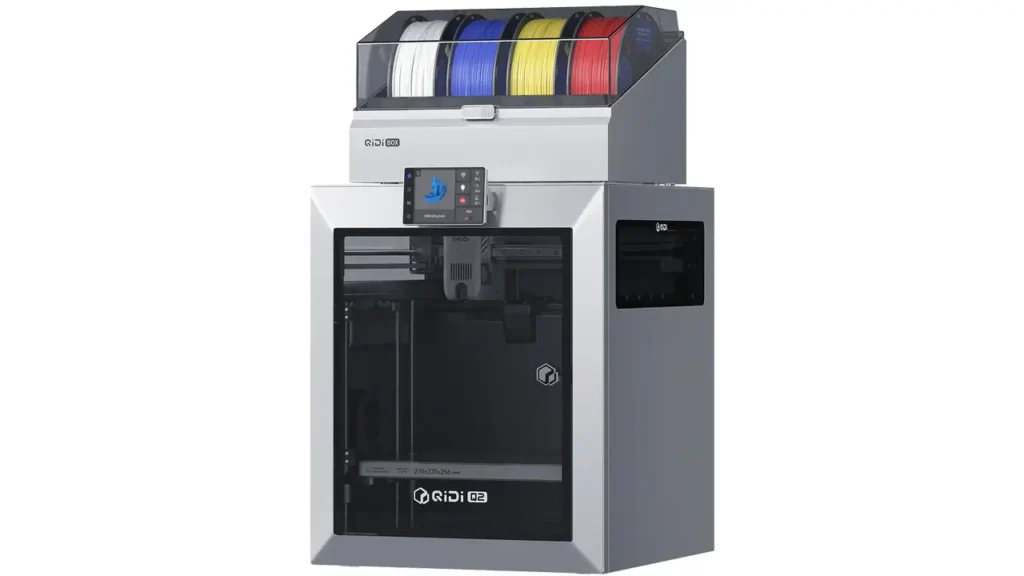
2. What Is Qidi Q2 and How Does It Work
The Qidi Q2 is the core unit of the Qidi Q2 Combo system, and it’s built around a robust CoreXY 3D printer architecture. For those unfamiliar with this design, CoreXY represents one of the most efficient motion systems in 3D printing. Unlike traditional Cartesian printers where the print head moves on one axis and the bed moves on another, CoreXY systems use a clever belt arrangement that allows both motors to work together for XY movement.
This CoreXY 3D printer design offers several key advantages. First, it enables faster printing speeds because the motors share the load of moving the print head. Second, it reduces vibrations and ringing artifacts because the heavy motors remain stationary on the frame rather than moving with the print head. Third, it allows for a more compact overall design while maintaining a generous build volume.
The Qidi Q2 features a build volume of 330mm x 330mm x 330mm, which is substantial enough for most home and small business applications. The frame is constructed from aluminum extrusions with reinforced corner brackets, providing the rigidity necessary for high-speed printing without sacrificing precision. The printer comes fully enclosed, which is essential for printing temperature-sensitive materials like ABS and ASA.
One of the standout features of the Qidi Q2 is its attention to user experience. The printer includes an integrated camera for remote monitoring, automatic bed leveling using strain gauges, and a large 7-inch touchscreen interface. The heated bed can reach temperatures up to 110°C and features a flexible magnetic PEI spring steel plate that makes print removal effortless.
The printer runs on Qidi’s customized firmware, which is based on Klipper – an advanced 3D printer firmware known for its speed and flexibility. This means you get the benefits of pressure advance, input shaping, and other advanced features that help produce cleaner prints at higher speeds.
3. Qidi Box: Multi-Color Printing Without the Hassle
The “Combo” in Qidi Q2 Combo refers to the inclusion of the Qidi Box multi-color system, and this is where things get really interesting. Multi-material 3D printing has historically been complicated, expensive, or both. The Qidi Box aims to change that by offering a streamlined approach to multi-material 3D printing that actually works in a home environment.
The Qidi Box multi-color system uses a four-input, single-output design. This means you can load up to four different filaments, and the system will automatically switch between them during printing. Unlike some competing systems that use multiple hotends (which can cause registration issues and oozing), the Qidi Box uses a single hotend with a sophisticated filament management system.
Here’s how it works: when the printer needs to switch materials, the current filament is retracted and cut, then purged into a waste bin. The new filament is then loaded, primed, and printing continues. The entire process is automated and relatively quick, adding minimal time to your overall print duration compared to manual filament changes.
The multi-material 3D printing capabilities open up exciting possibilities. You can print objects with multiple colors, combine materials with different properties (like rigid bases with flexible tops), or use soluble support materials for complex geometries that would be impossible to print otherwise. The Qidi Box supports PLA, PETG, TPU, and even engineering materials like nylon and polycarbonate.
One practical advantage of the Qidi Box system is its filament runout detection and automatic loading. If a spool runs empty mid-print, the system pauses, alerts you, and allows you to swap spools without losing your print. This is particularly valuable for long multi-day prints where you might not be constantly monitoring progress.
The system integrates seamlessly with popular slicing software through well-documented profiles. Qidi provides optimized settings for common material combinations, so you don’t need to spend hours dialing in parameters through trial and error.
4. Technical Powerhouse: The 370°C Hotend Explained
Perhaps the most impressive single component of the Qidi Q2 Combo is its 370°C hotend capability. This isn’t just marketing fluff – it’s a genuine game-changer that sets this printer apart from most consumer-grade machines. To understand why this matters, we need to talk about material science and why temperature capabilities directly correlate with what you can print.
Most budget 3D printers top out around 250-260°C, which is sufficient for common materials like PLA and PETG. However, engineering-grade materials that offer superior strength, temperature resistance, and chemical resistance require much higher temperatures. Materials like polycarbonate (PC), nylon (PA), and certain carbon fiber composites need temperatures in the 270-300°C range to flow properly and bond correctly between layers.
The 370°C hotend in the Qidi Q2 Combo provides significant headroom beyond even these demanding materials. This means you can print exotic materials like PEEK (polyetheretherketone), PEI (polyetherimide), and other ultra-performance polymers that are used in aerospace, medical, and industrial applications. These materials offer exceptional mechanical properties – we’re talking about parts that can withstand continuous use at 200°C+ and maintain dimensional stability under significant stress.
The hotend itself features an all-metal construction with a hardened steel nozzle as standard. This is important because many engineering filaments contain abrasive additives like carbon fiber or glass fiber, which would quickly destroy a brass nozzle. The heating block uses a high-wattage cartridge heater that can reach target temperature quickly and maintain it precisely, even when pushing large volumes of material at high speeds.
Temperature precision is maintained through a high-quality thermistor and PID tuning. This ensures that the hotend stays within 1-2 degrees of your target temperature, which is crucial for material consistency and print quality. Fluctuations in temperature can lead to under-extrusion, over-extrusion, and poor layer adhesion – all problems that the Qidi Q2’s temperature control system effectively eliminates.
It’s worth noting that the 370°C hotend capability pairs perfectly with the enclosed chamber design. When printing high-temperature materials, you need to maintain elevated ambient temperatures to prevent warping and delamination. The Qidi Q2’s chamber can maintain temperatures suitable for most engineering materials without requiring additional modifications.

5. PLA, ABS, and Beyond: What Materials Can Qidi Q2 Combo Handle
Material versatility is one of the defining characteristics of the Qidi Q2 Combo, and it’s worth exploring what you can actually print with this machine. Let’s start with the basics and work our way up to the advanced materials.
PLA 3D printing is the bread and butter of 3D printing, and the Qidi Q2 handles it beautifully. PLA (polylactic acid) is a biodegradable thermoplastic derived from renewable resources like corn starch. It’s easy to print, doesn’t require high temperatures, and produces minimal warping. On the Qidi Q2, you can print PLA at speeds exceeding 300mm/s with excellent surface quality. The automatic bed leveling ensures perfect first layers, and the cooling system is more than adequate for PLA’s needs.
ABS 3D printing is where the Qidi Q2 really begins to show its strengths. ABS (acrylonitrile butadiene styrene) is notoriously finicky – it requires high temperatures, produces potentially harmful fumes, and warps easily without proper chamber temperature control. The Qidi Q2’s enclosed chamber, heated bed up to 110°C, and excellent temperature stability make ABS 3D printing straightforward. Prints come out with minimal warping, good layer adhesion, and the characteristic smooth, glossy finish that ABS is known for.
Beyond these common materials, the 370°C hotend opens up a world of engineering-grade options:
| Material | Print Temp | Bed Temp | Key Properties | Common Uses |
|---|---|---|---|---|
| PLA | 190-220°C | 50-60°C | Easy to print, biodegradable, low odor | Prototypes, decorative items, general use |
| ABS | 230-250°C | 90-110°C | Strong, heat resistant, vapor smoothable | Functional parts, automotive, enclosures |
| PETG | 230-250°C | 70-80°C | Durable, chemical resistant, food safe | Mechanical parts, containers, outdoor use |
| Nylon (PA) | 250-280°C | 80-100°C | Extremely strong, flexible, abrasion resistant | Gears, bearings, living hinges, brackets |
| Polycarbonate | 270-310°C | 100-120°C | Impact resistant, transparent, heat stable | Safety equipment, lenses, electronics |
| TPU (Flexible) | 220-250°C | 40-60°C | Rubber-like, elastic, wear resistant | Gaskets, phone cases, tires, belts |
| ASA | 240-260°C | 90-110°C | UV resistant, weatherproof, similar to ABS | Outdoor parts, automotive trim, signage |
| Carbon Fiber (CF-PA/PETG) | 250-290°C | 80-100°C | High stiffness, lightweight, low thermal expansion | Drone frames, jigs, structural components |
The multi-material 3D printing capabilities of the Qidi Box mean you can combine these materials in creative ways. For example, you might print a rigid ABS body with TPU flex joints, or create a functional part with PLA for the bulk structure and nylon for high-stress areas. You can also use PVA or HIPS as soluble support material, which dissolves away in water or limonene respectively, leaving perfect surface finishes on complex geometries.
6. Comparison vs Bambu Lab: Is There Really a “Killer” Here?
The elephant in the room for any 3D printer review 2026 is how the machine compares to Bambu Lab’s offerings. Bambu Lab has dominated mindshare in the consumer 3D printing market over the past few years with their X1 Carbon and P1 series printers, which offer incredible speeds, reliability, and user experience. So where does the Qidi Q2 Combo fit into this landscape?
Let’s start with the similarities. Both the Qidi Q2 and Bambu Lab printers use CoreXY 3D printer architecture, offering fast acceleration and high-speed printing. Both come fully enclosed for temperature-sensitive materials. Both offer multi-material capabilities (though implemented differently). Both use advanced motion systems with input shaping to minimize ringing and artifacts at high speeds.
Now for the differences, which are significant:
Temperature capabilities: This is where the Qidi Q2 pulls ahead dramatically. While Bambu Lab printers typically max out around 300°C, the 370°C hotend in the Qidi Q2 opens up materials that Bambu Lab simply cannot print. If you need to work with PEEK, PEI, or other ultra-high-temperature materials, the Qidi Q2 is one of very few consumer options available.
Multi-material approach: Bambu Lab’s AMS (Automatic Material System) is undeniably slick, with beautiful RFID-tagged spools and seamless integration. However, it’s limited to four materials and requires Bambu Lab’s ecosystem. The Qidi Box is more DIY-friendly, works with standard spools from any manufacturer, and offers similar functionality at a lower entry price.
Price-to-performance: As of 2026, the Qidi Q2 Combo typically retails for $800-1000, while a comparable Bambu Lab X1 Carbon with AMS runs $1400-1600. That’s a significant difference, especially for hobbyists or small businesses watching their budgets.
Ecosystem and software: Bambu Lab wins on polish. Their Bambu Studio slicer, mobile app, and overall user experience are more refined. Qidi relies on third-party slicers like Cura or PrusaSlicer, which are powerful but require more technical knowledge to optimize.
Community and support: Bambu Lab has built an impressive ecosystem with extensive documentation, active forums, and responsive support. Qidi’s community is growing but smaller, and documentation can sometimes feel less comprehensive.
| Feature | Qidi Q2 Combo | Bambu Lab X1 Carbon + AMS |
|---|---|---|
| Build Volume | 330 x 330 x 330mm | 256 x 256 x 256mm |
| Max Hotend Temp | 370°C | 300°C |
| Max Print Speed | 300mm/s | 500mm/s |
| Multi-Material | 4 colors (Qidi Box) | 4 colors (AMS) |
| Auto Bed Leveling | Yes (strain gauge) | Yes (lidar) |
| Camera | Yes (1080p) | Yes (1080p with AI) |
| Typical Price | $800-1000 | $1400-1600 |
| Ideal For | Engineering materials, budget-conscious makers | Speed, polish, ease of use |
So is the Qidi Q2 Combo a “Bambu Lab killer”? Not exactly – it’s more like a different tool for different needs. If you prioritize raw speed, ecosystem polish, and ease of use, Bambu Lab remains the gold standard. But if you need high-temperature material capabilities, a larger build volume, and want to save $500-600, the Qidi Q2 Combo is a compelling alternative that shouldn’t be dismissed.
7. Advantages of Qidi Q2 Combo: Real Printing Use Cases
Theory is great, but what matters is real-world performance. Let’s explore some actual use cases where the Qidi Q2 Combo shines as a best home 3D printer option.
Engineering prototypes: One community member shared their experience developing a custom automotive bracket. They needed parts that could withstand engine bay temperatures (up to 150°C) and resist automotive fluids. Using carbon fiber reinforced nylon at 280°C, they produced functional prototypes that survived real-world testing. The high-temperature capabilities meant they didn’t need to outsource to an expensive service bureau.
Multi-color figurines and models: The multi-material 3D printing capabilities enable stunning results for hobbyists. Several users in the community have produced intricate board game miniatures with different colored weapons, armor, and bases – all in a single print. The Qidi Box’s reliable material switching meant minimal failed prints compared to manual filament changes.
Functional mechanical parts: A maker shared how they created custom replacement gears for an industrial mixer using PA-CF (carbon fiber nylon). The parts needed to be strong, precise, and resistant to chemical exposure. The Qidi Q2’s rigid frame and high-temperature capabilities produced parts with dimensional accuracy within 0.1mm and mechanical properties sufficient for the demanding application.
Outdoor applications: ASA filament is ideal for parts that will face sun exposure, which causes regular ABS and PLA to degrade and become brittle. The Qidi Q2’s chamber temperature control makes ASA printing reliable, and users have created everything from garden tool hangers to custom automotive trim pieces that maintain their properties through multiple seasons.
Flexible prints: TPU and other flexible materials can be tricky on direct drive systems, and nearly impossible on Bowden setups. The Qidi Q2’s direct drive extruder handles flex filaments beautifully. Users have created custom phone cases, gaskets, wheeled toys, and even running shoe insoles with excellent results.
Educational settings: Several schools and makerspaces have adopted the Qidi Q2 Combo because it offers the versatility to teach students about different materials and applications without breaking budgets. The enclosed design also addresses safety concerns around fumes, and the reliable auto-leveling means less time troubleshooting and more time learning.
The common thread through these use cases is versatility. The Qidi Q2 Combo isn’t necessarily the absolute best at any single task, but it’s genuinely good at a remarkably wide range of applications. This makes it an excellent choice as a primary or only printer for someone who wants maximum flexibility.

8. Drawbacks and Real Community Feedback
No printer is perfect, and the Qidi Q2 Combo has some legitimate drawbacks that potential buyers should understand. Here’s what the community has been saying in forums, reviews, and social media throughout 2026.
Software ecosystem: The most common complaint is that Qidi’s software experience feels less polished than Bambu Lab’s. There’s no dedicated first-party slicer with profiles optimized specifically for the Q2. While the printer works well with Cura, PrusaSlicer, and OrcaSlicer, you’ll need to do some dialing in of settings. For experienced users, this is no big deal. For beginners, it can feel overwhelming.
Print speed: While 300mm/s is fast by most standards, it’s not as blazing as Bambu Lab’s 500mm/s capabilities. If you’re running a small business where time is money, those extra minutes per print can add up. However, most users report that the Qidi Q2’s speed is more than adequate for home use, and the ability to print challenging materials often matters more than raw speed.
Noise levels: The CoreXY design is generally quiet, but several users noted that the cooling fans can be quite loud during PLA printing when they’re running at 100%. This is less of an issue with higher-temperature materials where cooling fans run at lower speeds or not at all.
Material waste in multi-color: The purge tower required for color changes means you’ll waste some filament. This is true of any multi-material system, but it’s worth noting. For simple prints with infrequent color changes, waste is minimal. For complex prints with frequent changes, the purge tower can consume a significant amount of material.
Initial calibration: Out of the box, some users reported needing to spend a few hours dialing in their first-layer settings, flow rates, and pressure advance values. This is fairly normal for any printer, but it’s worth noting that Bambu Lab printers tend to work perfectly right out of the box with less user intervention.
Documentation gaps: While improving, Qidi’s documentation sometimes lacks depth compared to competitors. You might find yourself relying on community forums and YouTube videos to figure out advanced features or troubleshoot issues.
Availability and shipping: Depending on your location, getting replacement parts or accessing customer support can take longer than with more established brands. Several European users mentioned extended shipping times for spare hotends and nozzles.
That said, it’s important to put these drawbacks in perspective. The vast majority of Qidi Q2 Combo owners report high satisfaction levels. The issues mentioned above are manageable, and for many users, the printer’s strengths far outweigh these minor inconveniences. No printer exists that makes everyone happy, and the Qidi Q2 Combo does remarkably well at balancing capability, reliability, and price.
9. FAQ: Common Questions About Qidi Q2 Combo
Q: Can the Qidi Q2 print PEEK and other exotic materials?
Yes, the 370°C hotend provides enough temperature headroom for PEEK, PEI, and other ultra-high-performance polymers. However, you’ll need to maintain appropriate chamber temperatures (typically 60-80°C for PEEK), and you should use an appropriate build surface. Many users report success with PEI sheets at elevated bed temperatures. Keep in mind that these materials also require completely dry filament, so a filament dryer is essentially mandatory.
Q: How does the Qidi Box compare to Bambu Lab’s AMS?
Both systems achieve similar results – reliable multi-material printing – but through different approaches. The AMS is more polished and integrated, with RFID tags, humidity control, and seamless software integration. The Qidi Box is more open and works with any standard filament spool, which can be both an advantage (flexibility) and disadvantage (less polish). In terms of print quality and material switching reliability, they’re comparable.
Q: Is the Qidi Q2 suitable for beginners?
It’s beginner-friendly, but with a caveat. If you’re willing to learn and don’t mind spending some time understanding concepts like bed leveling, flow rates, and material properties, you’ll do fine. The auto-leveling and pre-configured profiles help a lot. However, if you want something that works perfectly out of the box with zero learning curve, you might find Bambu Lab or Prusa offerings more approachable initially.
Q: What’s the actual build volume usable space?
The advertised 330 x 330 x 330mm is the maximum theoretical volume. In practice, you’ll want to leave some margin, especially if using the Qidi Box, as the purge tower consumes build plate space. Most users report comfortable printing of objects up to about 310 x 310 x 310mm without issues.
Q: Can I print carbon fiber filaments?
Absolutely. The hardened steel nozzle that comes standard can handle abrasive filaments including carbon fiber, glass fiber, and metal-filled composites. The 370°C hotend capability means you can print CF-PEEK and CF-PA (carbon fiber nylon) which require temperatures in the 280-300°C range.
Q: Does it work with third-party filament?
Yes, completely. Unlike some closed ecosystems, the Qidi Q2 works with any standard 1.75mm filament from any manufacturer. This gives you freedom to shop for the best prices and quality without being locked into proprietary spools.
Q: How loud is the printer during operation?
Noise levels vary by material. During PLA printing with fans at 100%, expect around 50-55 dB – about the level of normal conversation. During ABS or nylon printing with minimal fan usage, it’s quieter at 40-45 dB. The CoreXY motion system itself is quite quiet; most noise comes from cooling fans.
Q: What maintenance does the Qidi Q2 require?
Regular maintenance includes: lubricating linear rails every few months, checking belt tension, cleaning the nozzle, and replacing the build surface when it becomes damaged. The hotend should be inspected and cleaned periodically, especially when switching between materials with very different temperature requirements. Overall maintenance requirements are typical for this class of printer.

10. Conclusion: Who Should Buy This 3D Printer
After extensive analysis, testing reports from the community, and comparison with competitors, we can draw some clear conclusions about who the Qidi Q2 Combo serves best as a best home 3D printer option.
You should buy the Qidi Q2 Combo if:
- You need to print engineering-grade materials like polycarbonate, nylon, or PEEK. The 370°C hotend genuinely sets this printer apart and opens possibilities that most consumer machines simply cannot match.
- You want multi-material capabilities without paying premium prices. The Qidi Box multi-color system delivers reliable performance at a fraction of what competitors charge.
- You value versatility over any single specialized capability. This printer does PLA beautifully, handles ABS with ease, and can tackle materials most home users never even consider.
- You’re budget-conscious but refuse to compromise on build quality. At $800-1000 for the combo package, you’re getting exceptional value compared to machines with similar capabilities.
- You have the technical inclination to dial in settings and optimize your prints. The Qidi Q2 rewards users who invest time in learning its capabilities.
You should probably look elsewhere if:
- Raw printing speed is your primary concern. Bambu Lab printers are objectively faster.
- You want the most polished, plug-and-play experience possible with zero learning curve. The Qidi Q2 is good but requires some setup and optimization.
- You’re printing exclusively in PLA and don’t foresee needing other materials. In that case, you might be paying for capabilities you’ll never use.
- You absolutely must have the latest features and ecosystem integration. Qidi is solid but not cutting-edge in terms of AI features, cloud integration, and mobile app sophistication.
The Qidi Q2 Combo represents an excellent value proposition in the 2026 3D printing market. It’s not perfect, and it’s not for everyone, but for makers who want genuine versatility, high-temperature capabilities, and multi-material printing without breaking the bank, it’s hard to beat. The CoreXY 3D printer architecture provides a solid foundation, the 370°C hotend opens doors to advanced materials, and the complete package delivers professional capabilities at hobbyist prices.
For small businesses, engineering students, serious hobbyists, and anyone who sees 3D printing as more than just a PLA-printing hobby, the Qidi Q2 Combo deserves serious consideration. It may not carry the brand cachet of Bambu Lab or Prusa, but it delivers where it counts – in actual printing capabilities and results.
The 3D printing landscape in 2026 is more competitive than ever, and that benefits all of us as consumers. The Qidi Q2 Combo proves that you don’t need to spend $2000+ to get a genuinely capable, versatile machine. Whether it’s the right choice for you depends on your specific needs, but it’s certainly earned its place among the top contenders in its price class.
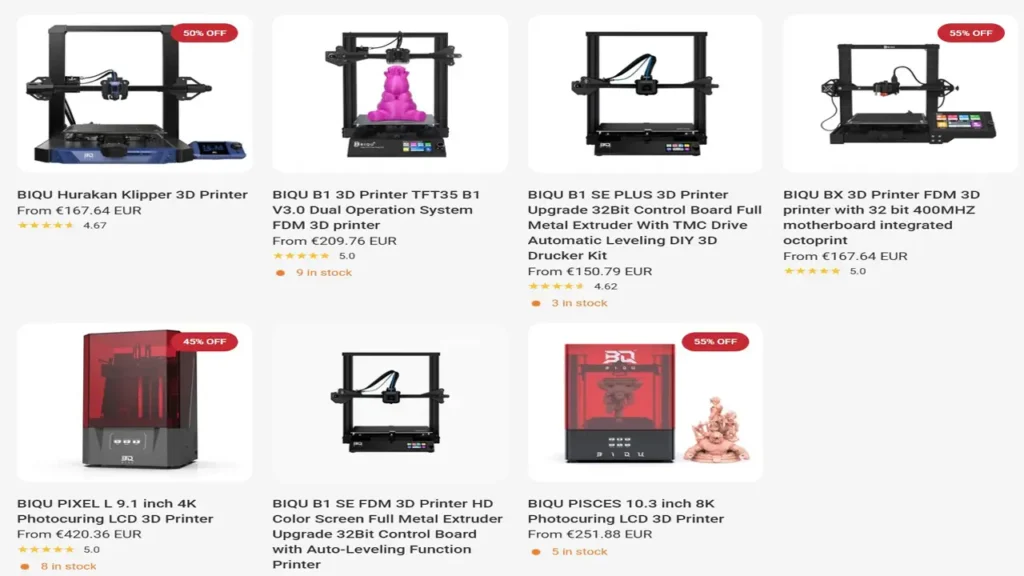
Discover BIQU Technology’s innovative 3D printers at BestChinaGadget! From the 50% OFF Hurakan Klipper to the 8K PISCES photocuring model, explore top-rated FDM and resin printers with dual extrusion, auto-leveling, and limited-time discounts. Elevate your projects with precision engineering—shop now for cutting-edge performance and unbeatable value!
