
1. Introduction to Nothing Phone 3
There are very few smartphone brands in the world today that genuinely make you stop, look twice, and ask — wait, what is that? Nothing is one of them. Founded by Carl Pei, co-founder of OnePlus, Nothing has built a reputation for creating devices that look, feel, and behave entirely differently from everything else on the market. The Nothing Phone 3 is the company’s most ambitious product to date — a smartphone that combines bold industrial aesthetics, a revolutionary rear lighting system, clean Android software, and competitive flagship hardware into one unforgettable package.
Nothing describes Phone 3 as a device that combines elegantly bold and playful design with a new kind of experience — one that is more personal, intuitive, and evolves with every use. It is not just a phone that performs; it is a phone with a soul that understands you and helps you stay in flow.
Released on July 15, 2025, and officially announced on July 1, 2025, the Nothing Phone 3 is priced at $799 for the base 12GB RAM / 256GB storage variant and $899 for the top-spec 16GB RAM / 512GB version. That positions it firmly at the lower end of the flagship bracket — alongside phones like the Samsung Galaxy S25, Google Pixel 9, and OnePlus 13 — yet Nothing Phone 3 takes an entirely different approach to competing. Rather than out-specing the competition, it out-personalities them.
In this full review, we will walk you through every major aspect of the Nothing Phone 3: its iconic transparent design, the all-new Glyph Matrix system, smart LED notifications, the clean Nothing OS experience, camera performance, and the hardware specs that power it all. Let’s get into it.
2. Iconic Transparent Design
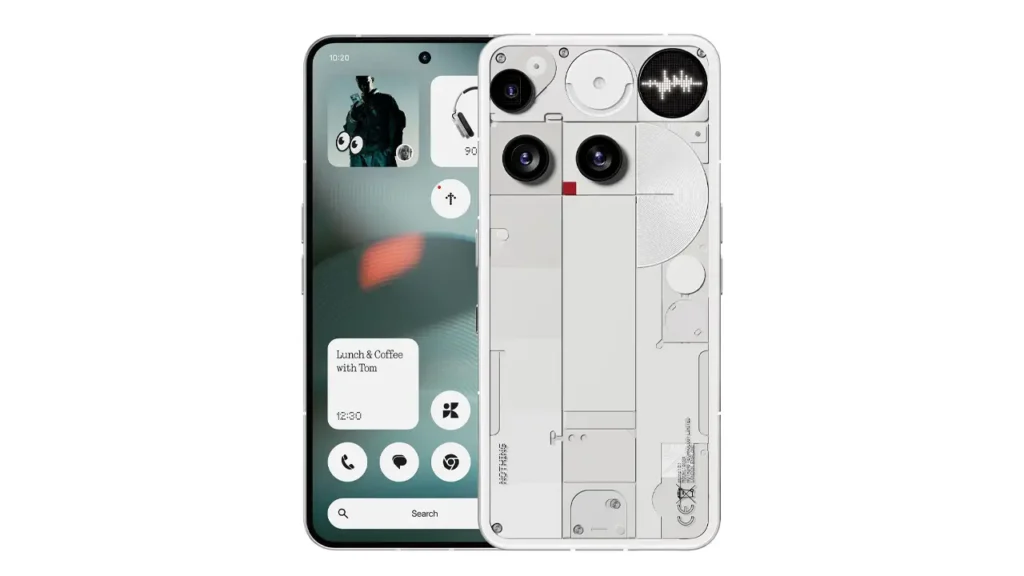
From the moment Nothing launched its very first phone in 2022, the transparent back design became its signature calling card. While every other Android flagship was competing with identical glass slabs and hidden internals, Nothing dared to do the opposite — it let you see what was inside. And it didn’t just expose raw circuit boards; it designed those internals to look beautiful.
The Nothing Phone 3 takes this philosophy further than ever. The transparent back panel reveals carefully arranged internal components — wiring runs, structural elements, and modules — that are deliberately positioned to create an aesthetically pleasing visual when viewed through the glass. It is industrial design meets consumer technology, and it works brilliantly.
The build quality is premium throughout. The device measures 160.6 × 75.6 × 9.0 mm and weighs 218g. The front is protected by Corning Gorilla Glass 7i, while the back uses the more durable Gorilla Glass Victus. The frame is aluminum. The Phone 3 is available in two color options: Black and White — both of which keep the focus on the transparency and the visual details behind the glass.
One significant design change in the Phone 3 is the removal of the traditional Glyph LED strips that lined the back of previous models. According to Nothing’s head of design Adam Bates, removing those strips freed up internal space, allowed for smaller custom-made components, and ultimately gave the design team more freedom to arrange the internals in a more expressive way. The result is a back panel that looks even more curated and intentional than its predecessors.
The device carries an IP68 rating for water and dust resistance, meaning it can survive submersion in water without damage. So the striking transparent aesthetic is not just beautiful — it is built tough.
3. Evolution of the Glyph Interface
To truly appreciate the Glyph Matrix, you need to understand where the Glyph Interface came from and what it has meant to Nothing as a brand.
When Nothing Phone (1) launched in 2022, it introduced the world to the Glyph Interface — a series of white LED strips arranged in geometric patterns across the back of the device. These were not simply decorative. They were functional: different patterns lit up for different notifications, incoming calls, charging status, and even custom app alerts. You could see your phone charging from across the room. You could know who was calling without picking up the device. It was a completely different way of thinking about the back of a smartphone.
The concept generated enormous attention and became the defining feature of the Nothing brand. The Glyph Interface was clever, minimal, and purposeful — a perfect embodiment of Nothing’s design philosophy: less distraction, more meaning.
With Phone (2) in 2023, Nothing refined the system. More LEDs were added, patterns became more sophisticated, and customization options expanded. But the fundamental architecture remained the same: fixed LED strips arranged in a segment-based pattern.
The Nothing Phone 3 changes everything. The Glyph Interface as it previously existed is gone. In its place is something entirely new: the Glyph Matrix. Rather than simply improving on what came before, Nothing has reimagined the concept from the ground up — and the results are genuinely exciting.
4. New Glyph Matrix Lighting System
The Glyph Matrix is the single most talked-about feature of the Nothing Phone 3, and for good reason. It is a fundamentally different approach to rear-panel lighting, and it elevates the concept from functional notification tool to expressive interactive display.
Here is what it is: a compact dot-matrix display located in the top-right corner of the phone’s back panel. It is composed of 489 individually addressable micro-LEDs arranged in a 25×25 pixel grid. Unlike the LED strips on previous Nothing phones, which could only light up in fixed segments, the Glyph Matrix can control each individual LED independently. That means it can render shapes, symbols, animations, text, and even simple graphics.
Nothing’s head of design Adam Bates explained the thinking behind the shift: “The Glyph Matrix replaces traditional segmented light strips with a dynamic, evolving visual system. Rather than simple indicators, it enables movement, pattern formation, and fluid animations that give the phone a sense of personality. It can now form symbols, abstract visuals, and dynamic feedback, allowing users to connect with their device in an entirely new way. The philosophy remains the same: less distraction, more meaning. But the scope has expanded. The back of the phone is no longer just a tool for alerts; it is a canvas for interaction.”
That description captures it perfectly. Think of the Glyph Matrix as pixel art for your pocket — a minimalist but highly programmable display that communicates through motion and symbolism.
The Glyph Matrix also comes with a dedicated capacitive Glyph Button on the back of the phone. This button lets you cycle through the available Glyph Toys and interact with the display without ever needing to wake the main screen. It is a thoughtful hardware addition that makes the feature feel complete and purpose-built.
Nothing has also released a public SDK (Software Development Kit) for the Glyph Matrix, inviting third-party developers to create their own Glyph Toys and custom integrations. This means the system will only grow more capable and creative over time, driven by Nothing’s community and developer ecosystem.

5. Smart LED Notifications and Visual Alerts
One of the most practical applications of the Glyph Matrix is its use as a smart notification and alert system. Nothing has always positioned the Glyph Interface as a tool for reducing screen time — giving you the information you need without requiring you to unlock your phone — and the Glyph Matrix takes this idea to a new level.
Here is what the Glyph Matrix can show you in terms of notifications and alerts:
Essential Notifications: Users can create custom rules that determine which apps and contacts are important enough to trigger the Glyph Matrix. When you flip the phone face-down, only those selected notifications will light up the rear display. This “Flip to Glyph” feature is one of the core use cases Nothing has designed the system around.
Contact-Based Alerts: You can assign specific app alerts and even custom pixel-art icons to individual contacts. When a message arrives from that person, the Glyph Matrix displays their assigned avatar as a pixelated animation — a surprisingly personal and fun touch.
Caller ID: Through an OTA update released after launch, the Glyph Matrix can now display the caller’s name or number when you long-press the Glyph Button during an incoming call. This means you can see who is calling without flipping the phone over.
Real-Time Progress Indicators: Apps dealing with progress-based notifications — such as food delivery services or ride-hailing apps — can push live updates directly to the Glyph Matrix. You can see your delivery progress or countdown to arrival right on the back of the phone.
System Status: The Glyph Matrix also functions as a battery indicator, showing you the current charge level through a visual display on the rear panel.
Recording Indicator: A dedicated red LED light on the back of the phone blinks whenever you are recording video or using the voice recorder — so anyone nearby knows when they are being filmed.
The combination of all these features makes the Glyph Matrix a genuinely useful notification management tool, not just a novelty. It rewards the practice of putting your phone face-down — something Nothing actively encourages as part of its “less screen time” philosophy.
6. Clean Android Experience with Nothing OS
The software experience on the Nothing Phone 3 is powered by Nothing OS 3.5, built on top of Android 15. Nothing OS has always been one of the cleanest and most restrained Android skins available, and version 3.5 continues that tradition while adding meaningful new features.
Nothing OS 3.5 retains Android 15’s full feature set and app compatibility while layering in Nothing’s own design language — monochrome typography, dot-matrix inspired fonts, and a minimalist widget system that feels cohesive and intentional. There are no bloatware apps, no pushy notifications from pre-installed services, and no excessive customization layers that slow things down.
The key new software features in Nothing OS 3.5 include:
Essential Space: An AI-powered hub for storing and organizing text notes, screenshots, and audio recordings. The system uses on-device AI to automatically categorize content, surface relevant items, and even create calendar reminders from your notes.
Essential Search: A universal smart search bar that lets you search across contacts, photos, files, apps, and even get answers to queries like weather updates and calendar events — all from a single interface. Think of it as a more deeply integrated version of Spotlight Search on iOS, built natively into the Android experience.
Flip to Record: A feature accessed by long-pressing the Essential Key on the side of the phone. It activates the microphone and begins a recording that can be automatically transcribed and summarized by AI after the session ends. This is particularly useful for meetings, lectures, or any situation where you need a quick audio summary.
Nothing has committed to five major Android updates and seven years of security patches for the Phone 3. That means the device will receive Android OS updates through approximately 2030 — a very strong software support commitment that rivals what Google offers for Pixel devices.
7. Smooth and Minimal Android Interface
Nothing OS is consistently praised by users and reviewers as one of the best Android experiences available — and the Phone 3’s version takes that reputation even further. The interface is built on the principle of doing more with less: fewer unnecessary features, less visual noise, and a design system that stays out of your way.
The home screen uses a clean grid layout with Nothing’s signature dot-matrix aesthetic. Widgets are minimal and functional. The app drawer is fast and searchable. Animations are smooth and purposeful without being flashy.
What makes Nothing OS particularly special is its sense of restraint. Most Android manufacturers add layer upon layer of custom features, competing screens, and proprietary apps — creating a cluttered experience that many users immediately strip back. Nothing OS starts from a place of minimalism and adds only what genuinely improves the experience.
The 6.67-inch AMOLED display running at 120Hz makes everything feel fluid and responsive. The panel supports a 1.5K resolution (2800 × 1260 pixels) and reaches a peak brightness of 4,500 nits — making it perfectly readable in direct sunlight. Bezels are slim at just 1.87mm on all sides, giving the display an impressively clean, edge-to-edge appearance.
Nothing OS also benefits from the raw performance of the Snapdragon 8s Gen 4 chipset underneath, which ensures that every swipe, scroll, and app launch feels instant. There is no lag, no stutter, and no compromise in day-to-day performance.

8. Camera System and Photography Features
The Nothing Phone 3 features a quad-camera setup — four 50MP sensors in total — making it the most capable camera system Nothing has ever shipped in a phone.
Rear camera system:
- Main camera: 50MP, f/1.7 aperture, large 1/1.3-inch sensor — the largest sensor Nothing has ever used
- Periscope telephoto: 50MP, f/2.7 aperture, 3x optical zoom, with macro photography support
- Ultra-wide: 50MP, f/2.2 aperture, 1/2.76-inch sensor
Front camera:
- Selfie camera: 50MP, centered punch-hole design
All four cameras — including the selfie — can shoot 4K video at 60fps. That is a significant capability that places the Phone 3 alongside much more expensive flagship competitors.
The camera app includes Action Mode for stabilized video, Portrait Mode, Pro Design Presets for artistic filters, and AI SuperRes Zoom that sharpens digital zoom shots for clearer text and detail. The Nothing Gallery app adds further editing options including color grading tools.
A post-launch software update (Nothing OS V3.5-250801) brought significant camera improvements: manual exposure became more precise, AI SuperRes Zoom sharpened text at zoom levels, Action Mode produced cleaner motion shots, and color cast issues were corrected across multiple scenarios.
One uniquely fun camera feature tied to the Glyph Matrix: when you use the rear dot-matrix display as a viewfinder (called Glyph Mirror), the phone automatically saves a stylized pixel-art version of your photo alongside the regular image. It is quirky, creative, and very on-brand for Nothing.
9. Hardware Performance and Battery Life
The Nothing Phone 3 is powered by the Qualcomm Snapdragon 8s Gen 4, manufactured on a 4nm process. While this is not the top-tier Snapdragon 8 Elite found in the Samsung Galaxy S25 or OnePlus 13, it is still an extremely capable and efficient processor — and Nothing claims it delivers a 36% faster CPU, 88% faster GPU, and 125% faster AI processing compared to the Snapdragon 8 Plus Gen 1 in the Phone 2.
| Specification | Details |
|---|---|
| Processor | Qualcomm Snapdragon 8s Gen 4 (4nm) |
| GPU | Qualcomm Adreno 825 |
| RAM | 12GB / 16GB LPDDR5x |
| Storage | 256GB / 512GB UFS 3.1 |
| Display | 6.67-inch AMOLED, 1.5K (2800×1260), 120Hz, 4500 nits peak |
| Battery | 5,150 mAh Silicon Carbon (5,500 mAh in India) |
| Wired Charging | 65W (0–50% in under 20 minutes) |
| Wireless Charging | 15W |
| Reverse Wireless | 5W |
| Operating System | Nothing OS 3.5 (Android 15) — upgradeable to Nothing OS 4.0 (Android 16) |
| Wi-Fi | Wi-Fi 7 (802.11be) |
| Bluetooth | Bluetooth 6.0 |
| Water Resistance | IP68 |
| Dimensions | 160.6 × 75.6 × 9.0 mm, 218g |
| Colors | Black, White |
| Software Support | 5 major Android updates, 7 years of security patches |
| Price | From $799 (12GB/256GB) — $899 (16GB/512GB) |
The battery is one of the Phone 3’s strongest suits. The 5,150 mAh silicon-carbon cell is the largest Nothing has ever shipped, and according to Nothing’s internal testing, it delivers up to 80 hours of battery life. In practical terms, most users should comfortably get through two full days of moderate use on a single charge.
The 65W wired charging is impressively fast — Nothing claims it can take the battery from 1% to 50% in under 20 minutes. Add 15W wireless charging and 5W reverse wireless charging to the mix, and you have one of the most well-rounded charging setups in this price range.
Connectivity is fully up to date with Wi-Fi 7 and Bluetooth 6.0 — the latest standards available — ensuring the Phone 3 will remain connectivity-capable for years to come.

10. Final Verdict: Is Nothing Phone 3 Worth It?
The Nothing Phone 3 is a genuinely fascinating smartphone — and one that is surprisingly difficult to compare to anything else on the market. That is, arguably, the highest compliment you can pay a phone at this price point.
Let’s be honest about what it is not: the Snapdragon 8s Gen 4 is a step below the absolute best Android processors available in 2025. The Phone 3 will not out-benchmark a Galaxy S25 Ultra or an OnePlus 13. If raw processing power is your top priority, those phones are stronger choices on paper.
But that framing misses the point of the Nothing Phone 3 almost entirely.
What the Phone 3 offers that no other phone at $799 can match is a complete, cohesive experience built around a clear and consistent design philosophy. The transparent back is unmistakable. The Glyph Matrix is genuinely innovative — a 489-micro-LED rear display that functions as a notification system, a set of interactive Glyph Toys, a caller ID display, a battery indicator, and a creative canvas. The Nothing OS 3.5 is one of the cleanest Android interfaces available, with thoughtful AI features that enhance daily life without overwhelming it. And the quad 50MP camera system delivers genuine photographic versatility across wide, ultra-wide, and 3x periscope telephoto lenses.
| What We Love | What to Consider |
|---|---|
| Unique transparent design with premium build | Not the most powerful chip in class |
| Glyph Matrix — genuinely innovative rear display | No microSD card slot |
| Four 50MP cameras including periscope zoom | $799 starting price is a step up from Phone 2 |
| Clean Nothing OS with 5 years of Android updates | Glyph Matrix SDK still growing ecosystem |
| 5,150 mAh battery + 65W fast charging | No Qi2 wireless charging |
| Wi-Fi 7 + Bluetooth 6.0 + IP68 | Asymmetric camera design may not suit all tastes |
The Nothing Phone 3 is best described as a flagship for people who are tired of flagships looking and feeling the same. It is for users who value design, personality, and thoughtful software over raw benchmark numbers. It is for anyone who has ever looked at a sea of identical glass rectangles and wished that one of them had a soul.
With the Glyph Matrix, Nothing has introduced the most genuinely original smartphone feature in years — one that reduces screen dependency while adding a layer of expressive, personal interaction to the back of your phone. Combined with one of the cleanest Android experiences available and a camera system that punches well above its class, the Nothing Phone 3 makes a compelling case for itself.
Is it worth $799? If you are looking for the most powerful Android phone money can buy, there are better-spec’d options. But if you are looking for the most interesting, most distinctive, and most thoughtfully designed Android phone in its price bracket — the answer is a confident yes. The Nothing Phone 3 is, without question, one of the most unique flagships of 2025.
BestChina3DPrinters
Expert Reviews & Rankings
Independent 3D Printer Reviews
Your trusted source for Chinese 3D printer reviews, rankings, and comparisons. We buy, test, and review every printer so you can make informed decisions.
