
When foldable phones first hit the market, they were luxury items reserved for tech enthusiasts with deep pockets. Fast forward to 2026, and the landscape is changing dramatically. The Blackview Hero 10 review wouldn’t be complete without acknowledging what this device represents: a genuine attempt to democratize foldable technology. Priced at approximately $350-$400 depending on where you shop, this flip-style foldable challenges the notion that you need to spend over $1,000 to join the foldable phone revolution.
But here’s the million-dollar question—or rather, the $400 question: Can a budget foldable deliver a satisfying experience, or are the compromises too significant? After diving deep into what this device offers, I’m here to give you the complete picture. Whether you’re curious about foldables but hesitant about flagship prices, or you’re simply wondering if Blackview’s ambitious budget offering is worth your money, this review will help you decide.
Price and Positioning: Understanding the Blackview Hero 10 review Price
Let’s talk numbers, because the Blackview Hero 10 price is simultaneously its biggest selling point and its most confusing aspect. According to official sources and retailer listings, you’ll encounter significant price variations depending on where you shop. On Blackview’s official website, the Hero 10 costs around $530, but the same device can be found for approximately $400 on AliExpress, while Amazon listings show prices reaching $600.
This price disparity isn’t unusual for brands that sell primarily online through multiple channels. The sweet spot for this device appears to be around $350-$400, which makes it one of the most affordable foldables on the market. To put this in perspective, Samsung’s Galaxy Z Flip 6 retails for $1,099, making the Hero 10 less than half the price of its premium competitor.
The MSRP variance exists for several reasons: different retailers have different overhead costs, promotional periods vary, and import fees can fluctuate depending on your region. My advice? Shop around, check return policies carefully, and don’t rush into the first listing you find. The price range from $350 to $600 represents vastly different value propositions for essentially the same hardware.
What the “Flip” Name Means: Blackview Hero 10 Flip Explained
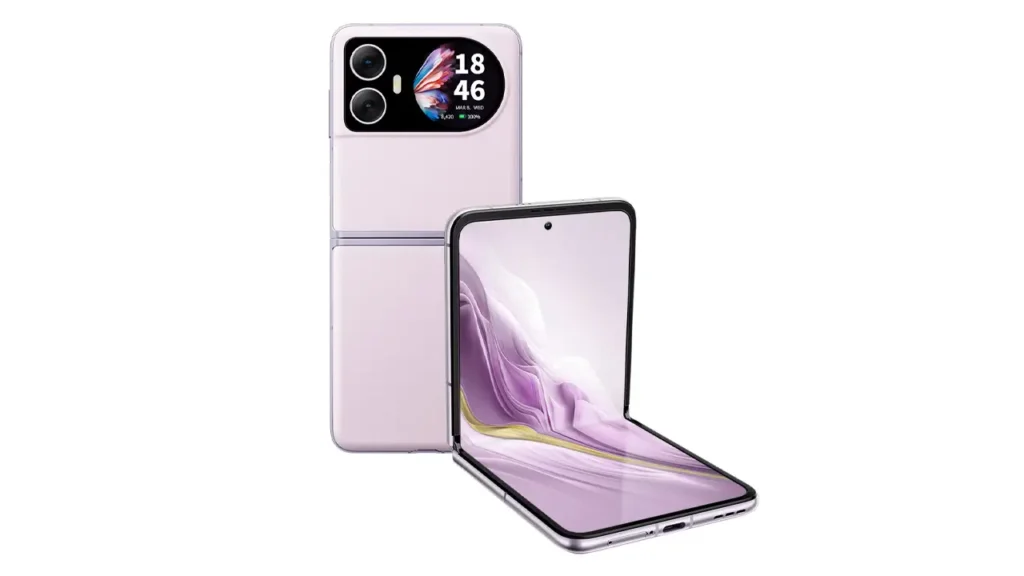
You might notice the device is often marketed as the Blackview Hero 10 Flip, and there’s good reason for this naming convention. Unlike book-style foldables that open into tablet-sized displays, the Hero 10 adopts the clamshell or “flip” form factor that dominated the pre-smartphone era—think early 2000s Motorola Razr vibes, but with a modern twist.
When unfolded, the device maintains standard smartphone dimensions with a large 6.9-inch display, and when folded, it becomes pocket-friendly and compact. The “Flip” designation helps differentiate it from larger foldables and immediately communicates its form factor to potential buyers. It’s a smart branding move that aligns the Hero 10 with the popular flip category dominated by Samsung and Motorola.
This form factor offers practical advantages: it’s more pocketable than traditional smartphones when folded, potentially more durable since the screen is protected when closed, and it offers a nostalgic aesthetic that many users find appealing. However, as we’ll discuss later, the tiny external display means you’ll be unfolding this device constantly for most tasks.
Key Specifications at a Glance: Blackview Hero 10 Specs
Before we dive deeper, let’s examine the core Blackview Hero 10 specs that define this device. Here’s everything you need to know in one convenient table:
| Specification | Details |
|---|---|
| Display (Main) | 6.9″ AMOLED, 2560×1080, 60Hz, 443 PPI |
| Display (Cover) | 1.19″ AMOLED, 390×390 pixels |
| Processor | MediaTek Helio G99 (6nm, octa-core) |
| RAM | 12GB LPDDR4x (expandable to 36GB virtual) |
| Storage | 256GB internal |
| Main Camera | 108MP primary + 8MP ultra-wide |
| Selfie Camera | 32MP (internal display) |
| Battery | 4,000mAh (dual-cell: 2700mAh + 1300mAh) |
| Charging | 45W wired (0-48% in 20 minutes) |
| Operating System | Android 13 with DokeOS 4.0 |
| Connectivity | 4G LTE, Wi-Fi, Bluetooth, NFC |
| Weight | 198g |
| Thickness | 8.08mm (unfolded) |
| Build Materials | Vegan leather back, aerospace-grade aluminum frame |
| Colors | Eclipse Black, Sakura Purple |
Looking at these specifications, the Hero 10 presents an interesting package. The display technology is genuinely impressive for the price point, offering 2.5K resolution with 443 PPI and TÜV SÜD Low Blue Light certification. The processor choice, however, reveals where Blackview made strategic compromises to hit that aggressive price target.

Performance and Compromises: The Helio G99 Foldable Phone Experience
The Helio G99 foldable phone category is relatively new, and the Hero 10 stands as one of the pioneering devices in this space. Let’s be completely honest: the MediaTek Helio G99 is a 6nm chipset that’s competent for everyday tasks but lacks 5G connectivity. In 2026, this is a notable limitation, though not necessarily a dealbreaker for everyone.
The Helio G99 handles social media scrolling, web browsing, and light gaming without significant issues. The device manages everyday tasks reasonably well and can handle many mobile games, though not always at maximum graphics settings. If you’re a mobile gaming enthusiast who demands high-end performance, this probably isn’t your device. However, for casual users who prioritize the foldable form factor over raw processing power, the G99 delivers acceptable performance.
The 12GB of RAM helps maintain smooth multitasking, and the option to expand this virtually to 36GB (though this uses storage space) provides additional headroom. In practical use, reviewers reported consistent screen-on times of approximately 5.5 hours from the 4,000mAh battery, which is decent but not exceptional for a foldable device.
One area where the processor choice shows its limitations is in the refresh rate. The main display is capped at 60Hz, which feels noticeably less fluid than the 120Hz panels found on premium devices. While 60Hz can be acceptable as a cost-cutting measure, many feel this compromise wasn’t entirely necessary at this price point.
The lack of 5G connectivity is perhaps the most significant compromise. In many regions, 4G LTE still provides adequate speeds for most tasks, but future-proofing is a valid concern. If you’re planning to use this device for several years, the absence of 5G might become increasingly limiting as networks continue evolving.
Cameras: Marketing vs Reality with the 108MP Foldable Phone
The 108MP foldable phone marketing sounds impressive on paper, and to Blackview’s credit, they’ve equipped the Hero 10 with a genuine 108MP main sensor paired with ArcSoft algorithms. But as any photography enthusiast knows, megapixels don’t tell the whole story.
The 108MP sensor performs admirably in good lighting conditions, capturing detailed shots with accurate colors. Blackview emphasizes the camera’s ability to capture scenes with realistic colors and fine details, particularly in well-lit environments. The camera system includes computational photography features and various shooting modes to maximize versatility.
However, expectations should be calibrated to the price point. Low-light performance, while aided by the large sensor and processing algorithms, doesn’t match flagship devices. Night mode helps, but you’ll notice more noise and less detail compared to premium smartphones. The 8MP ultra-wide camera is functional but unremarkable, serving primarily for occasional wide-angle shots rather than as a primary shooting tool.
The 32MP selfie camera, positioned in the internal display, produces decent results. One advantage of the flip form factor is that you can use the superior main cameras for selfies by utilizing the cover display as a viewfinder—though the tiny 1.19″ external screen makes framing somewhat challenging.
The device supports flex mode photography, allowing you to prop the phone at various angles for hands-free shooting in 2K resolution. This feature genuinely enhances the photography experience and represents one area where the foldable form factor provides practical advantages over traditional smartphones.
Why “Cheap Foldable” Is Its Own Category: Understanding the Cheap Foldable Smartphone Market
The cheap foldable smartphone segment represents a fascinating market evolution. For years, foldables existed exclusively in the premium tier, but devices like the Hero 10 are challenging this paradigm. However, understanding where manufacturers economize is crucial for setting appropriate expectations.
Software support represents one common area where budget brands compromise. Blackview promises three years of Android updates, supporting the Hero 10 through Android 16, which is respectable but falls short of the seven-year commitment Google makes for Pixel devices. The real question isn’t just about major version updates but security patches and timely implementation.
The DokeOS 4.0 interface running atop Android 13 presents a mixed experience. Reviewers describe it as reasonably lightweight but simultaneously clunky, with barren Quick Settings, an overly filled status bar, jarring animations, and occasional rough English translations. It’s functional, but it lacks the polish of mature Android skins from Samsung, Google, or OnePlus.
Another economizing area is component quality. The haptic motor delivers mushy, unpleasant vibrations that actively detract from the user experience. These are the kinds of quality-of-life compromises that distinguish budget devices from premium ones—they work, but they don’t feel refined.
Network compatibility also varies, particularly for users in certain regions. In the United States, T-Mobile and MVNOs on its network work well, Verizon activation has limited success, and AT&T compatibility is extremely unlikely. Always verify network compatibility before purchasing if you’re in a region with specific carrier requirements.

Hinge, Crease, and Longevity: Blackview Hero 10 Hinge Durability
Perhaps the most critical question for any foldable phone concerns its mechanical longevity. The Blackview Hero 10 hinge durability is backed by manufacturer claims of 250,000 fold cycles using aerospace-grade high-strength steel in a waterdrop-style hinge design. If accurate, this translates to over 15 years of use at approximately 45 folds per day.
The waterdrop hinge design aims to minimize the crease while allowing the phone to flex and hold at various angles, with zero gap when fully closed. In practice, reviewers note that the hinge feels reasonably solid with minimal side-to-side play, which is encouraging compared to some budget foldables.
However, the crease itself presents a more noticeable compromise. The crease is visible when looking at the display head-on, particularly noticeable when the phone lies flat, and you can definitely feel the bump when running your finger across it. This tactile sensation is more pronounced than on premium foldables, though at this price point, it’s an understandable compromise.
The display utilizes Ultra-thin Glass (UTG) with a bespoke protective film for enhanced impact resistance, which should provide better durability than plastic screens. However, Blackview warns users not to remove the factory-applied screen protector, suggesting that the underlying glass may be more vulnerable than premium implementations.
Some reviewers express concern about the long-term reliability, noting that even if the hinge survives the claimed 250,000 folds, questions remain about Blackview’s aftersales support and repair parts availability. This is a valid concern for any lesser-known brand entering the foldable market.
Comparison with Premium Flip Models: The Budget Flip Phone Proposition
When evaluating the budget flip phone category, comparison with established competitors is inevitable. The Hero 10 exists in a market where the Motorola Razr and Samsung Galaxy Z Flip series define consumer expectations, even if they operate at different price points.
The 2024 Motorola Razr, priced at $699, offers more powerful performance, better software support track record, and a more functional full-size cover display. That’s nearly double the Hero 10’s optimal price, but it represents a more refined, mature product with established brand support.
The Galaxy Z Flip 6, while even more expensive, showcases what’s possible when manufacturers don’t need to make aggressive cost compromises. The Z Flip 6’s crease is nearly invisible from most angles, the hinge allows for more viewing angles, and the overall polish is unmistakable.
So who is the Hero 10 for? It’s ideal for users who meet these criteria:
- You’re curious about foldables but unwilling to spend flagship prices
- You primarily use your phone for social media, messaging, and light content consumption
- You appreciate the compact form factor more than cutting-edge performance
- You’re comfortable with 4G connectivity and don’t require 5G
- You understand and accept the software limitations and support questions
Conversely, skip the Hero 10 if you:
- Need reliable 5G connectivity
- Demand flagship-level performance for gaming or intensive apps
- Require guaranteed long-term software support with timely updates
- Can’t tolerate a visible, tactile crease
- Need comprehensive warranty and repair support infrastructure
Real-World Usage: What Daily Life Is Like
Living with the Hero 10 for extended periods reveals both its charms and frustrations. The vegan leather back provides excellent grip and premium aesthetics, particularly in the Sakura Purple colorway. At just 198g and 8.08mm thin when unfolded, it feels lighter and slimmer than many flagship devices.
The compact folded form factor genuinely fits better in pockets, and there’s an undeniable satisfaction to snapping the device closed after ending a call—it’s a tactile experience that slab phones simply can’t replicate. The included protective case and 45W charger add value, especially considering many premium manufacturers no longer include chargers.
However, the tiny cover display proves frustrating in daily use. The 1.19-inch round screen shows clock, battery status, notifications, and basic controls, but the tiny size and small font make effectively reading notifications difficult. You’ll find yourself constantly unfolding the device for tasks that larger external displays handle without opening.
The display quality itself impresses when you do unfold it. Colors are vibrant with a maximum brightness of 1,300 nits, making it easy to view even in direct sunlight. The 6.9-inch canvas provides ample space for media consumption and productivity tasks when needed.
Battery life falls into the “adequate but not exceptional” category. The 4,000mAh capacity, split between dual cells, handles a full day of moderate use. The 45W charging capability brings the battery from 0 to 48% in approximately 20 minutes, which helps mitigate the smaller capacity somewhat.

Software Experience and Update Commitment
The software experience deserves special attention because it significantly impacts daily usability. DokeOS 4.0 overlaying Android 13 presents a functional but occasionally quirky interface. It’s colorful and reminiscent of MIUI from years past, with a learning curve but generally working well without hindering the overall experience.
Split-screen functionality feels particularly relevant on a foldable device, and the camera app’s ability to pin photo previews to the top portion of the screen while keeping controls at the bottom demonstrates thoughtful software adaptation for the form factor. However, unlike premium foldables, the Hero 10 doesn’t seamlessly transition apps between the cover and main displays.
The three-year Android update commitment represents a positive step for a budget brand, though execution will determine whether this promise materializes into timely, stable updates. Security patch frequency remains uncertain, which could be concerning for security-conscious users.
The Foldable Phone Under $400 Value Proposition
As we evaluate the foldable phone under $400 segment, the Hero 10 represents both promise and compromise. It proves that foldable technology can be accessible without requiring four-figure investments, which is genuinely exciting for market expansion. However, it also highlights that certain compromises become unavoidable when targeting aggressive price points.
The hardware compromises—60Hz display, 4G-only connectivity, midrange processor—are understandable and manageable for the right user. The more concerning questions revolve around long-term durability, software support, and whether Blackview can provide adequate aftersales service if problems arise.
Verdict: Who Should Buy in 2026
After extensive evaluation, here’s my verdict on the Blackview Hero 10:
Best for:
- Foldable-curious budget shoppers who want to experience the form factor without flagship investment. If you’ve been intrigued by foldables but hesitant about spending $1,000+, the Hero 10 offers a relatively low-risk entry point.
- Light users prioritizing portability who primarily use their phones for messaging, social media, and basic content consumption. If you don’t need cutting-edge performance and appreciate the compact folded form factor, the Hero 10’s compromises might not affect you.
- Secondary device seekers looking for a unique pocket phone. As a secondary or travel device where you don’t need your primary phone’s full capabilities, the Hero 10 fills an interesting niche.
Not recommended for:
- Power users who demand high-end performance, extensive gaming capabilities, or need 5G connectivity for their workflows.
- Long-term reliability seekers who plan to use their device for 3+ years and need confidence in manufacturer support, warranty service, and parts availability.
- Photography enthusiasts who prioritize camera quality. While the 108MP sensor is respectable, it can’t match flagship camera systems, particularly in challenging lighting conditions.
Final Thoughts
The Blackview Hero 10 represents an important moment in foldable phone evolution—it’s one of the first genuine attempts to make this form factor accessible to budget-conscious consumers. At its best pricing around $350-$400, it delivers a functional foldable experience with surprisingly good build quality and an impressive main display.
However, it requires users to accept notable compromises: the visible crease, limited external display functionality, midrange performance, 4G-only connectivity, and questions about long-term support. These aren’t necessarily dealbreakers, but they’re important considerations that differentiate this device from premium alternatives.
If you understand and accept these limitations, the Hero 10 can be a fun, functional device that delivers the unique foldable experience at a fraction of flagship prices. If you need flagship reliability, performance, or support, save up for a Motorola Razr or Samsung Galaxy Z Flip instead.
The foldable market is maturing, and budget options like the Hero 10 are pushing the technology toward broader accessibility. Whether this specific device is right for you depends entirely on your priorities, expectations, and willingness to embrace the compromises that make its aggressive pricing possible. Choose wisely, shop carefully for the best price, and verify network compatibility before purchasing—and you might just find that the foldable experience you’ve been curious about is more accessible than you thought.
If foldables like the Blackview Hero 10 prove one thing, it’s that innovation is getting cheaper—and faster. The next wave isn’t just hardware; it’s what AI can do on top of it. For practical AI tools, smart workflows, and next-gen ideas you can actually use, visit https://aiinnovationhub.shop/
