
The smartphone landscape in 2025 continues to evolve at a breathtaking pace, and the Vivo X200 Pro has emerged as one of the most talked-about flagship devices of the year. With its sophisticated ZEISS-branded camera system, cutting-edge MediaTek chipset, and refined design philosophy, this device represents Vivo’s ambitious push into the premium smartphone segment. Whether you’re a photography enthusiast, a performance-driven user, or simply someone looking for a well-rounded flagship experience, the Vivo X200 Pro deserves your attention. In this comprehensive review, we’ll explore everything this device has to offer, from its hardware capabilities to real-world performance.
1. Introduction: Why Vivo X200 Pro Is Trending
The Vivo X200 Pro has captured significant attention in tech circles, and for good reason. Launched as part of Vivo’s flagship X-series lineup, this device builds upon the success of its predecessors while introducing meaningful improvements that address both enthusiast and mainstream needs. The smartphone market has become increasingly competitive, with manufacturers fighting for differentiation in a space where specifications often look similar on paper.
What sets the Vivo X200 Pro apart is its holistic approach to the flagship experience. Rather than focusing on a single standout feature, Vivo has crafted a device that excels across multiple dimensions. The partnership with ZEISS brings optical expertise that elevates mobile photography beyond typical computational tricks. The choice of MediaTek’s latest flagship silicon demonstrates confidence in an alternative to the usual Snapdragon dominance. And the attention to detail in areas like display quality, battery life, and software optimization shows a maturity in product development.
The device has generated particular buzz among photography enthusiasts who appreciate the nuanced approach to image processing. Unlike some competitors that aggressively process images toward a specific “look,” the Vivo X200 Pro offers versatility and natural rendering that appeals to users who want creative control. Early adopters have praised the telephoto capabilities, the low-light performance, and the consistency across all camera modules—a rare achievement in modern smartphones.
For those tracking smartphone trends, the Vivo X200 Pro represents an important data point in the industry’s evolution. It demonstrates that innovation doesn’t always mean reinventing the wheel, but rather refining existing technologies and integrating them thoughtfully. As we dive deeper into this review, you’ll discover why this device has earned its place among 2025’s most compelling smartphone offerings.
2. Design and Build Overview
First impressions matter, and the Vivo X200 Pro makes a strong statement from the moment you unbox it. The device follows a refined design language that balances premium aesthetics with practical functionality. The phone measures approximately 164.1 x 76.0 x 8.2mm and weighs around 221 grams, which places it squarely in flagship territory—substantial enough to feel premium, but not so heavy that it becomes burdensome during extended use.
The front of the device is dominated by a generous 6.78-inch display with elegantly curved edges that flow seamlessly into the aluminum frame. Vivo has opted for a centered punch-hole camera rather than an under-display solution, prioritizing camera quality and display consistency over the marginal aesthetic gain of a completely uninterrupted screen. This practical choice reflects the phone’s overall philosophy of substance over gimmicks.
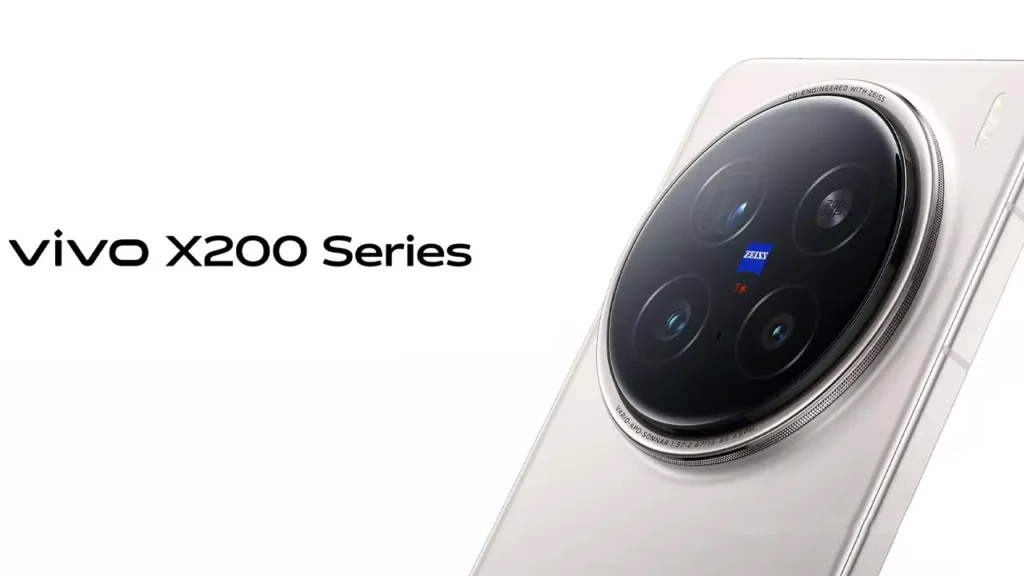
The rear panel showcases the prominent circular camera module, which has become a signature design element of the X-series. This housing contains the impressive array of sensors we’ll explore in detail later, and it bears the prestigious ZEISS branding—a visual reminder of the optical partnership that defines much of this phone’s identity. The camera bump is notable but not excessive, and the phone sits relatively flat on a table thanks to thoughtful engineering.
Vivo offers the X200 Pro in several sophisticated color options, including a titanium-inspired finish and deeper, more traditional shades. The materials feel premium throughout, with Gorilla Glass Victus 2 protecting both front and back, and an IP68/IP69 rating providing comprehensive protection against water and dust ingress. The frame features precision-milled details and well-positioned buttons that offer satisfying tactile feedback.
In-hand, the device feels balanced and well-considered. The weight distribution is even, the curved edges make it comfortable to hold despite the large screen, and the overall build quality inspires confidence. This is a phone built to last and to make a statement about quality craftsmanship.

3. Hardware Platform and Chipset
At the heart of the Vivo X200 Pro beats the MediaTek Dimensity 9400, representing one of the most significant chipset partnerships in Vivo’s flagship history. This processor marks MediaTek’s continued ascent in the premium smartphone segment, and its inclusion in a device of this caliber validates the company’s engineering prowess and competitive positioning against Qualcomm’s Snapdragon offerings.
The Dimensity 9400 is built on TSMC’s second-generation 3nm process technology, which delivers substantial improvements in both performance and efficiency compared to previous generations. The CPU architecture features a 1+3+4 configuration: one Cortex-X925 prime core clocked at up to 3.63 GHz, three Cortex-X4 performance cores running at 3.3 GHz, and four Cortex-A720 efficiency cores at 2.4 GHz. This arrangement provides excellent performance scaling, allowing the chip to deliver flagship-level power when needed while maintaining efficiency during lighter tasks.
Graphics performance comes courtesy of the Immortalis-G925 GPU, which supports hardware-accelerated ray tracing and delivers impressive gaming capabilities. In benchmark testing, the Dimensity 9400 holds its own against competing flagship chipsets, and in real-world usage, the differences become even less apparent. Games run smoothly at high settings, demanding applications launch quickly, and multitasking remains fluid even with dozens of apps in memory.
The chipset also integrates MediaTek’s latest NPU (Neural Processing Unit), which handles AI-related tasks including camera processing, voice recognition, and various machine learning workloads. This dedicated AI hardware accelerates many of the computational photography features that make the Vivo X200 Pro’s camera system so capable.
Paired with the Dimensity 9400 is 12GB or 16GB of LPDDR5X RAM, depending on the configuration, and storage options ranging from 256GB to 1TB of UFS 4.0 memory. These specifications ensure that the phone never feels constrained by memory or storage bottlenecks, and the UFS 4.0 standard provides exceptional read and write speeds that benefit everything from app loading to photo processing.
Thermal management deserves special mention. Vivo has implemented a sophisticated vapor chamber cooling system that keeps the MediaTek Dimensity 9400 running at optimal temperatures even during sustained heavy use. During extended gaming sessions or 4K video recording, the phone remains comfortably warm rather than uncomfortably hot, and performance throttling is minimal.
4. ZEISS Partnership Explained
The collaboration between Vivo and ZEISS represents one of the most significant optical partnerships in the smartphone industry. Unlike superficial brand licensing agreements, the relationship between these two companies involves genuine engineering cooperation that influences everything from lens design to image processing algorithms. Understanding this partnership is essential to appreciating what makes the Vivo X200 Pro’s camera system special.
The ZEISS camera system brings over 175 years of optical expertise to the mobile photography domain. ZEISS engineers work directly with Vivo’s camera development team to optimize lens formulations, reduce optical aberrations, and ensure that each camera module meets stringent quality standards. The lenses undergo ZEISS T* coating treatment, which minimizes reflections and flare while maximizing light transmission—crucial for achieving clean images in challenging lighting conditions.
Beyond the hardware collaboration, ZEISS contributes to the software experience through several distinctive features. The ZEISS Natural Color mode aims to reproduce colors as they appear to the human eye rather than creating oversaturated, social-media-ready images. This approach won’t appeal to everyone, but photographers who value color accuracy and natural rendering appreciate having this option.
The partnership also brings ZEISS’s legendary portrait simulation modes to the Vivo X200 Pro. These modes emulate the bokeh characteristics and rendering styles of classic ZEISS lenses, including the Biotar, Sonnar, Planar, and Distagon profiles. While purists might debate whether these digital simulations truly capture the essence of their analog inspirations, they undeniably add creative flexibility and produce distinctive results that set the phone apart from competitors.
Another tangible benefit of the ZEISS camera system partnership is the attention to optical quality across all focal lengths. Many smartphones excel with their primary camera but compromise on secondary modules. The ZEISS influence ensures that the ultrawide and telephoto cameras receive comparable optical engineering attention, resulting in a more consistent imaging experience regardless of which lens you’re using.
The collaboration extends to quality control as well. Each camera module in the Vivo X200 Pro undergoes testing to meet ZEISS’s optical standards, which helps explain the consistency and reliability users experience. This attention to manufacturing quality reduces unit-to-unit variation and ensures that the camera performs as intended throughout the device’s lifespan.

5. Main Camera Capabilities
The primary camera of the Vivo X200 Pro camera system is a remarkable piece of engineering that serves as the foundation for the device’s photographic capabilities. At its core sits a custom 1-inch-type Sony LYT-900 sensor with approximately 50 megapixels of resolution. This large sensor provides significant advantages in light gathering, dynamic range, and overall image quality compared to the smaller sensors found in most smartphones.
The physical lens covering this sensor features a 23mm equivalent focal length with an f/1.57 aperture—one of the widest apertures available on any smartphone. This combination of large sensor and fast lens creates beautiful background blur naturally, even before computational bokeh effects are applied. The shallow depth of field can be used creatively for subject isolation, or stopped down digitally when you need more in focus.
Image quality from the main camera is exceptional across various shooting scenarios. In good lighting, photos display excellent detail resolution, accurate color reproduction, and impressive dynamic range. The sensor’s large size and high pixel count allow for aggressive cropping while maintaining usable image quality, effectively giving you additional framing flexibility in post-processing.
Low-light performance is where the Vivo X200 Pro camera truly shines. The combination of the large sensor, fast lens, and sophisticated image processing produces clean images with well-controlled noise even in challenging conditions. Night mode enhances this capability further, using multi-frame exposure stacking to extract detail from shadows while preventing highlights from blowing out. The results rival and sometimes exceed dedicated cameras in similar lighting situations.
The camera’s autofocus system employs all-pixel omni-directional PDAF (Phase Detection Autofocus), which provides rapid and accurate focusing across the frame. Whether you’re shooting moving subjects, working in low light, or capturing macro details, the autofocus locks on quickly and tracks reliably. Eye detection works for both humans and pets, adding to the system’s versatility.
Video capabilities match the impressive still photography performance. The main camera can record 8K video at 30fps or 4K at up to 60fps, with excellent stabilization provided by a combination of optical and electronic image stabilization. The footage displays good dynamic range, accurate colors, and smooth motion rendering. For content creators, features like LOG recording and 10-bit color depth provide professional-grade options.
6. Telephoto and Optical Zoom Performance
Telephoto photography has become a critical differentiator in flagship smartphones, and the Vivo X200 Pro telephoto system represents one of the most advanced implementations available. The device features a periscope-style telephoto camera with a 200-megapixel sensor and a focal length equivalent to approximately 135mm in full-frame terms, providing roughly 5.3x optical zoom from the main camera’s perspective.
This isn’t just a high-megapixel sensor for marketing purposes—the implementation is thoughtful and practical. The 200-megapixel resolution allows for significant in-sensor zoom through pixel binning and cropping, extending the usable zoom range well beyond the native optical magnification. In typical use, the camera bins pixels to output 50-megapixel images with improved light sensitivity, but the full resolution remains available when maximum detail is needed.
The periscope design provides several advantages over traditional telephoto implementations. The folded optical path allows for a longer physical focal length within the phone’s slim body, which improves optical quality and reduces the need for aggressive digital processing. The telephoto module includes its own optical image stabilization system, crucial for keeping images sharp at high magnification where even tiny movements can cause blur.
Image quality from the Vivo X200 Pro telephoto camera impresses across its zoom range. At the native 5.3x magnification, photos display excellent sharpness, accurate colors, and good dynamic range. Even at 10x hybrid zoom (combining optical magnification with computational processing), results remain surprisingly usable for social sharing and many practical purposes. Pushing to 20x or even 50x digital zoom produces images that, while not print-worthy, can be valuable for capturing distant subjects that would otherwise be impossible to photograph.
The telephoto camera excels in several specific scenarios. Portrait photography benefits from the natural compression and pleasant bokeh of the longer focal length. Wildlife and sports photography become possible in ways that most smartphones can’t match. Architectural details can be isolated from a distance. And the ability to zoom allows for more creative composition without physically moving closer to your subject.
Low-light performance from the telephoto camera is respectable, though understandably not quite at the level of the main camera’s larger sensor. The phone intelligently switches to the main camera with digital crop in very dim conditions, prioritizing image quality over native optical zoom. This seamless switching happens automatically, though experienced users can override it in Pro mode.

7. Photography Use Cases
The Vivo X200 Pro positions itself as a genuine mobile photography smartphone capable of serving as a primary camera for enthusiasts and even some professional applications. Understanding how the camera system performs across different real-world scenarios helps illustrate its practical capabilities and limitations.
For street photography, the device offers an ideal combination of portability and image quality. The main camera’s 23mm equivalent focal length provides a natural field of view similar to classic street photography lenses. The fast f/1.57 aperture allows shooting in available light without relying on flash, maintaining the candid, natural aesthetic that street photographers prize. The phone’s instant readiness—no lens caps or power-on delays—means you never miss spontaneous moments.
Portrait photography benefits from multiple focal length options and sophisticated computational photography. The main camera creates environmental portraits with natural background blur and excellent subject detail. The telephoto camera produces more traditional portraits with flattering compression and isolation. The ZEISS portrait modes add creative flexibility, allowing you to emulate different lens characteristics. Skin tones render naturally across various lighting conditions, and the edge detection for background blur has improved to handle challenging elements like hair and glasses more accurately.
Landscape photography showcases the camera system’s dynamic range and detail rendering capabilities. The main camera captures sweeping vistas with excellent sharpness from foreground to background. The ultrawide camera (which we haven’t detailed extensively but is present in the system) expands compositional possibilities for dramatic perspectives. The ability to shoot in RAW format preserves maximum information for post-processing, important for landscape photographers who want complete control over the final image.
Macro photography, while not the primary focus of this camera system, is surprisingly capable thanks to the main sensor’s high resolution and close focusing ability. You can capture intricate details of small subjects with pleasing background blur and good color accuracy. While dedicated macro cameras on some competing phones might edge out slightly closer focusing distances, the Vivo X200 Pro’s approach prioritizes overall image quality over extreme close-up capability.
Low-light and night photography represent particular strengths of this mobile photography smartphone. The combination of large sensors, fast lenses, and sophisticated night mode processing allows capturing scenes that many cameras would struggle with. City lights, starry skies, intimate indoor moments—all become accessible without compromising too heavily on image quality. The night mode doesn’t require a tripod for most scenarios, though stability certainly improves results.
Event photography benefits from the camera’s fast and reliable autofocus, good continuous shooting capabilities, and versatility across different focal lengths. Whether you’re documenting a family gathering, concert, or sporting event, the Vivo X200 Pro provides the tools needed to capture meaningful moments. The telephoto camera proves particularly valuable for events where you can’t get physically close to the action.
8. Technical Specifications Snapshot
Understanding the complete technical picture helps contextualize the Vivo X200 Pro’s capabilities and positioning. Here’s a comprehensive look at the Vivo X200 Pro specs across all major categories:
| Category | Specification |
|---|---|
| Display | 6.78″ LTPO AMOLED, 2800×1260, 120Hz, 1-120Hz adaptive, 4500 nits peak brightness |
| Processor | MediaTek Dimensity 9400 (3nm), Cortex-X925 + X4 + A720 cores |
| GPU | Immortalis-G925 with ray tracing |
| RAM | 12GB / 16GB LPDDR5X |
| Storage | 256GB / 512GB / 1TB UFS 4.0 |
| Main Camera | 50MP 1-inch Sony LYT-900, f/1.57, 23mm, OIS, PDAF |
| Telephoto Camera | 200MP periscope, f/2.67, 135mm (5.3x optical), OIS |
| Ultrawide Camera | 50MP, f/2.0, 15mm, autofocus |
| Front Camera | 32MP, f/2.0 |
| Battery | 6000mAh silicon-carbon |
| Charging | 90W wired, 30W wireless, reverse wireless charging |
| Operating System | Android 15 with OriginOS 5 (China) / Funtouch OS 15 (Global) |
| Connectivity | 5G SA/NSA, Wi-Fi 7, Bluetooth 5.4, NFC, IR blaster, USB-C 3.2 |
| Biometrics | Ultrasonic in-display fingerprint, 3D face unlock |
| Durability | Gorilla Glass Victus 2, IP68/IP69 rating, aluminum frame |
| Dimensions | 164.1 x 76.0 x 8.2mm, 221g |
| Audio | Stereo speakers, Hi-Res audio certification, no headphone jack |
The display deserves particular attention in these Vivo X200 Pro specs. The LTPO AMOLED panel supports adaptive refresh rates from 1Hz to 120Hz, which optimizes battery life by reducing the refresh rate during static content. The peak brightness of 4500 nits ensures excellent outdoor visibility even in direct sunlight, while maintaining deep blacks and vibrant colors characteristic of OLED technology. The screen supports HDR10+ for compatible content and offers impressive color accuracy with multiple color profile options.
Battery capacity stands out as exceptional—the 6000mAh silicon-carbon battery represents one of the largest capacities in any flagship smartphone. This advanced battery chemistry provides higher energy density than traditional lithium-ion batteries, allowing the large capacity without proportionally increasing size or weight. Combined with the efficiency of the Dimensity 9400 chipset and LTPO display, battery life easily exceeds a full day of heavy use for most users, with lighter users potentially stretching to two days.
Charging capabilities balance speed with battery health. The 90W wired charging can replenish the large battery from empty to 50% in approximately 15 minutes and reach full charge in around 30-35 minutes. Wireless charging at 30W provides convenient cable-free topping up, and the phone supports reverse wireless charging for accessories like earbuds or smartwatches.

9. Performance and Daily Experience
The Vivo X200 Pro performance in real-world usage is where specifications transform into user experience. Day-to-day interactions with the device reveal how well the hardware and software integrate to create a smooth, responsive, and reliable smartphone.
The MediaTek Dimensity 9400 handles all common tasks with ease. App launches happen nearly instantaneously, switching between applications feels fluid, and even demanding multitasking scenarios—like editing photos while streaming music and maintaining several social media apps in the background—never cause noticeable slowdowns. The generous RAM allocation ensures apps stay resident in memory, reducing reload times when switching back to previously used applications.
Gaming performance is impressive and demonstrates that MediaTek’s flagship silicon now genuinely competes with Qualcomm’s best. Popular titles like Genshin Impact, Call of Duty Mobile, and Honkai: Star Rail run at high graphics settings with stable frame rates. The vapor chamber cooling system keeps temperatures in check during extended gaming sessions, and performance throttling is minimal compared to some competing devices that aggressively limit power to control heat.
The display contributes significantly to the premium user experience. The 120Hz refresh rate makes scrolling through social media feeds, web pages, and long documents feel incredibly smooth. The adaptive refresh rate technology intelligently adjusts between 1Hz and 120Hz based on content, which conserves battery without sacrificing smoothness when it matters. Touch response feels immediate and accurate, important for both productivity and gaming scenarios.
Software experience varies depending on region. The China market receives OriginOS 5, while international markets get Funtouch OS 15, both based on Android 15. The software includes thoughtful features like comprehensive privacy controls, extensive customization options, and useful productivity tools. Some users may find the interface more feature-rich than stock Android, while others appreciate the additional functionality. Vivo has committed to four years of Android version updates and five years of security patches for this device.
Battery life in real-world usage exceeds expectations. The 6000mAh capacity, combined with the efficient chipset and display technologies, delivers exceptional longevity. A typical day of moderate use—social media, photography, video streaming, messaging, and web browsing—typically leaves 40-50% battery remaining by bedtime. Power users who push the device with gaming, extensive camera use, and maximum brightness settings can still expect to reach the end of a full day without needing to charge.
The ultrasonic fingerprint sensor offers fast and reliable unlocking, working well even with wet or slightly dirty fingers. Face unlock provides a convenient alternative that functions accurately in various lighting conditions thanks to the 3D face mapping technology. The combination of both biometric options ensures you can unlock your phone quickly regardless of situation.
Audio quality from the stereo speakers is surprisingly good for a smartphone, with reasonable volume levels, decent clarity, and a hint of bass response. While not replacing dedicated speakers, the audio system handles video calls, media consumption, and gaming adequately. The lack of a headphone jack follows current flagship trends, though Bluetooth 5.4 support ensures excellent wireless audio quality with compatible headphones.
Network Vivo X200 Pro performance is comprehensive with support for 5G connectivity, Wi-Fi 7 (the latest wireless standard offering exceptional speeds and reduced latency), and Bluetooth 5.4. Real-world network speeds and reliability have been consistently strong in testing, and the phone handles network transitions smoothly.
10. Pricing, Positioning and Final Verdict
The Vivo X200 Pro price positions the device firmly in the premium flagship segment, with regional pricing varying based on market and configuration. In China, the device launched at approximately ¥5,299 (around $730 USD) for the 12GB/256GB base model, with higher storage configurations commanding proportionally higher prices. International markets typically see pricing closer to €1,099-1,199 (approximately $1,200-1,300 USD) for comparable configurations, reflecting import duties, VAT, and regional market dynamics.
This pricing strategy places the Vivo X200 Pro in direct competition with established flagships from Samsung, Apple, and Google, while typically undercutting them by a meaningful margin. The value proposition becomes particularly compelling when you consider the camera capabilities, battery capacity, and overall specification set—areas where the Vivo X200 Pro often matches or exceeds its pricier competitors.
The device targets a specific audience: users who prioritize photography capabilities, appreciate technical sophistication, and want flagship performance without necessarily paying absolute top-tier pricing. Photography enthusiasts who would have previously carried a dedicated camera alongside their phone will find the Vivo X200 Pro capable enough to leave the camera at home for many situations. Power users who demand consistent high performance will appreciate the flagship chipset and generous memory configuration.
In the broader smartphone landscape of 2025, the Vivo X200 Pro represents an important alternative to the usual flagship suspects. It demonstrates that innovation can come from refining and perfecting existing technologies rather than pursuing gimmicks. The genuine engineering collaboration with ZEISS, the thoughtful camera system design, the practical approach to battery capacity—these reflect a maturity in product development that serves users well.
Potential buyers should consider a few factors before purchasing. The software experience, while improved, may not appeal to pure Android enthusiasts who prefer minimal interface customization. The device’s size and weight, while manageable, definitely place it in the “large phone” category. And market availability varies significantly by region, with some markets not receiving official distribution.
For those seeking a mobile photography smartphone with flagship credentials across all major categories, the Vivo X200 Pro delivers exceptional value. The camera system justifies the device on its own for photography-focused users, while the well-rounded specification set ensures it won’t compromise in other areas. The battery life alone makes it an attractive option for users tired of daily charging anxiety.
The final Vivo X200 Pro review verdict is overwhelmingly positive. This device succeeds in its ambitions, delivering a flagship experience that competes effectively with more expensive alternatives while carving out its own identity through superior camera capabilities and practical innovations like the massive battery. It’s not a perfect device—no smartphone is—but it comes remarkably close to fulfilling the promise of a truly complete flagship smartphone.
For users in markets where Vivo has strong distribution and support infrastructure, the X200 Pro represents one of the most compelling flagship purchases available. It proves that the smartphone market still has room for differentiation and that success comes from understanding and executing on what users actually value in their daily device. The Vivo X200 Pro stands as a testament to what happens when engineering excellence, optical expertise, and user-focused design converge in a single device.
AI video creation is moving fast, and tools with integrated sound are setting new standards. If you want to understand where generative video is heading next, this detailed overview explains how Wan 2.6 changes workflows, creativity, and production speed for creators, marketers, and digital storytellers worldwide. Read more here:
https://aiinovationhub.com/wan-2-6-ai-video-generator-with-sound/
