Introduction to Maibenben Laptops
Maibenben laptops have quietly become one of the more interesting stories in the budget and mid-range computing world. Founded in 2013, the company describes itself as an internet-driven technology business focused on the design, research, development, sales, and after-sales service of laptops, laptop accessories, and select smart home products. Unlike many legacy PC makers that trace their roots back decades, Maibenben built its identity around speed, flexibility, and value, positioning itself as a laptop brand for younger, budget-conscious buyers rather than enterprise clients or luxury shoppers.
From its base in China, Maibenben has steadily expanded its reach. According to the company’s own information, its footprint now covers China, parts of Europe and the Americas, East Africa, Russia, and a number of other countries and regions, with the brand citing more than six million loyal customers worldwide. That kind of scale doesn’t happen by accident, and it explains why Maibenben laptops are increasingly showing up in conversations among shoppers in the CIS region (Russia and neighboring countries) and across Southeast Asia, where price-to-performance often matters more than brand prestige.
Part of what makes Maibenben worth watching is its manufacturing approach. The company has stated that it works with well-known partners such as Qualcomm and Pegatron, two names that carry real weight in the hardware and component supply chain. Pegatron, in particular, is one of the world’s largest electronics contract manufacturers, and its involvement signals that Maibenben isn’t simply slapping a logo on generic hardware — there’s an established production pipeline behind the brand.
So why is a relatively young company attracting attention now? A few factors line up nicely. Component costs for capable processors and graphics cards have come down over the years, e-commerce platforms have made it easier for lesser-known brands to reach international buyers directly, and a growing segment of consumers — students, casual gamers, remote workers — are actively looking for laptops that deliver strong specs without the premium price tag attached to flagship brands. Maibenben has stepped into exactly that gap, building a catalog that spans budget notebooks, productivity-focused ultrabooks, and gaming laptops with genuinely modern components.
This article walks through what Maibenben offers today, with a close look at its two most talked-about lineups: the X Series for gaming and the M Series for everyday productivity. Along the way, we’ll cover hardware specifics, how the brand stacks up against bigger names, and who is likely to get the most value out of a Maibenben laptop.
Why Maibenben Is Becoming a Popular Chinese Laptop Brand
China has produced no shortage of laptop manufacturers over the years, but most of the global spotlight tends to fall on a handful of giants. Maibenben’s rise is interesting precisely because it isn’t trying to out-market Lenovo or out-engineer ASUS. Instead, it has carved out a position built on affordability paired with genuinely current-generation components, something that smaller brands don’t always manage to balance well.
When you compare Maibenben to established players like Lenovo, ASUS, and Acer, a few clear differences emerge. Lenovo and ASUS both maintain enormous global service networks, decades of brand recognition, and extensive after-sales infrastructure, including in-house repair centers in most major markets. Acer has built a similar reputation, particularly in budget and mid-range gaming. Maibenben, by contrast, leans almost entirely on price competitiveness and spec sheets that look unusually generous for the cost. A Maibenben gaming laptop with a recent Ryzen processor and a dedicated GPU often costs noticeably less than a comparably specced machine from a more established brand, and that price gap is the core of the brand’s appeal.
That said, this approach comes with trade-offs. Several user discussions and forum threads point out that local warranty support and long-term parts availability can be inconsistent depending on the region, since Maibenben hasn’t built the same dense network of authorized service centers that Lenovo or ASUS have spent years establishing. Buyers in some markets rely on regional resellers or local agents for warranty service rather than dedicated brand-owned repair centers.
Maibenben’s market expansion strategy appears to lean heavily on e-commerce. The brand sells through major online marketplaces and works with regional distributors, which allows it to enter new markets without the overhead of opening physical retail locations everywhere. This is a common playbook among newer Chinese hardware brands, and it has proven especially effective in regions like Russia, the broader CIS, and Southeast Asia, where online retail has grown quickly and price comparison shopping is the norm.
The strategy seems to be paying off. Maibenben’s own materials note that the brand now reaches customers across a long list of regions, and the steady stream of new model releases — spanning gaming laptops, ultrabooks, and budget notebooks — suggests the company is actively reinvesting in its product lineup rather than coasting on a handful of older designs.
Overview of the Maibenben X Series
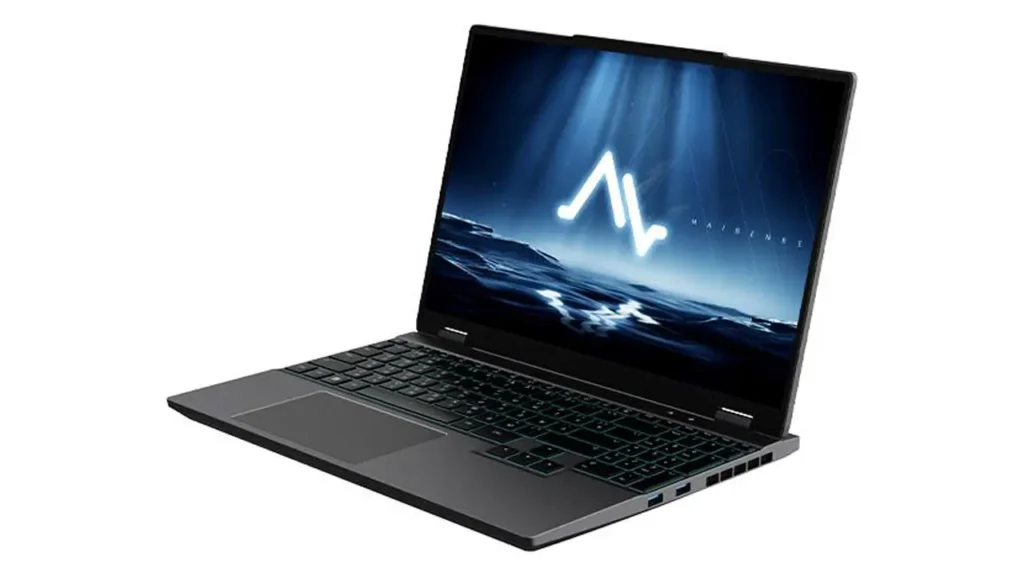
The X Series is Maibenben’s flagship gaming lineup, and it’s the range most responsible for putting the brand on the radar of performance-focused shoppers. Models in this series, such as the X558 and the X568, are built around 15.6-inch displays, dedicated NVIDIA graphics, and a magnesium alloy chassis in some configurations, which helps keep weight reasonable for a gaming machine while maintaining a sturdier build than the polycarbonate shells found on some of Maibenben’s older or more budget-oriented laptops.
Hardware-wise, the X Series has offered a mix of processor platforms depending on the generation and model. Some X Series laptops, like certain X568 configurations, pair an 11th Gen Intel Core i7 processor with an NVIDIA GeForce RTX 3060 laptop GPU, 16GB of DDR4 memory (expandable in many configurations), and a 512GB NVMe SSD. Other models in the line, including the X558, have been built around AMD’s Ryzen 7 5800H processor alongside similar memory and storage configurations. This mixed-platform approach means Maibenben isn’t locked into a single chipmaker, and it gives shoppers some choice between Intel and AMD depending on what they’re prioritizing.
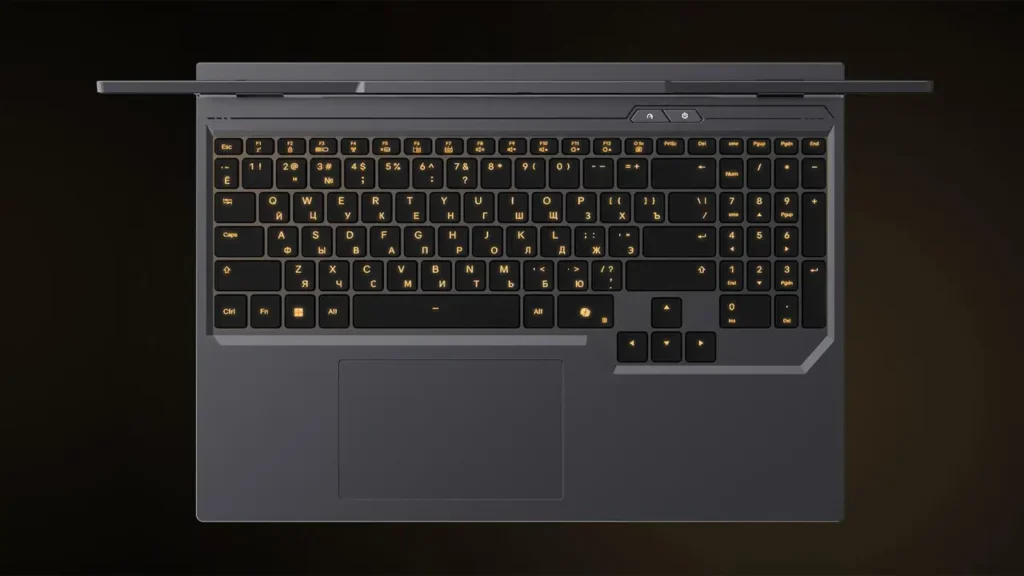
Display options in the X Series have included full HD panels with high refresh rates — some configurations advertise up to 240Hz — which matters for competitive gaming where smoothness and responsiveness count for more than raw resolution. Connectivity on these models has typically included Wi-Fi 6, Thunderbolt 4 on select configurations, backlit keyboards, and a reasonably modern port selection for external displays and peripherals.
The target audience for the X Series is fairly easy to define: younger gamers and content creators who want a machine capable of running modern titles at solid settings without spending flagship-laptop money. It’s not a series aimed at enterprise buyers or professionals chasing color-accurate displays for creative work — the X Series is built squarely around gaming performance per dollar, and the spec sheets reflect that priority.
| Model | Processor | Graphics | Display |
|---|---|---|---|
| X568 | Intel Core i7-11800H | RTX 3060 6GB | 15.6″ FHD, up to 240Hz |
| X558 | AMD Ryzen 7 5800H | Dedicated GPU (model varies by configuration) | 15.6″ FHD IPS |
Maibenben Gaming Laptop Performance
When it comes to actual gaming performance, the X Series leans on a fairly conventional gaming-laptop formula: a capable multi-core CPU paired with a discrete NVIDIA GPU, decent RAM headroom, and fast NVMe storage. Configurations built around the RTX 3060 and similarly tiered GPUs land in a performance bracket that handles most modern titles at 1080p with respectable frame rates, particularly when paired with a high-refresh display.
CPU and GPU pairing matters a lot in this conversation. Maibenben’s choice to offer both 11th Gen Intel Core i7 and AMD Ryzen 7 options in similar chassis designs gives buyers some flexibility, but it also means performance can vary meaningfully between configurations even within the same series name. Shoppers comparing two X Series listings should pay close attention to the specific processor and GPU pairing rather than assuming all X Series laptops perform identically.
Thermal design is one of the trickier parts of evaluating any budget gaming laptop, Maibenben included. Compact 15.6-inch chassis with discrete GPUs need to move a meaningful amount of heat, and how well a laptop manages that under sustained load affects whether it can hold peak clock speeds during long gaming sessions or whether it throttles.
Independent, side-by-side thermal testing data specifically for Maibenben’s X Series isn’t widely published in the same way it is for laptops from larger brands with dedicated review programs, so buyers relying heavily on sustained performance — long gaming sessions, video rendering, or other GPU-intensive workloads — may want to look at user reviews and hands-on coverage for the specific model and configuration they’re considering, since thermal behavior can vary between revisions.
Gaming benchmarks for Maibenben’s RTX 3060-equipped configurations generally fall in line with what you’d expect from that GPU tier across the industry: solid 1080p performance in most current titles, with esports games like competitive shooters running comfortably at high frame rates thanks to the higher refresh-rate panel options. Demanding AAA titles at maximum settings will naturally ask more of the hardware, which is true of virtually any laptop in this price-to-performance bracket, not just Maibenben’s lineup.
BestChina3DPrinters
Expert Reviews & Rankings
Independent 3D Printer Reviews
Your trusted source for Chinese 3D printer reviews, rankings, and comparisons. We buy, test, and review every printer so you can make informed decisions.
AMD Gaming Laptop Options in the X Series
AMD’s Ryzen mobile processors have become a popular choice for budget and mid-range gaming laptops industry-wide, and Maibenben has leaned into that trend with Ryzen-powered configurations in its X Series, most notably models built around the Ryzen 7 5800H.
The Ryzen 7 5800H is an 8-core, 16-thread mobile processor built on AMD’s Zen 3 architecture, and it has been a popular choice across many gaming laptop brands — not just Maibenben — because it offers strong multi-threaded performance for the price, which benefits both gaming and lighter content creation tasks like video editing or streaming. Pairing it with a dedicated NVIDIA GPU in the X Series gives Maibenben’s AMD configurations a reasonably balanced profile: strong CPU performance for background tasks and multitasking, combined with GPU power for the actual gaming workload.
The advantages of an AMD-based configuration for gamers generally come down to a few things: strong multi-core throughput for streaming or running background applications while gaming, competitive power efficiency compared to some Intel counterparts from the same generation, and — often most importantly for budget shoppers — favorable pricing relative to performance. AMD’s mobile Ryzen lineup has consistently positioned itself as offering more cores and threads per dollar compared to similarly priced Intel options, and Maibenben’s AMD-based X Series configurations benefit directly from that positioning.
Price-to-performance is really the heart of why Maibenben’s AMD options matter. A Ryzen 7 5800H paired with a mid-tier discrete GPU, sold at the price points Maibenben typically targets, lands in a spot where buyers are getting hardware that would often cost meaningfully more if purchased under a bigger brand name with the same internal components. That gap is exactly what has driven interest in Maibenben among value-focused shoppers in markets where every dollar (or ruble, or peso) of the budget matters.
Ryzen Laptop Configurations That Stand Out
Beyond the gaming-focused X Series, Maibenben has used AMD Ryzen processors across several other product lines, which makes the brand a useful case study for anyone specifically shopping for a Ryzen-powered laptop on a budget.
On the higher end of Maibenben’s Ryzen offerings, configurations built around Ryzen 7 and Ryzen 9-class chips (depending on the specific model and release year) target buyers who want strong CPU performance for both productivity and gaming. These higher-tier Ryzen chips offer more cores, higher boost clocks, and better sustained multi-threaded performance compared to the Ryzen 5 options found in Maibenben’s more budget-oriented models.
For productivity work — things like spreadsheet-heavy tasks, multitasking across many browser tabs, light video editing, or compiling code — a Ryzen 7 or Ryzen 9 mobile chip gives noticeably more headroom than entry-level processors. Combined with the integrated AMD Radeon graphics found in many Ryzen mobile chips, even configurations without a discrete GPU can handle light creative work and older or less demanding games reasonably well, which adds versatility for buyers who can’t justify a dedicated gaming machine but still want occasional gaming capability.
Gaming performance on the higher Ryzen tiers, especially when paired with a discrete GPU in X Series configurations, scales predictably: more cores and higher clocks help reduce CPU bottlenecking in GPU-bound games and improve frame consistency in titles that lean more heavily on CPU performance, such as strategy games or simulation-heavy titles.
| Processor | Cores / Threads | Best Suited For |
|---|---|---|
| Ryzen 5 4500U | 6 / 6 | Everyday productivity, browsing, office work |
| Ryzen 7 5800H | 8 / 16 | Gaming, content creation, multitasking |
| Ryzen 9 (select models) | 8 / 16 | Higher-end gaming and heavier multitasking |
Why the X Series Competes With the Best Budget Gaming Laptop Segment
The “best budget gaming laptop” conversation is a crowded one, with brands like Acer, ASUS, Lenovo, and Dell all fielding entries in the same general price bracket. Maibenben’s X Series competes in this space primarily on raw value: getting a discrete GPU like the RTX 3060 paired with a recent-generation CPU at a price point that often undercuts comparable configurations from more established brands.
That value proposition is real, but it comes with the caveats already mentioned — primarily around after-sales support and the relative scarcity of independent long-term reliability data compared to brands with years of third-party review coverage. Buyers comparing Maibenben against, say, an Acer Nitro or an ASUS TUF model in a similar price range are essentially weighing raw spec value against brand-backed service infrastructure and a longer track record of independent testing.
Where Maibenben tends to win comparisons is in pure specs-per-dollar. Where it tends to lose ground is in things that are harder to quantify on a spec sheet: keyboard feel over years of use, chassis flex, speaker quality, and the ease of getting warranty service if something goes wrong after the first year. For buyers in regions where Maibenben has an established distributor network — parts of the CIS and Southeast Asia, for example — these concerns are somewhat mitigated by local support channels, even if they don’t match the density of an Acer or Lenovo service network.
The bottom line for this segment: if the primary deciding factor is “what hardware can I get for this price,” the X Series holds up well against the budget gaming laptop competition. If after-sales support density and long-term brand track record carry more weight in the decision, established brands still have an edge.
The Maibenben M Series for Everyday Users
While the X Series gets attention for gaming, the M Series is arguably the more practical lineup for the average buyer. Models like the M543 and M545 are built around everyday productivity rather than gaming, with a focus on AMD Ryzen processors paired with integrated graphics rather than discrete GPUs.
The M545, for instance, has been built around an AMD Ryzen 5 4500U processor with integrated AMD Radeon graphics, 8GB of RAM (expandable in dual-channel configurations up to higher capacities), and a 512GB PCIe SSD. The chassis design favors a 15.6-inch full HD display, a relatively light weight for the form factor, and a full-sized keyboard with numeric keypad, which makes it reasonably comfortable for everyday typing and data entry work.
Battery life on M Series models has typically been rated in the range of around six hours under the listed testing conditions, which is solid for casual use — web browsing, document editing, streaming video — though heavier workloads will naturally bring that runtime down. Wi-Fi 6 support on newer M Series models helps with networking performance in busy wireless environments like shared offices, cafes, or university campuses.
Portability is a relative strength here. While the M Series isn’t marketed as an ultra-thin-and-light machine, its 15.6-inch chassis stays within a reasonable weight range for a laptop with this screen size, and the overall design favors a clean, professional look that works fine in office or classroom settings without drawing attention as a “gaming” device the way the X Series chassis design does.
| Model | Processor | RAM / Storage | Battery |
|---|---|---|---|
| M545 | Ryzen 5 4500U | 8GB / 512GB SSD | ~6 hours (51.28Wh) |
| M543 | Ryzen 4000 series | Varies by configuration | Varies by configuration |
Maibenben Ultrabook Models and Their Advantages
Maibenben’s ultrabook-oriented models, including entries in the Jinmai line, take the productivity focus of the M Series a step further by prioritizing a lighter, thinner chassis aimed at portability over raw performance. These models tend to favor compact 13.3-inch displays, lighter overall weight, and lower-power processors designed to stretch battery life rather than maximize CPU throughput.
For students, this profile makes a lot of sense. A lightweight ultrabook that’s easy to carry between classes, has enough battery life to get through a school day without needing a charger, and can comfortably handle note-taking, web research, and document editing covers the core needs of most academic work without the added weight and cost of gaming-oriented hardware.
Business users looking for a secondary or travel laptop may find similar appeal here — a machine that’s easy to slip into a bag, doesn’t draw attention with gaming aesthetics, and handles email, video calls, and office software without issue. The trade-off, as with most ultrabooks across the industry and not unique to Maibenben, is reduced raw processing power compared to laptops built around higher-wattage processors, which means heavier workloads like video editing or complex spreadsheet modeling will feel noticeably slower than on an M Series or X Series machine.
Lightweight construction is the defining feature of this category. Maibenben’s ultrabook models generally weigh in around the 1.3 kilogram range for the smaller form factors, which puts them in a comfortable carrying range for daily commuting or campus use.
Maibenben Laptop Review: Final Verdict
Pulling everything together, Maibenben has built a genuinely interesting catalog for a company that’s only been around since 2013. The brand’s strengths are fairly clear: aggressive pricing relative to the hardware on offer, a willingness to mix both Intel and AMD platforms across its lineup, partnerships with recognizable supply chain names like Qualcomm and Pegatron, and a growing international footprint that now spans multiple continents.
The X Series stands out as a legitimately competitive affordable gaming laptop option, particularly in configurations built around the Ryzen 7 5800H or similar Intel pairings alongside RTX 3060-class graphics. For buyers focused purely on getting the most gaming performance per dollar, it’s hard to ignore what Maibenben is offering. The M Series and ultrabook lines round out the catalog nicely for buyers who don’t need gaming horsepower and instead want something practical for school, office work, or general browsing and productivity.
The weaknesses are equally clear and worth taking seriously before buying. Maibenben doesn’t have the decades-long service infrastructure of brands like Lenovo, ASUS, or Acer, and warranty support can depend heavily on the specific market and retailer rather than a unified global service network. Independent, long-term reliability and thermal testing data is also less abundant for Maibenben compared to bigger brands, which means buyers are relying more on user reviews and forum discussions than structured lab testing when assessing long-term durability.
So who should consider buying a Maibenben laptop? Budget-conscious gamers who want strong specs without paying a premium brand markup are a natural fit, especially in regions where Maibenben has an established distributor and reasonable local support. Students and everyday users looking for an affordable, portable machine for schoolwork or office tasks will likely find the M Series or ultrabook lines suitable for their needs. Buyers who prioritize an extensive global service network, long-established brand reputation, or who plan to push their hardware hard for years without easy access to local support may want to weigh that trade-off carefully before committing.
Maibenben isn’t trying to dethrone the industry’s biggest names overnight, but its growth across CIS and Asian markets, backed by a clear value-focused strategy and modern hardware choices, makes it a brand worth watching for anyone shopping in the budget-to-mid-range laptop space.
🇺🇸 John Peterson — ⭐⭐⭐⭐⭐
Excellent article about Maibenben laptops. I was looking for information about the X Series gaming models and found detailed specifications, comparisons, and useful insights. The website is well organized and easy to navigate.
🔗 https://bestchinagadget.com/
🇪🇸 Carlos Ramírez — ⭐⭐⭐⭐⭐
Muy buen artículo sobre los portátiles Maibenben. La información es clara, actualizada y fácil de entender. Me gustó especialmente la comparación entre las series X y M. Definitivamente volveré a visitar este sitio.
🔗 https://bestchinagadget.com/
🇸🇦 أحمد العتيبي — ⭐⭐⭐⭐⭐
مقال رائع ومفيد جداً عن أجهزة Maibenben. أعجبني الشرح التفصيلي والمقارنات الواقعية بين الطرازات المختلفة. الموقع يحتوي على مراجعات تقنية احترافية ومحدثة باستمرار.
🔗 https://bestchinagadget.com/
🇨🇳 王伟 (Wang Wei) — ⭐⭐⭐⭐⭐
这是一篇非常专业的 Maibenben 笔记本电脑评测文章。内容详细,涵盖了性能、设计和价格等方面的信息。网站更新及时,是了解中国科技产品的优秀平台。
🔗 https://bestchinagadget.com/
🇫🇷 Pierre Laurent — ⭐⭐⭐⭐⭐
Très bon article sur les ordinateurs portables Maibenben. Les explications sont précises, les photos sont de qualité et les informations techniques sont faciles à comprendre. Je recommande ce site à tous les passionnés de technologie.
🔗 https://bestchinagadget.com/
🇩🇪 Markus Schneider — ⭐⭐⭐⭐⭐
Hervorragender Bericht über Maibenben-Laptops. Die Analyse der Gaming- und Ultrabook-Modelle war besonders hilfreich. Die Website bietet hochwertige Technikbewertungen und interessante Neuigkeiten aus der Welt der chinesischen Gadgets.
🔗 https://bestchinagadget.com/