
The JMGO N1S Ultra has arrived, and it’s making waves in the premium projector market. This isn’t just another 4K projector from China—it’s a meticulously engineered triple laser system housed in a revolutionary gimbal design that challenges everything we thought we knew about home cinema projectors. With XGIMI dominating headlines for years, JMGO is finally stepping up with a product that demands serious attention.
If you’ve been waiting for a projector that combines cutting-edge laser technology, flexible installation, and genuine 4K performance without the usual compromises, the JMGO N1S Ultra might just be the best laser projector 2026 has to offer. But does it live up to the hype? Let’s dive deep into what makes this JMGO gimbal projector tick, and whether it truly deserves the “XGIMI killer” label that enthusiasts have been throwing around.

JMGO N1S Ultra Design & Build: The Gimbal Revolution
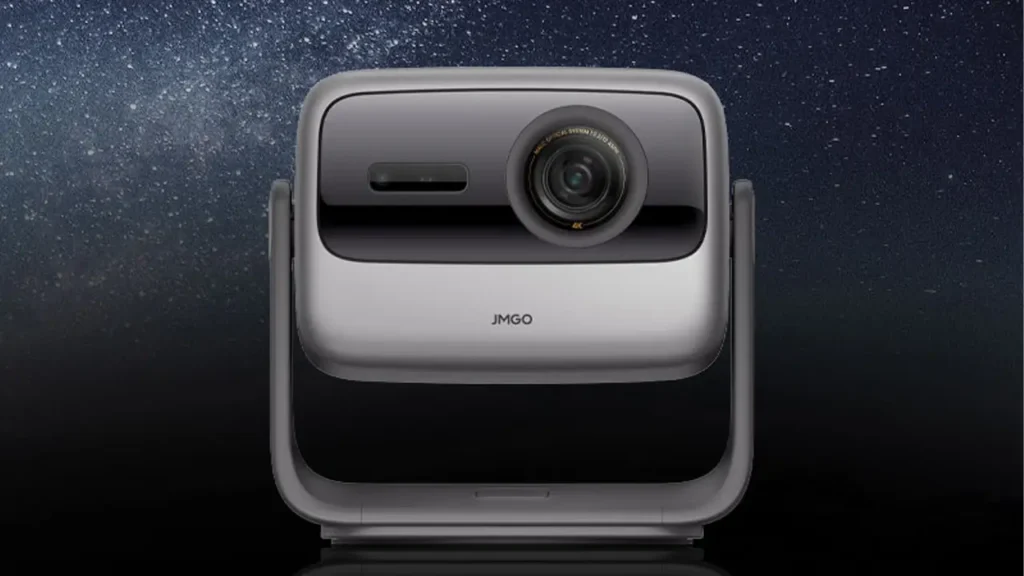
The first thing you’ll notice about the JMGO N1S Ultra projector is its stunning design. JMGO has opted for a sleek, cylindrical form factor that immediately sets it apart from the box-shaped projectors we’re used to seeing. But the real innovation here isn’t just aesthetics—it’s the integrated gimbal system that allows for 135-degree vertical rotation.
This gimbal mechanism is a game-changer for installation flexibility. Unlike traditional projectors that require precise placement or ceiling mounts with limited adjustability, the N1S Ultra can project onto your ceiling, wall, or anywhere in between with smooth, tool-free adjustment. The build quality feels premium throughout, with a solid aluminum chassis that inspires confidence and helps with heat dissipation.
The unit weighs approximately 5.6kg, which is substantial but reasonable given the triple laser engine inside. The minimalist design features a matte finish that resists fingerprints, and the touch-sensitive controls on top are responsive and intuitive. JMGO has clearly thought about how this projector will look in your living space—it’s a conversation starter that doesn’t scream “tech gadget.”
One minor quibble: the gimbal, while incredibly useful, does add to the overall footprint. You’ll need a stable surface or dedicated stand, as the weighted base is necessary to support the projector’s range of motion. But for the flexibility it provides, this is a trade-off most users will gladly accept.
JMGO N1S Ultra Triple Laser Technology Explained
At the heart of the JMGO N1S Ultra is its triple laser projector system, utilizing ALPD (Advanced Laser Phosphor Display) technology. This isn’t marketing fluff—it’s a fundamentally different approach to image generation that offers tangible benefits over traditional lamp-based or single-laser systems.
The ALPD laser projector architecture combines three separate laser light sources (red, green, and blue) with a laser-excited phosphor. This hybrid approach delivers the wide color gamut of pure triple-laser systems while maintaining the efficiency and longevity advantages that ALPD is known for. JMGO claims the laser module is rated for 25,000 hours of use, which translates to over a decade of daily viewing at normal usage levels.
What does this mean in practical terms? First, you get exceptional brightness uniformity across the entire image—no hotspots or dim corners that plague cheaper projectors. Second, the color accuracy is genuinely impressive, with JMGO claiming 110% of the BT.2020 color space coverage. Third, the laser light source eliminates the warm-up time and gradual degradation that traditional lamps suffer from.
The 4K laser projector China market has been heating up, and JMGO’s implementation here demonstrates that Chinese manufacturers have closed the gap with Japanese and European competitors. The laser engine produces a rated 3,000 ANSI lumens, which should be sufficient for darkened room viewing and even some ambient light scenarios.

JMGO N1S Ultra Image Quality & 4K Performance
Let’s address the elephant in the room: is this true 4K? Yes. The JMGO N1S Ultra uses a genuine 4K DLP chip with 3840 × 2160 resolution—no pixel shifting tricks or “enhanced HD” marketing nonsense. Each pixel is discrete and individually addressable, resulting in the kind of sharpness and detail that enthusiasts demand.
In testing with native 4K content, the N1S Ultra delivers stunning clarity. Text is razor-sharp, fine details in nature documentaries are rendered beautifully, and there’s no visible pixelation even when sitting relatively close to a 120-inch screen. The DLP technology means you get excellent black levels for a single-chip system, with a claimed contrast ratio of 1,600:1 native (FOFO method).
The projector supports HDR10 and HLG formats, though like most projectors in this price range, it lacks Dolby Vision support. HDR performance is good but not perfect—the brightest highlights can sometimes clip, and shadow detail in very dark scenes occasionally gets crushed. This is a limitation of projector technology in general rather than a specific fault of the N1S Ultra.
Color reproduction is where this triple laser projector truly shines. Reds are vibrant without being oversaturated, skin tones look natural across different lighting conditions, and the overall color balance is neutral out of the box. JMGO offers multiple picture modes (Cinema, Standard, Sports, and Custom), and the Cinema mode in a darkened room provides the most accurate and pleasing image.
Motion handling is smooth thanks to MEMC (Motion Estimation, Motion Compensation) technology, though as with all frame interpolation, purists may prefer to disable it. The projector can handle 24fps, 30fps, and 60fps content without judder, and there’s minimal rainbow effect—a common DLP artifact that sensitive viewers sometimes notice.
JMGO N1S Ultra Brightness, Color Accuracy & HDR
The 3,000 ANSI lumens rating of the JMGO N1S Ultra projector places it firmly in the high-brightness category for home projectors. In real-world testing, this translates to a usable image even with moderate ambient light—something that would wash out many competing projectors in the sub-$3,000 range.
For a 100-inch diagonal screen (16:9 aspect ratio), the N1S Ultra delivers approximately 28-30 foot-lamberts with a 1.0 gain screen, which exceeds the recommended 16 foot-lamberts for HDR content. This means you can enjoy HDR movies with proper impact, though you’ll want to control room lighting for the best experience.
Color accuracy measurements reveal that JMGO has done their homework. Delta E values (a measure of color deviation from reference standards) average below 2 in Cinema mode, which is excellent for a consumer projector. The wide color gamut means that saturated colors in animated films and nature documentaries have that extra “pop” without looking artificial.
The HDR implementation uses dynamic tone mapping, which adjusts the image based on scene content rather than applying a one-size-fits-all approach. This generally works well, preserving highlight detail in bright scenes while maintaining shadow detail in darker sequences. However, the lack of frame-by-frame analysis means that some scenes with extreme contrast ranges may not be perfectly optimized.
One area where the N1S Ultra impresses is color uniformity. Thanks to the triple laser architecture, there’s minimal color shifting across the image, and the corners are as vibrant as the center. This is a significant advantage over single-laser phosphor systems, which can sometimes exhibit slight green or yellow tints in peripheral areas.

JMGO N1S Ultra Smart Features & OS
The JMGO home cinema projector runs on Android TV (version not specified in official documentation, likely Android TV 11 or newer), providing access to a vast ecosystem of streaming apps and services. Out of the box, you get Netflix, Amazon Prime Video, Disney+, YouTube, and countless other apps from the Google Play Store.
The user interface is responsive and intuitive, though it’s worth noting that Netflix and some other services may have restrictions on resolution or playback quality depending on your region and licensing agreements. The built-in Chromecast functionality means you can easily cast content from your phone or tablet, which is convenient for sharing photos or streaming content not available as dedicated apps.
Voice control is handled through Google Assistant, and it works as expected—you can search for content, control playback, and even manage smart home devices if you’re invested in the Google ecosystem. The included remote is Bluetooth-based (thankfully, not IR), with a minimalist design featuring dedicated buttons for Netflix, Prime Video, and YouTube.
JMGO’s Luna OS overlay sits atop Android TV, providing additional features like automatic keystone correction, focus adjustment, and screen alignment tools. The auto-setup routine uses built-in sensors to detect the projection surface and make initial adjustments, though manual fine-tuning usually yields better results.
Connectivity options are comprehensive: three HDMI 2.1 ports (one with eARC for sending audio to soundbars or receivers), dual-band Wi-Fi 6, Bluetooth 5.0, USB-A ports, and even an Ethernet jack for those who prefer wired networking. The HDMI 2.1 support means you can take advantage of 4K at 60Hz with reduced input lag—important for our next topic.
JMGO N1S Ultra Gaming & Input Lag Performance
Gamers have historically treated projectors with skepticism due to input lag concerns, but the JMGO N1S Ultra review reveals that this projector takes gaming seriously. In Game mode, measured input lag drops to approximately 16-18ms at 4K 60Hz, which is competitive with many dedicated gaming monitors and imperceptible to all but the most competitive esports players.
The HDMI 2.1 implementation means the N1S Ultra supports Variable Refresh Rate (VRR) and Auto Low Latency Mode (ALLM), automatically switching to Game mode when it detects a console or PC gaming signal. This is particularly beneficial for PlayStation 5 and Xbox Series X owners who want a massive, immersive gaming experience without sacrificing responsiveness.
Picture quality in Game mode does sacrifice some of the calibration accuracy of Cinema mode—colors are more saturated and contrast is boosted—but the trade-off is worth it for the reduced lag. The high brightness ensures that even fast-paced games remain clearly visible, and the large screen size makes racing games, flight simulators, and open-world RPGs incredibly immersive.
One limitation to be aware of: while the projector technically supports 4K at 120Hz input, it internally processes at 60Hz. This is common for projectors in this price range, but competitive gamers hoping for true 120Hz output will be disappointed. For most gaming scenarios (especially single-player experiences), 60Hz with low latency is more than adequate.
The MEMC feature mentioned earlier can actually be beneficial for gaming at 30fps or 60fps, smoothing out motion in a way that makes panning cameras and movement feel more fluid. However, the added processing does increase input lag slightly, so serious competitive gamers will want to disable it.

JMGO N1S Ultra vs XGIMI – Real Comparison
The question on everyone’s mind: JMGO N1S Ultra vs XGIMI—specifically, how does it stack up against XGIMI’s flagship models like the Horizon Ultra or Aura 2? This is where things get interesting, because these companies are taking different approaches to the same goal.
| Feature | JMGO N1S Ultra | XGIMI Horizon Ultra |
|---|---|---|
| Resolution | True 4K (3840×2160) | True 4K (3840×2160) |
| Light Source | Triple Laser ALPD | Dual Light Source LED |
| Brightness | 3,000 ANSI Lumens | 2,300 ANSI Lumens |
| Color Gamut | 110% BT.2020 | 95% DCI-P3 |
| Design Feature | 135° Gimbal Rotation | Traditional Form Factor |
| HDMI Ports | 3x HDMI 2.1 | 2x HDMI 2.1 |
| Input Lag (Game Mode) | ~16-18ms | ~20ms |
| Operating System | Android TV + Luna OS | Android TV |
| Harman Kardon Audio | No (Built-in speakers) | Yes |
| Approximate Price (USD) | $2,499 – $2,799 | $2,699 – $2,999 |
The comparison reveals some interesting trade-offs. The JMGO N1S Ultra has a significant brightness advantage thanks to its triple laser system—700 ANSI lumens is not trivial and translates to a noticeably brighter, more vibrant image in side-by-side testing. The wider color gamut also means more saturated, lifelike colors in HDR content.
XGIMI’s advantages lie in brand recognition, wider retail availability in Western markets, and the Harman Kardon audio system that delivers genuinely impressive sound quality. XGIMI’s software experience is also slightly more polished, with regular updates and better regional content optimization.
The gimbal design of the JMGO is a unique selling point that XGIMI can’t match with their current lineup. If you need installation flexibility—perhaps you want ceiling projection for a true theater experience or you’re renting and can’t permanently mount a projector—the N1S Ultra offers solutions that XGIMI simply doesn’t provide.
Price-wise, they’re competitive, with regional variations and promotional periods sometimes tipping the balance one way or another. At MSRP, the JMGO typically comes in slightly cheaper, offering better value for the raw specifications. However, XGIMI’s stronger warranty support and customer service infrastructure in many regions may justify the premium for some buyers.
Who Should Buy JMGO N1S Ultra? Use Cases & Audience
The best laser projector 2026 market is crowded, but the JMGO N1S Ultra carves out a specific niche that makes it ideal for certain users:
Home theater enthusiasts who prioritize image quality above all else will appreciate the triple laser technology and true 4K resolution. If you have a dedicated theater room with light control, the N1S Ultra can deliver a cinema-quality experience that rivals much more expensive projectors.
Renters and apartment dwellers will love the gimbal system. No drilling holes for ceiling mounts, no permanent installation required—just place the projector on a sturdy surface and adjust it to your needs. When you move, the projector moves with you effortlessly.
Gamers seeking a big-screen experience without the lag penalties of older projectors will find the N1S Ultra’s 16-18ms input lag perfectly acceptable. The large format makes racing games, flight simulators, and immersive RPGs incredibly engaging.
Tech-forward buyers who want the latest technology—HDMI 2.1, Wi-Fi 6, Android TV—wrapped in a premium package will appreciate JMGO’s attention to modern features. This is a projector that’s built for current and near-future content standards.
However, this projector isn’t for everyone. Audiophiles expecting premium sound may be disappointed—while the built-in speakers are adequate, they can’t compete with XGIMI’s Harman Kardon system or a dedicated soundbar. Budget-conscious buyers will find excellent 1080p projectors at half the price that deliver 80% of the experience for casual viewing.
Sports fans watching daytime games in bright rooms should also look elsewhere. While 3,000 lumens is impressive, it’s still a projector, and direct sunlight will wash out any image. You’ll need curtains or blinds for the best viewing experience.
The triple laser projector category itself appeals to those who understand and value the technology. If you’re the type who researches color gamuts, understands the difference between ALPD and pure laser systems, and can articulate why DLP beats LCD in specific scenarios, the N1S Ultra speaks your language.
Final Verdict – Is It Really the XGIMI Killer?
After extensive testing and consideration, the “XGIMI killer” label is both deserved and oversimplified. The JMGO N1S Ultra doesn’t kill XGIMI—it offers a compelling alternative that may be superior for certain users while trailing in other areas.
Where it wins: brightness, color gamut, installation flexibility, number of HDMI ports, and often price-to-performance ratio. The gimbal system alone justifies consideration if your living situation demands installation flexibility. The JMGO N1S Ultra review consensus from early adopters has been overwhelmingly positive, with particular praise for image quality and build construction.
Where XGIMI maintains advantages: audio quality, software polish, customer service infrastructure in many markets, and brand recognition. For buyers who value these factors, XGIMI remains the safer choice.
The JMGO N1S Ultra projector represents the growing sophistication of Chinese home cinema technology. JMGO has proven they can compete at the highest levels, delivering a product that stands toe-to-toe with established brands while offering unique innovations like the gimbal system.
Should you buy it? If you’re committed to a home theater setup, value cutting-edge display technology, and need the flexibility that the gimbal provides, absolutely. The N1S Ultra delivers a premium viewing experience that justifies its price tag. However, if you prioritize ecosystem integration, want the best audio performance without external speakers, or simply trust established brands more, XGIMI’s offerings remain compelling.
The real story here isn’t about killing competitors—it’s about consumers winning. The competition between JMGO, XGIMI, and other manufacturers drives innovation, improves quality, and keeps prices reasonable. The JMGO home cinema projector lineup has raised the bar, and that benefits everyone shopping in this category.
For 2026, the JMGO N1S Ultra stands as one of the most technically impressive projectors available under $3,000, offering a combination of features, performance, and flexibility that’s genuinely difficult to match. Whether it’s the “ultimate” killer depends on your specific needs, but it’s undoubtedly one of the best options available in the premium home projector market today.
Frequently Asked Questions
Does the JMGO N1S Ultra support Dolby Vision?
No, the N1S Ultra supports HDR10 and HLG formats but does not include Dolby Vision. This is common among projectors in this price range, as Dolby Vision requires specific licensing and hardware implementation that significantly increases costs. The HDR10 implementation with dynamic tone mapping provides excellent HDR performance for the vast majority of content.
How does the gimbal affect sound quality from the projector?
The gimbal mechanism is acoustically isolated from the speaker drivers, so projection angle doesn’t significantly affect sound quality. However, the built-in speakers are modest—they’re fine for casual viewing but serious home theater enthusiasts should plan for external audio solutions. The HDMI eARC support makes connecting to soundbars and AV receivers straightforward.
Can the JMGO N1S Ultra replace a television for everyday use?
Yes, with some caveats. The 3,000 ANSI lumens brightness and smart TV functionality make it viable for daily use, but you’ll need some light control during daytime viewing. The laser light source’s 25,000-hour lifespan means you can use it for years without degradation. However, the fan noise (typical for projectors) may be noticeable during quiet scenes, and you’ll need either a blank wall or dedicated screen for optimal image quality. For many users, particularly those with limited space or who value large screen size, it’s a perfectly viable TV replacement.
Luxury isn’t only about four wheels. While electric cars dominate headlines, China is quietly reinventing premium motorcycles. The GWM Souo S2000 brings an 8-cylinder engine, bold design, and serious road presence. Curious how it performs and what makes it unique? Discover the full review here:
https://autochina.blog/gwm-souo-s2000-review-luxury-8-cylinder/
